

One of my favourite spots on Exmoor National Park is the Tarr Steps, an ancient clapper bridge surrounded by the beautiful wooded valley of the River Barle and fringed by verdant grassy heath that the moors are so famous for.
This wooded nature reserve is the perfect spot for a gentle walk in the countryside, or to take a dip in the river on a warm summer’s day.
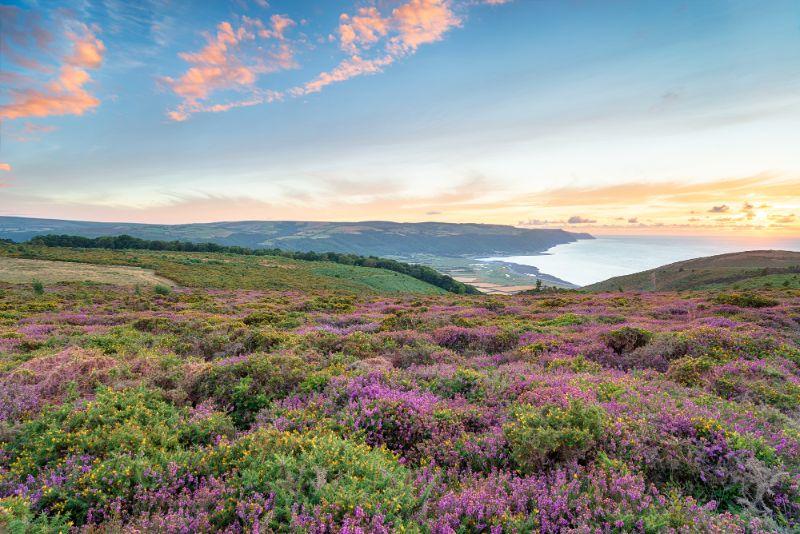
However, there is more than one walk you can do at Tarr Steps.
You can opt for a short, 2 mile circular walk, or a more challenging 14 mile (22 km) walk across the moorlands taking several hours, or one that’s in between the two.
The walk you choose largely depends on what you want to see, who you’re walking with, and how active you are, so to help you out – here is an overview of each options plus some background about the national park and the bridge’s history.
About Exmoor National Park
Exmoor is loosely defined as an area of hilly, open moorland in west Somerset and north Devon, located in South West England.
It is named after the River Exe, the source of which is situated in the centre of the area, two miles north-west of Simonsbath.
Exmoor is a unique landscape made up of moorland, woodland, valleys and farmland, and shaped by people and nature over thousands of years.
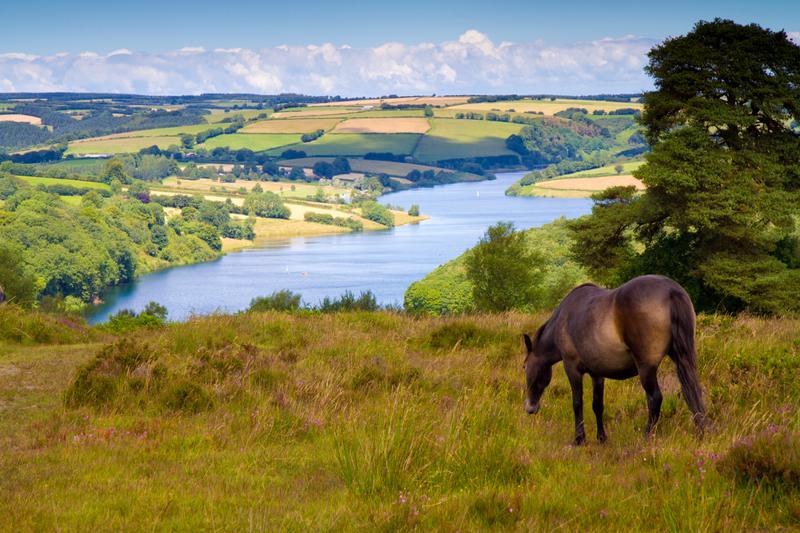
It was designated a National Park in 1954. It’s not a wilderness, it is a living and working landscape with many settlements from small towns and picturesque villages to tiny hamlets and isolated farmsteads.
In Exmoor National Park, you will find everything from high cliffs plunging into the Bristol Channel, quaint and rural villages, and plenty of cosy pubs and tearooms offering delicious local produce.
Wildlife on Exmoor
Exmoor is known for its great variety of habitats and abundance of wildlife.
Thanks to its spectacular moorland, rich oak woodland, clear streams and dramatic coastline, you’ll find species such as majestic red deer, elusive otters, the rare barbastelle bat, and some of the UK’s rarest butterflies and bats.
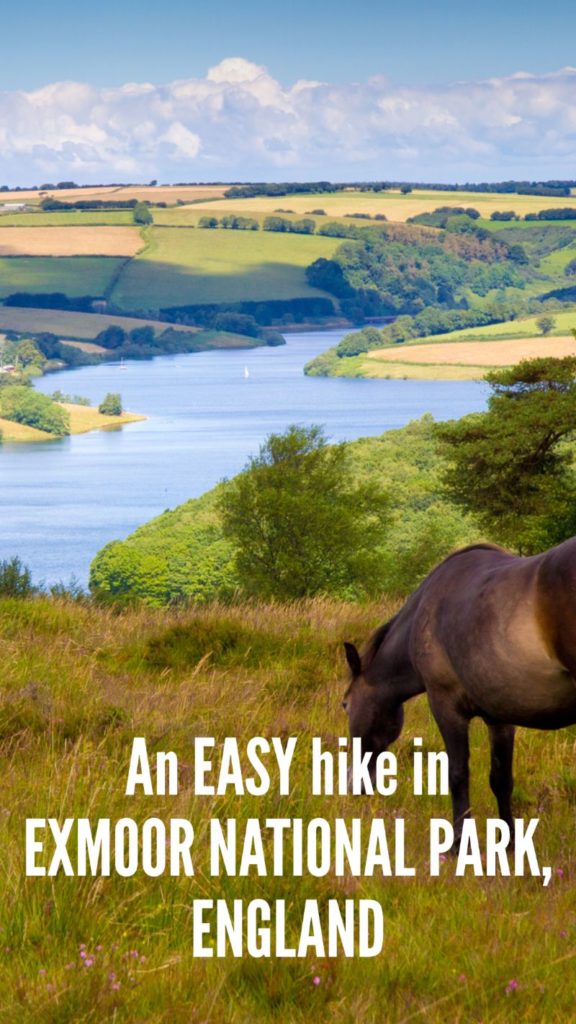
One of the more famous species in Exmoor high on any wildlife lovers bucket list, are the commonly spotted British native ponies. The ponies are only ‘wild’ in the sense that the herds roam freely on the moor, for all the ponies belong to someone.
Exmoor is so important for wildlife that almost a third of the National Park is protected under UK and European law.
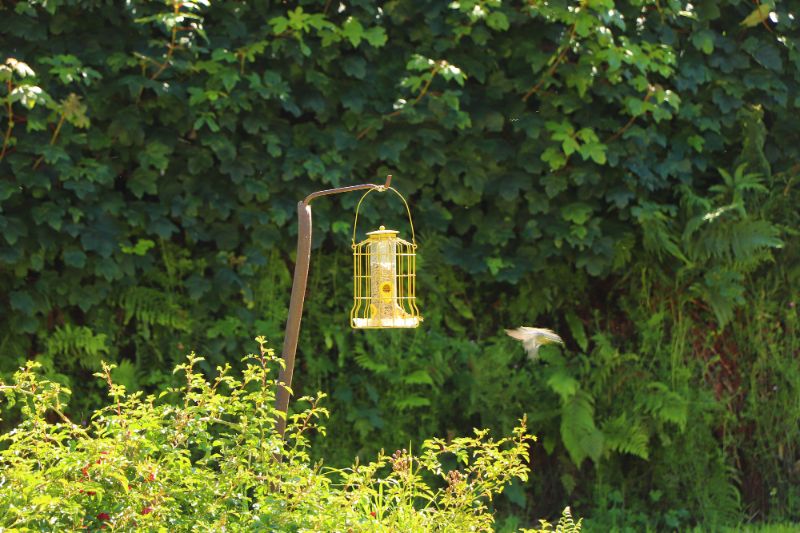
As well as wild ponies, Exmoor is known for its variety of birdlife. We saw a cuckoo and a skylark, but no partridge in a pear tree
I don’t think you can beat the melodic sounds of English birdsong, which is always loud and strong in the woods and hedgerows of Exmoor.
We saw a blackbird with a dragonfly in his beak. He was obviously taking it to feed his young as he wasn’t going to move far away from us, and seemed to be protecting his nest.
Did you know there is research to suggest that the sound of birdsong has a calming effect on us in times of stress, and that houses with birds in the garden sell quicker?
Can’t prove it myself, but I know I tend to seek out birdsong wherever I am.
What are the Tarr Steps?
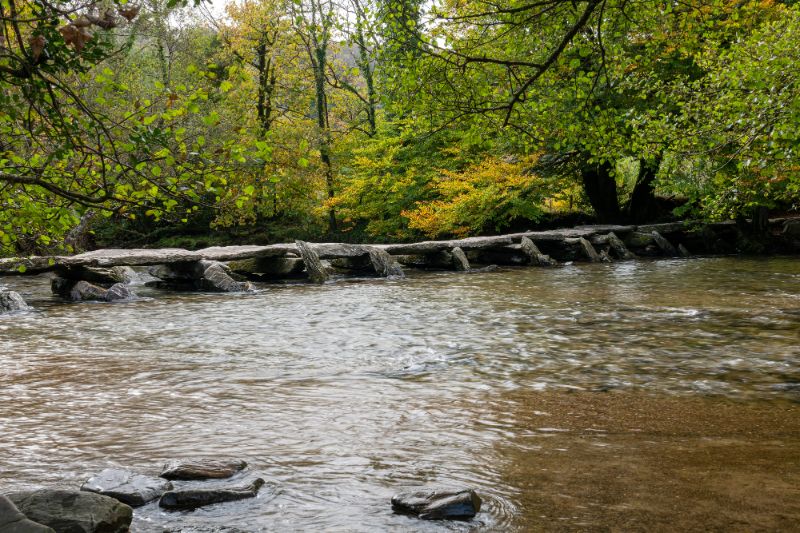
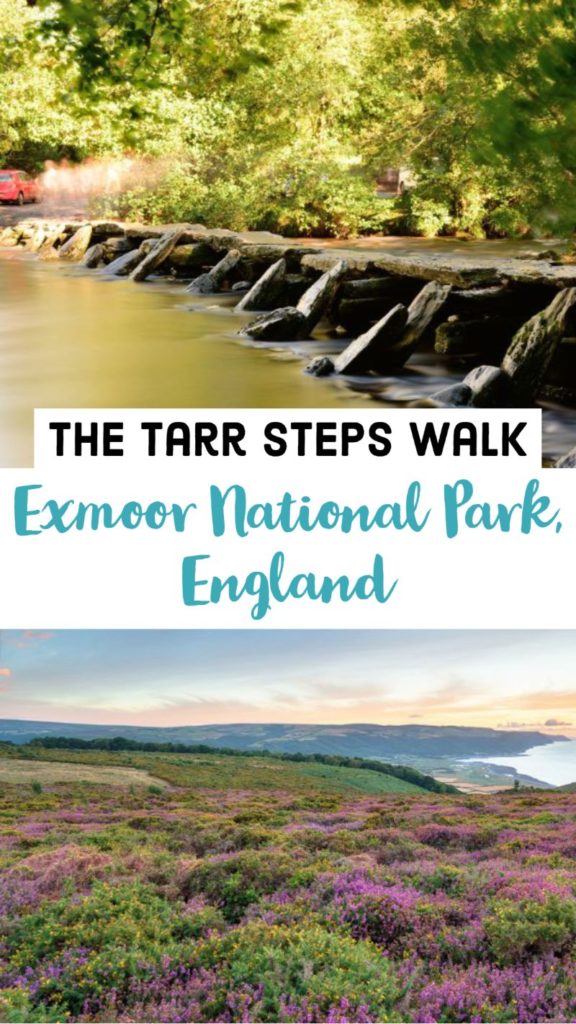
Tarr Steps is a place of legends and ancient history. Tarr Steps is actually one of Britain’s finest Medieval Clapper Bridges (clapper means ‘pile of stones’) and are located within the Barle Valley in a National Nature Reserve that covers about 33 hectares.
The clapper bridge was originally thought to have dated back to about 1000 BC, but now historians believe it to be medieval, around the 15th Century.
It’s made out of stone slate, which are estimated to weigh 1-2 tons each. Whats’s unique about the bridge is there is no cement or mortar used, it’s made completely with stone and nothing else.
The name ‘Tarr’ is thought to be derived from the Celtic word ‘tochar’, meaning ’causeway’, and the term ‘clapper’ comes from the Latin word ‘claperius’, which translates to ‘pile of stones.’
At 55yds (50 meters) in length, Tarr Steps is by far the longest of the 40 or so clapper bridges left in Britain. It consists of 17 large stone slabs of stone linking the Somerset villages of Withypool and Dulverton.
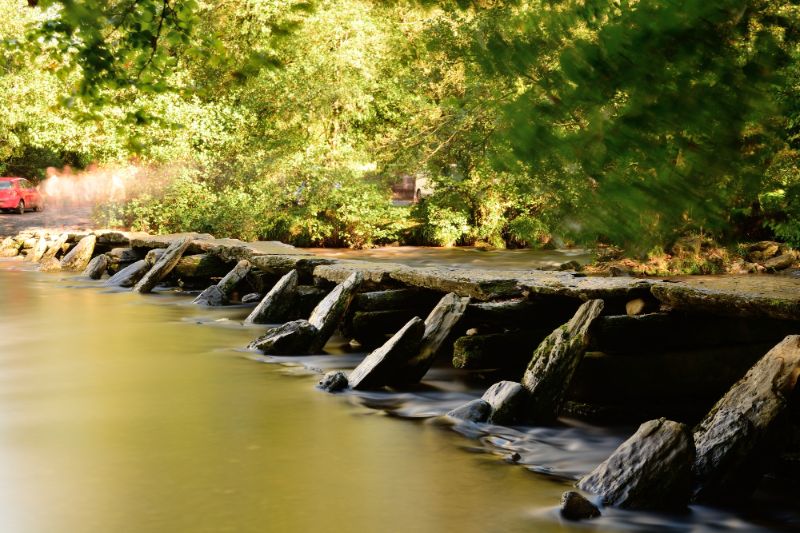
Over the years, the bridge has sustained damage due to flooding, but each time the bridge has been repaired to its original place.
The last big flood in December 2012, after thousands of years, actually caused the massive boulders to be washed away when a 10 foot wall of water came cascading down with huge uprooted trees.
When repairing the flood damage, the bridge was reinforced with steel cable to prevent it from washing away again.
The History and the Myth
Myth will tell you that the Devil built the bridge, promising to kill anyone who attempted to cross.
After the mysterious disappearance of a cat sent to cross over and a parson who stood his ground with the Devil in the middle of the bridge, the Devil decided to allow people to cross.
He had one stipulation – people would be banned from the bridge in the event of him choosing to sunbathe there.
We all know in England that wouldn’t happen often, so I think you’ll be safe on your Tarr Steps hike!
The Tarr Steps Walks
As mentioned previously, there are many walks you can do near Tarr Steps.
From the car park, it’s only about 400 meters to the Tarr Steps Bridge, so if you want to extend the walk, here are some of my favourites.
Side note: there are toilets in the car park.
Tarr Steps and River Barle Circular Walk
- Distance: 2.2 miles (3.7 km)
- Time to complete: 1 hour
- Difficulty: easy
The short, circular walk from the main car park down to the river is the most popular walk at Tarr Steps.
It extends along the riverbank for about 1.3 kilometres to a footbridge, and then returns on the other side of the river, crossing the river via the clapper bridge.
The walk is considered easy and has very little elevation, and can be completed in about an hour. It’s also dog-friendly, and they can be let off the leash in some areas to splash in the river and play in the heath.
It’s open all year round and is popular, even in the winter you’ll likely encounter other people on the walk.
Dulverton to Tarr Steps Loop
- Distance: 14 miles (22.9 km)
- Time to complete: 7 hours
- Difficulty: hard
Dulverton to Tarr Steps is around 14 miles (22.6km) there and back, and should take about 6 to 7 hours.
It’s generally considered a hard walk, because it crosses over the moorland and has an uneven terrain throughout. It has a mix of roads, fields, and a few rocky sections, plus it passes the river where you can take a dip on a warm summer’s day.
Although it has an include of about 813 meters in total, it’s not especially steep and the inclines are gradual. The most hilly part of the trail is at the beginning, and then once you reach the top it’s mostly flat.
As we hiked up high onto open moorland, where a windy squall and black cloud of rain had me thinking of the novel Lorna Doone (which was also set on Exmoor), and the vast, rolling hills stretched for as far as the eye could see. It was truly magical.
Tarr Steps marks the halfway point, and you can refuel with refreshments and a pub meal at the pub there before returning back to Dulverton (it’s much easier walking back). Also, there are toilets near the ancient monument of Tarr Steps, and these are the only toilets on the route.
This trail is less popular than the shorter walk, but is also dog-friendly and they can be taken off the lead in many areas.
Tarr Steps and Watery Lane Loop
- Distance: 5.2 miles (8.4 km)
- Time to complete: 2.5 hours
- Difficulty: moderate
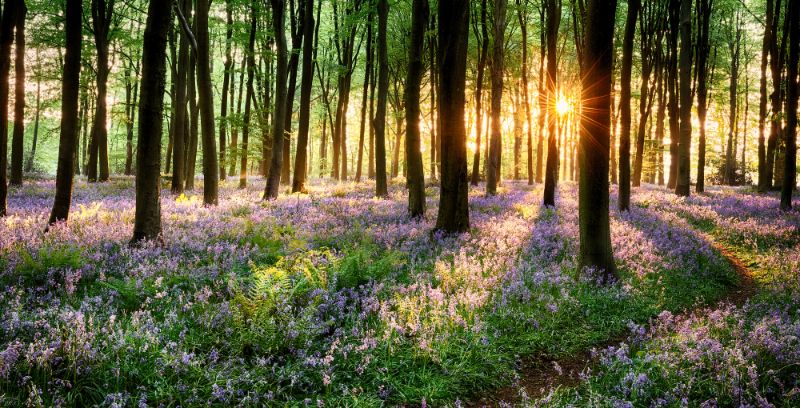
Spring, what a season to go walking? We had mapped out a 5 mile route from Tarr Steps via Watery Lane, which takes you through the Bluebell woods (Tarr Steps Woodlands).
With spring still a-lingering into late May, I was thrilled to discover there were Bluebells everywhere you looked and didn’t look.
The Barle River flows through thick woodland, oak, beech, ash, sycamore, hazel and blackberry. Leaves were bursting into every colour green you can imagine.
This walk is a happy medium between the circular walk and the Dulverston walk mentioned earlier. It’s challenging enough that you feel like you’ve had a good walk in, but not so strenuous that you will be exhausted after.
Best time to visit Exmoor National Park
Exmoor is set deep in England’s green and pleasant West Country, and there is no best time to visit as each season brings a certain charm to the park.
Early summer is a beautiful time to walk here when the fields are green and the trees are bursting with new buds, and you’re less likely to get caught in the rain.
However, this is England, and the weather is known to be interchangeable all year round. Spring is a perfect time to visit as the ground is awash in blues and purples, when the woods are full of blooming bluebells.
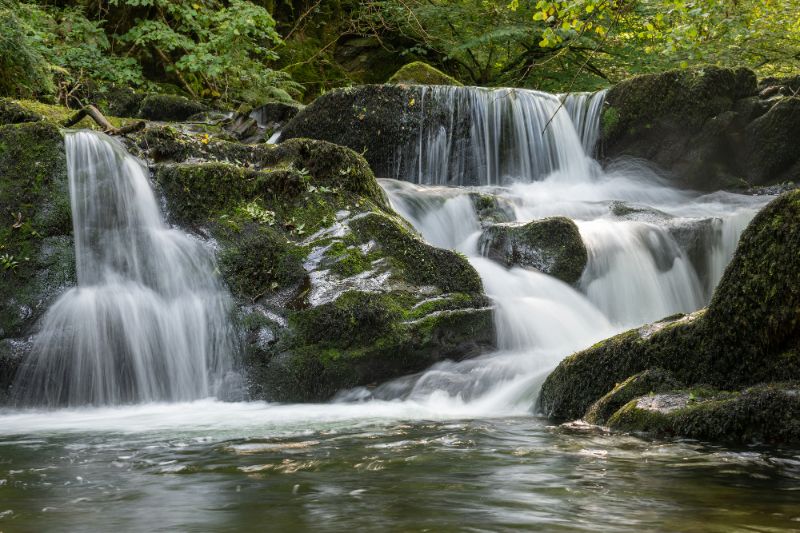
Don’t dismiss Autumn either, when the deciduous trees are turning gorgeous shades of red, gold and burnt sienna.
Even deepest winter, on a dry, crisp day with watery sun shining and a white frost on the ground. This time of year feels so magical, you could imagine fairies at play in the hedgerows.
Getting to Tarr Steps in Exmoor
Tarr Steps is about 3.5 hours from London by car. You will need to drive down the M4, connect to the M5, and turn off onto the A361 at Taunton, which takes you to the entrance of Exmoor National Park. Within the national park, Tarr Steps is located off the B3223 between Withypool and Dulverton.
Trains run from London Paddington to Taunton, Tiverton and Exeter, from where you could hire a car and drive the rest of the way.
It’s not possible to reach Tarr Steps using public transport, as there are no public bus routes to the steps inside Exmoor National Park. You would need to car to drive there, or if you cannot drive, look for a tour.
You can visit Exmoor on an Exmoor Safari tour, check them out here.
Where to Stay Near Tarr Steps: The Old Tarr Farm Inn
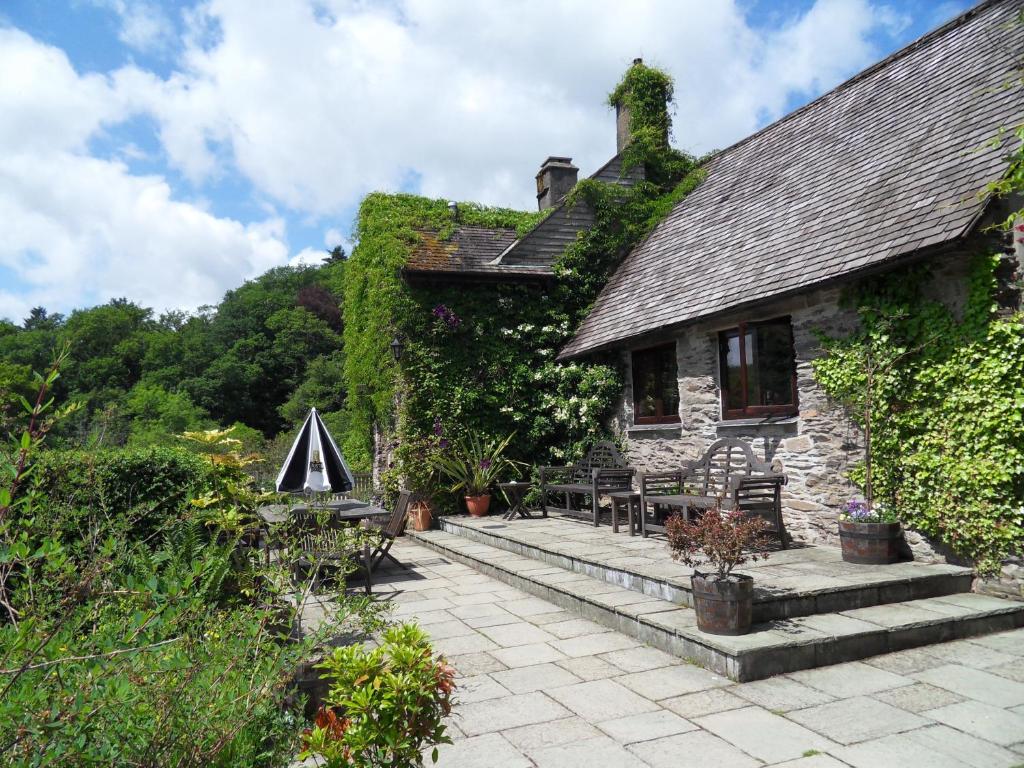
Above Tarr Steps is the ancient Tarr Farm, which has been there since Elizabethan times.
It’s a tranquil spot. The nearest roundabout and traffic lights are about half an hour away, so don’t expect a mobile phone signal.
Tarr Farm Inn itself is oldy worldy and has delightful rooms that have been refurbished with modern amenities, but still keeping their historic charm.
The inn also has a restaurant, which is open from 11am to 11pm, plus there is a beautiful garden which is perfect for sitting out on during a hot summer’s day.
Final Thoughts
Exmoor has a calming effect on you. It’s unspoiled nature, thriving wildlife, and ancient landmarks, feel almost fairytale like, as though you’ve stepped out of the UK and into a Beatrix Potter novel.
I loved the mosses, liverworts, and lichens that we saw in the cool damp understory of Tarr Steps, and I especially love the quiet and remote feel of the place, far removed from the madding crowds.
Other Things to do on Exmoor National Park
- Walk – there are over 120 marked trails in Exmoor National Park. Click here to see trail maps and get hiking!
- Horse riding
- Fly and Sea Fishing
- Clay Pigeon and Game Shooting
- Off road safaris and wildlife watching
- Sailing, windsurfing at nearby Wimbleball Lake
- Abseiling and rock climbing at The Valley of the Rocks
More UK Travel Tips
- Best Places to Hike in the UK
- Hot Destinations in Great Britain to travel to right now
- A family road trip in South West England
- What to do in Bath in two days.
- Top things to see and do in Oxford
- Best things to do in London
- Essential things to know before traveling to London
Pin to Save on Pinterest
Comment: Have you explored Exmoor National Park? Do you have any other great hikes or walks to recommend?
The Public Footpaths linking villages (and their pubs!) across Britain really are magic – Its the one thing I wish Australia had more of – Public rights of way to be able to get out bush and enjoy more of the landscape.
In Australia, one of my favourite walking spots is Lamington National Park, a few hours south of Brisbane on the border with NSW – The rainforest walks up along palm frond cascading creeks there, is superb.
All very well re-building those Tarr Steps with a crane and digger – but wow – imagine leveraging all those rocks into place by hand when it was originally built!
Hi Linda, yes the footpaths and rights of way across private acreage linking some of the prettiest parts of the English countryside are well worth replicating – although I think it’s the little pubs dotted along the way that really ‘do’ it for me 😉 I agree with you about the Lamington National Park. We once stayed at Binna Burra for a few days – and the walks around there were just gorgeous. I guess my favourite walk of the moment has to be the Cape To Cape trail in Western Australia – because it’s on our weekend doorstep.
Sounds so good! An ideal getaway for nature lovers. 🙂 I just came back from Dandeli where I enjoyed nature walks in the forests! It was so refreshing! England is a great country with many hidden gems.
Hi Renuka, Dendeli and nature walks sounds wonderful … going to pop over and have a look right now 🙂
Any time I read your posts I just wanna get on a plane and go wherever you’re describing! This looks like a beautiful place to visit! Thankyou for sharing this with us.
Thanks Catherine! I’m so glad that I inspire you sometimes to get on a plane and GO! I’ve just hear from my family though that Exmoor is currently under water as they’ve had so much rain in Devon over the last couple of weeks. So maybe wait until Spring to visit 😉 😉 (when the daffodils will be out)
We still have not spent a lot of time in the English countryside but after our last visit, we’re tempted to do so. Walking through fields of bluebells, beautiful woods and over stone bridges sounds idyllic!
If the weather is on your side Jenny, I still think that England’s countryside offers some of the prettiest natural vistas in the world. Hope you manage to get over again soon.
I have only visited England once – in 2005. When we went down to Cornwall I wanted to walk on the moors – but alas it wasn’t to be – our tour bus didn’t allow time for such things. Next time! I love dipping into your travel posts Jo – but they make me add yet another destination onto my list.
My favourite walks? Well anywhere in the South West of Western Australia is beautiful particularly in spring and walks to the gorgeous gorges on the Gibb River Road in the Kimberley.
Thanks for that Jill 🙂 I guess tours in England are focused on seeing the old, the quaint and the unusual, and a walking tour would be something separate. Hope you get back to do some walks in the Devon or Cornwall area one day. Ah yes, SWA just beautiful, and I agree with you about some of the gorge walks in The Kimberley too.
We lived in England for nearly five years and loved walking in the countryside. It really is spectacular, even if the weather is miserable!
Hi Carmen, I agree walking in England is a bit of a mindset – you have to get out whatever the weather and enjoy the green (that’s created by rain!). There are some really underrated walks and hikes, I think, and a cap and sunnies or wellies and a raincoat need always to be in the day pack!
Walking in Exmoor sounds great, Jo. I visited England this year but didn’t manage any walks – next time! My favourite walks include the alpine walks in northern Italy’s South Tirol region and, closer to home, Mt Buffalo National Park. Thanks for sharing your tips.
Sounds like a lovely walk and the flowers are magnificent. I’m very tuned into bird calls when I travel as new sounds always make a place feel somewhat exotic to me. I have done a few multi day hikes in England – the West Highland Way and the Cumbrian Way and both were beautiful.
I love the English countryside although I have spent a lifetime escaping from it it’s always a pleasure to revisit 🙂
This looks incredible, how many days do you recommend planning for a first time visit?
Stunning photography! I’m looking for ideas for places to go on my weekends, this is perfect! It isn’t very often that there are any travel blog posts about things that are a little more out of the way… Great to see!
So glad to have read this post, thanks Jo. We are heading back down to Cornwall where my mother in law lives on Bodmin Moor, and I planned to head via Exmoor. Shall visit here for sure. We lived near the New Forest for 5 years and had a tea shop walks book, so would pick a walk in Hampshire and stop at a tea shop or pub en-route. I loved the public access to paths too, used to give each walk a rating out of 10.