

This post may contain affiliate links. We may receive a small commission, if you make a purchase. Read Disclosure.
My first evening in Marrakech nearly ended with an early night. I was jet-lagged and running on very little sleep after a long flight, and the bed in my riad looked very convincing. I went anyway, and at 9:45 that night I was walking home through the dark, closed-up souks with a little pep in my step, thanking life out loud for the push.
The reason was a Marrakech street food tour I’d found on Airbnb Experiences, run by a former chef named Mustapha. It turned out to be one of my favorite things I did in Marrakech, and it introduced me to the food Moroccans eat on the street and at home, well beyond the tagine most of us arrive knowing (I still love a tagine, and I ate one almost every day of my 10-day Morocco trip).
Is the Marrakech night street food tour with Chef Mustapha worth it? Yes. As of October 2026, Nighttime Marrakech street food with a local chef on Airbnb Experiences costs from $41 per person for about three and a half hours, meets at Café de France on Jemaa el-Fna, and serves enough food for a full dinner. It’s rated 4.97 from more than 1,300 reviews.
Marrakech street food tour at a glance
- Tour: Nighttime Marrakech street food with a local chef on Airbnb Experiences
- Host: Chef Mustapha, often with a second guide (mine was Omar)
- Price: from $41 per person, which is what I paid
- Length: about 3.5 hours
- Meeting point: in front of Café de France, Jemaa el-Fna
- Group size: about seven of us on my night
- Food: seven tasting stops, a full meal and then some
- Dietary needs: message the host when you book (more on eating gluten-free below)
- Languages: English, French and Arabic
- Cancellation: full refund up to a day before
Why I booked a night food tour in Marrakech
I’ve been enjoying Airbnb Experiences lately for the small, personal tours run by locals, and this one stood out because it ran in the evening. I wanted to see Marrakech at night, and as a newcomer I wasn’t sure how comfortable I’d feel wandering around on my own after dark. A guided food tour solved both. (I booked it very late, because I wanted to be sure my flight landed on time before I committed.)
The other draw was that Mustapha is a trained chef. A chef leading a food tour told me he’d understand flavor and know where the good food is, and that turned out to be exactly right. He was joined by his friend Omar, a certified guide who also has a background as a chef, and the two of them were a dynamic duo all night.
Who was on our Marrakech food tour
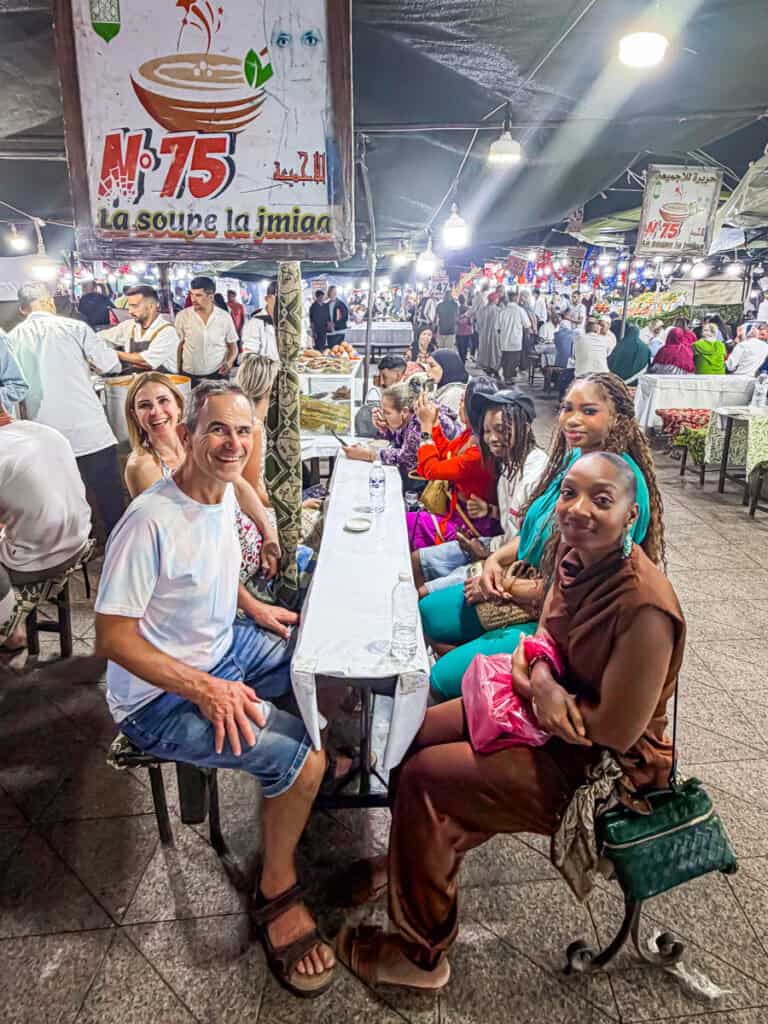
There were about seven of us, and what a mix. A Brazilian couple living in Portugal, a group of friends from St. Martin in the Caribbean, a Filipino traveler and me, the Australian American, and as so often happens with travelers, none of us lived in the country we were born in.
The group was easygoing and high-spirited, with a lot of laughter. Because the servings were big, some of the stops felt like a group of friends sitting around a dinner table together, and they ran long because Mustapha had so much to share about Moroccan culture, religion and daily life.
What we ate on the Marrakech street food tour
Berber omelet near Jemaa el-Fna
We met outside Café de France, which seems to be the meeting point for half the tours in Marrakech, right on the edge of Jemaa el-Fna. Mustapha walked us a short way to a hole-in-the-wall soup kitchen with plastic tables and chairs outside, and I knew straight away we’d be eating where locals eat.
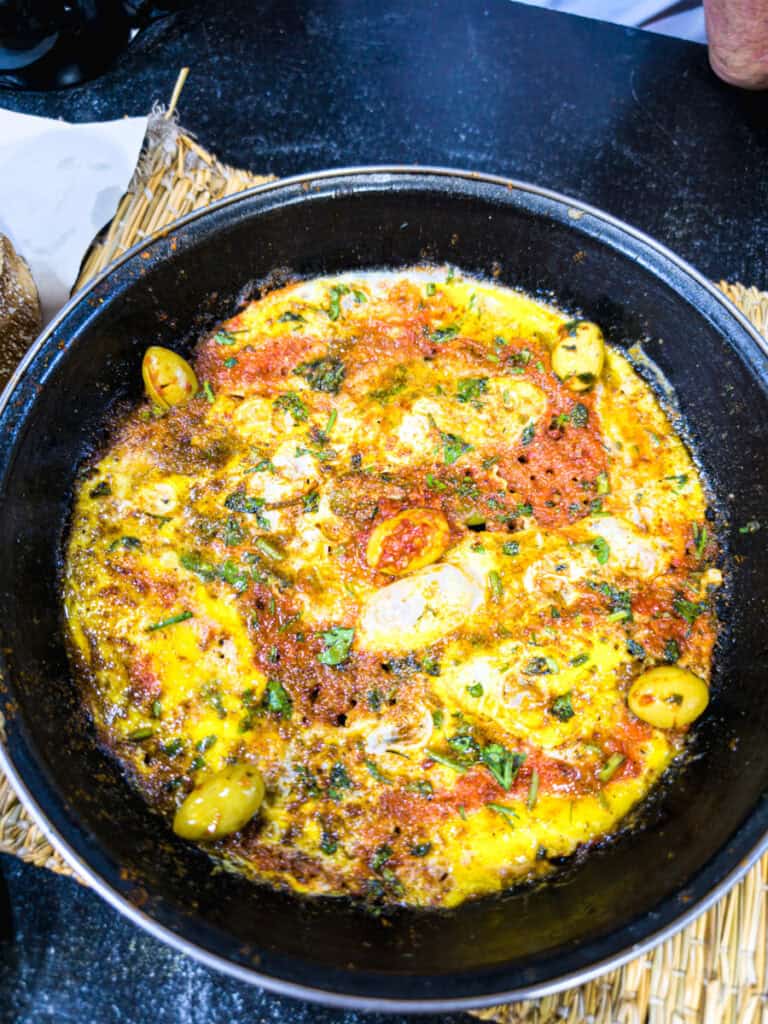
While we waited, Mustapha explained that many Moroccans have two breakfasts. The first is something small after early morning prayer. The second might be sweet pastries, or the dish we were about to try, a Berber omelet.
It’s a little like Morocco’s version of shakshuka. The egg is cooked through like an omelet, with tomatoes, olives and plenty of spices, and then you pour a delicious harissa sauce over the top. I had mine with rice because I’m gluten-free, and the others scooped theirs up with fresh-baked bread that they couldn’t stop talking about.
I’ll admit that for a moment at this first stop I wondered if we were on a touristy tour, because a couple of other food tours were doing the rounds there too. After that stop we didn’t see one other food tour all night.
Fried sardine burger
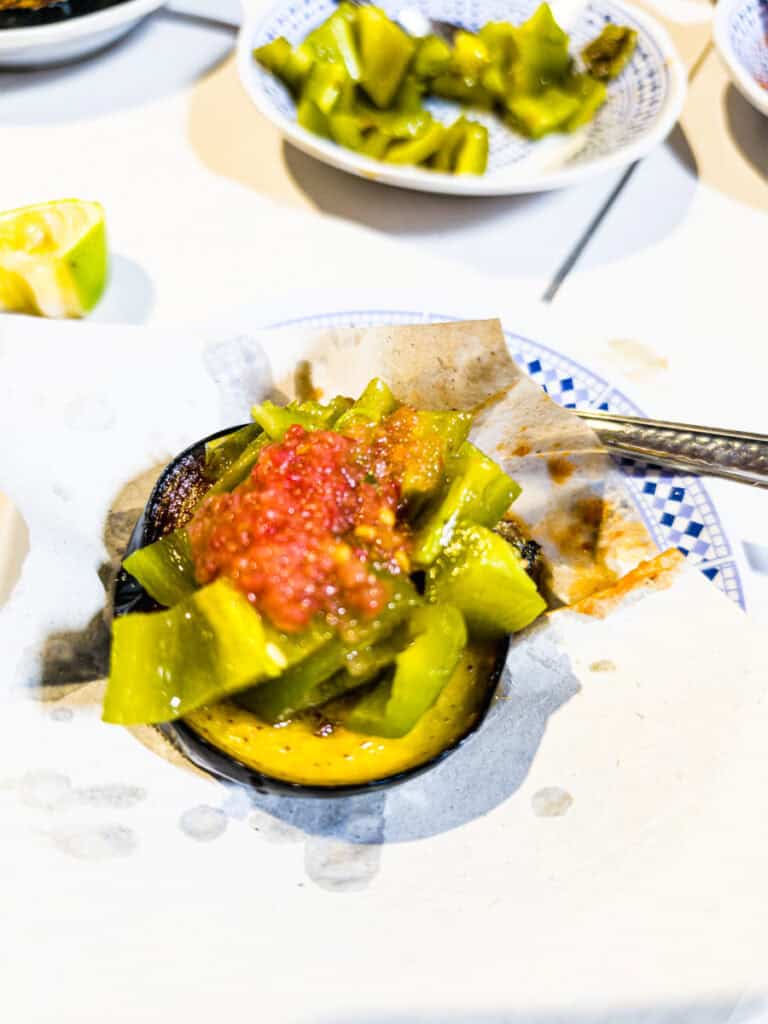
From there we walked along the edge of the square, past a mint market that smelled beautiful, and down another alleyway to a second hole-in-the-wall spot. We gathered around tables outside for a sardine burger, and oh my gosh, it was so flavorful.
The sardines are butterflied, coated in flour and deep-fried (mine were done without the flour), then two are pressed together and layered with tomato sauce, eggplant, peppers, harissa and more tomato. Normally it comes in a bun, but Mustapha has learned from running these tours that the bread fills guests up too early, so he dropped it. Smart move, because this is the most food I’ve eaten on a food tour, and by the last stop everyone was struggling to fit in a juice.
Herbs at the Marrakech mint market with Omar
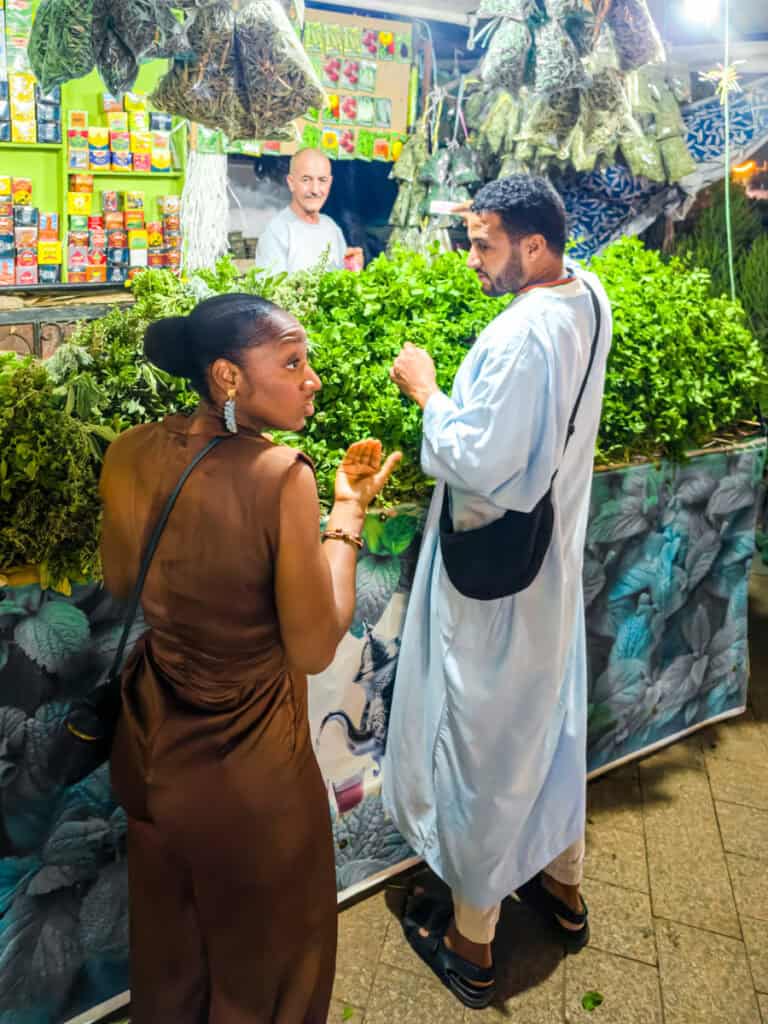
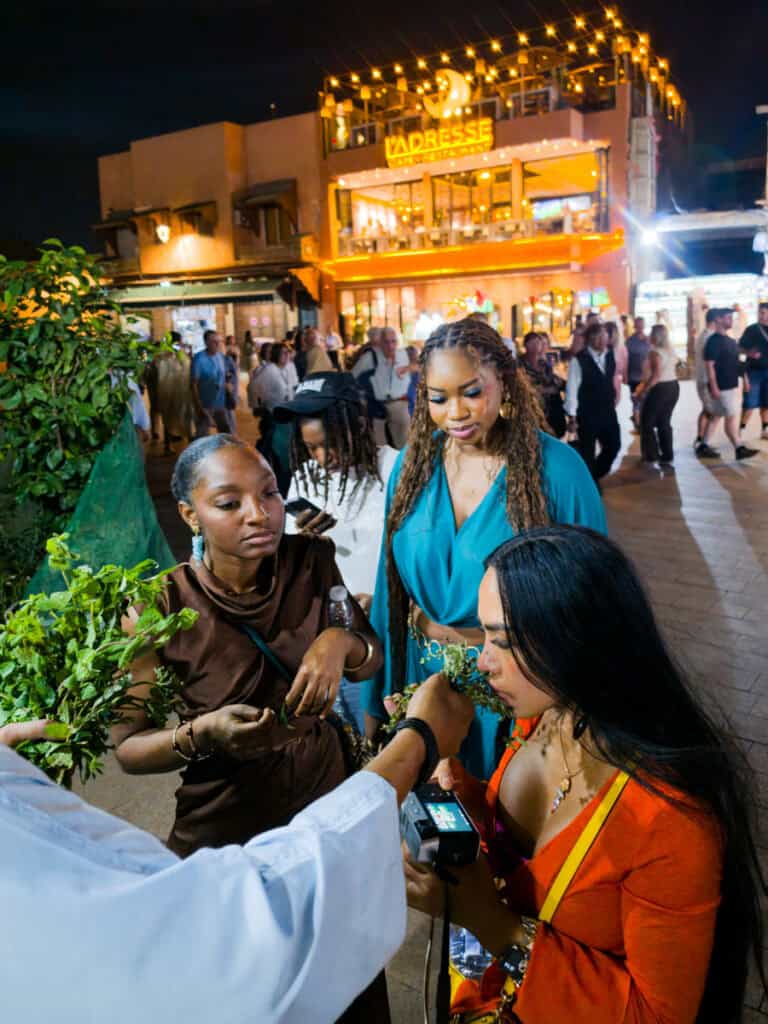
Omar walked us back to the mint market, bought a bunch of different herbs and handed them around so we could smell each one while he explained what they’re used for.
Lemon verbena is the one for calming down and sleeping well, and Omar’s tip was to never boil the leaves. You let them sit in hot water, which goes for most herbs, otherwise they turn bitter. We also smelled sage, a local herb that’s a bit like oregano, and about three different kinds of mint.
You can’t come to Morocco and not drink mint tea, and it’s usually made with green tea. I don’t like green tea, so the traditional version is a little strong and bitter for me, and I’m much happier with mint on its own as a herbal tea. Omar carried that bunch of mint with us for a later stop.
Harira and dates at the Jemaa el-Fna food stalls
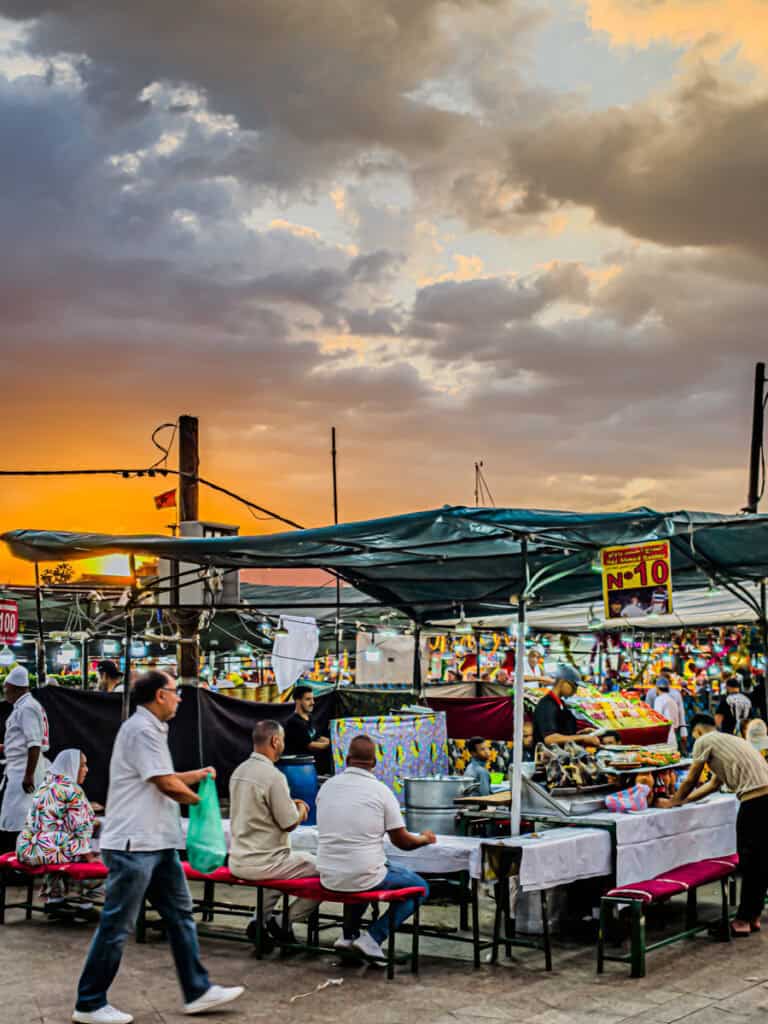
Next we walked through the food stalls that set up in the middle of Jemaa el-Fna every night, and I fell in love immediately. They reminded me so much of the night markets in Asia, where everything comes alive after dark and everyone comes out to gather and eat.
It’s stall after stall, with hawkers shouting, clapping and singing to pull you in. Some sell seafood, some soups, some desserts, and some have meat grilling over open flames.
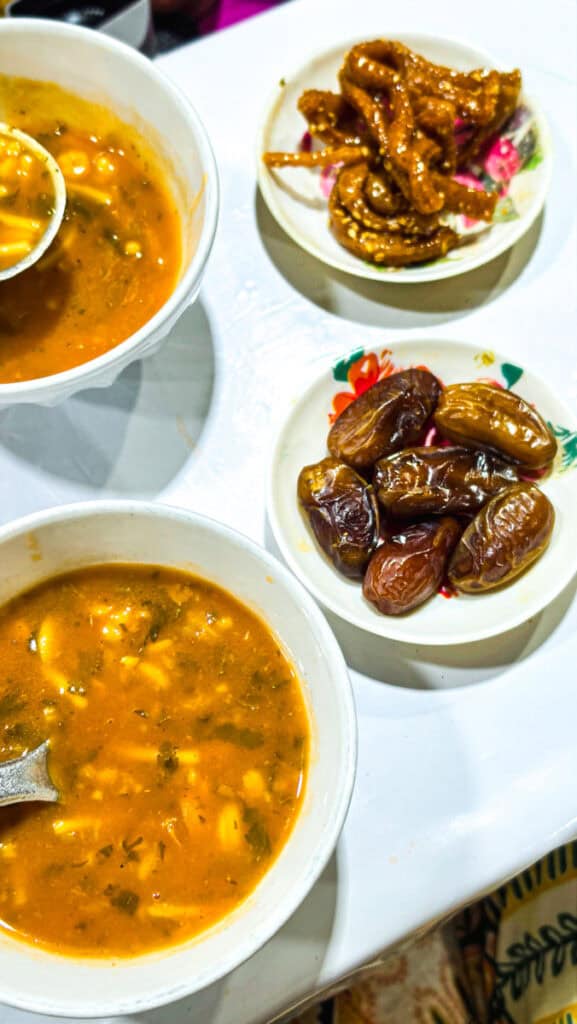
We stopped at a stall selling Morocco’s famous tomato-based soup, harira. It’s thickened with flour, so I sat this one out. Moroccans love harira for breaking the fast, especially during Ramadan, and the custom is to take a spoonful of soup and then a bite of a date or a sweet pastry so the sweet and savory mix in your mouth. I got the dates (which I love), and the others told me the soup and date combination was delicious.
Sfenj and mint tea in the Mellah
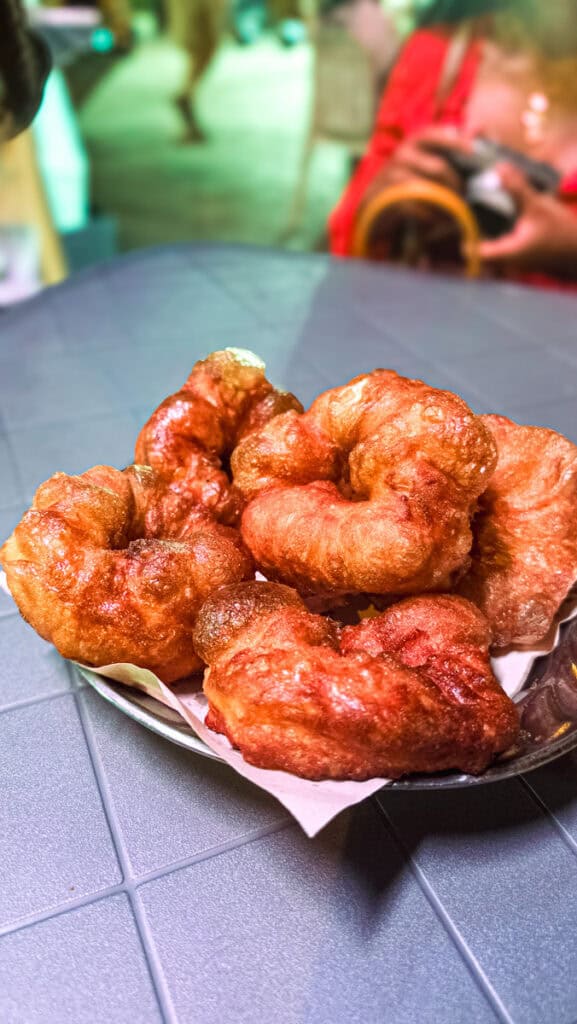
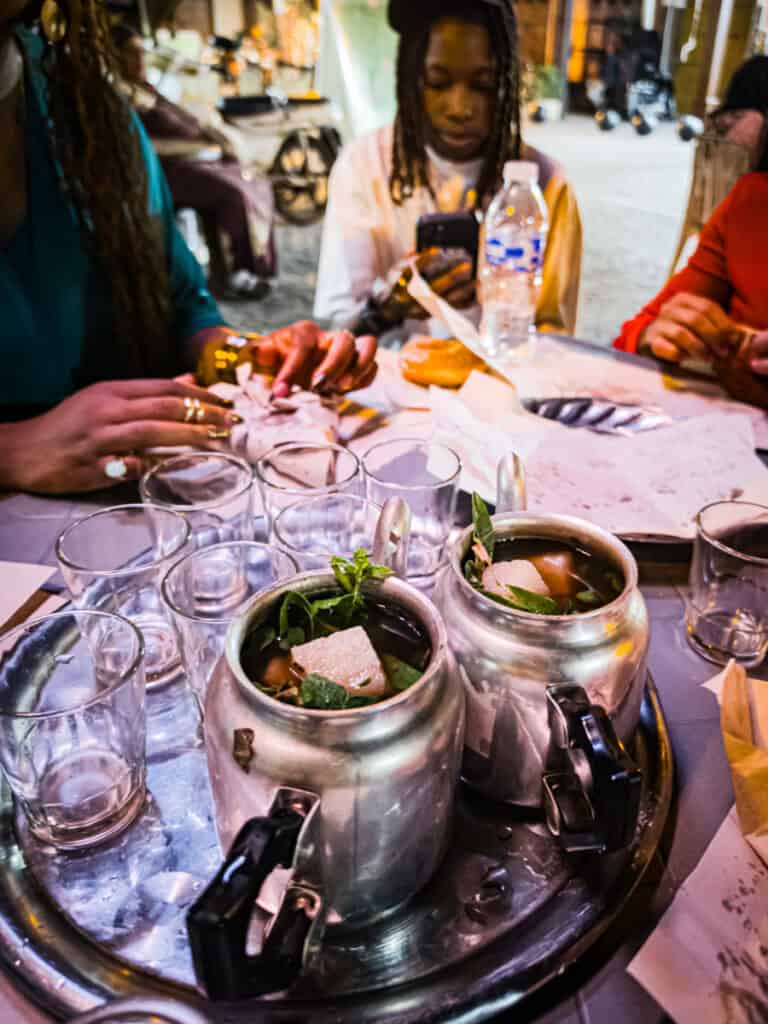
Our next stop took us just outside the square into the Mellah, the historic Jewish quarter of Marrakech, and it was great to see a different side of the city. Here we had sfenj, Moroccan fried doughnuts, and Mustapha told us the story that they’re the original doughnut, created when someone accidentally dropped dough into hot oil. They were big, puffy and fluffy.
I couldn’t eat these either. Sometimes being gluten-free works in my favor (that’s a lot of calories I didn’t eat, is what I tell myself).
Omar made the mint tea to go with them, dropping in big chunks of sugar to balance the bitterness of the green tea, stuffing in the mint from the market, then pouring it from up high into the glass and back into the pot several times to mix the sugar through. Mustapha explained that doughnuts and mint tea are something Moroccans often share with their Jewish neighbors. I had a little sip, and the rest of the group loved it with the sfenj.
Tanjia, my favorite dish of the night
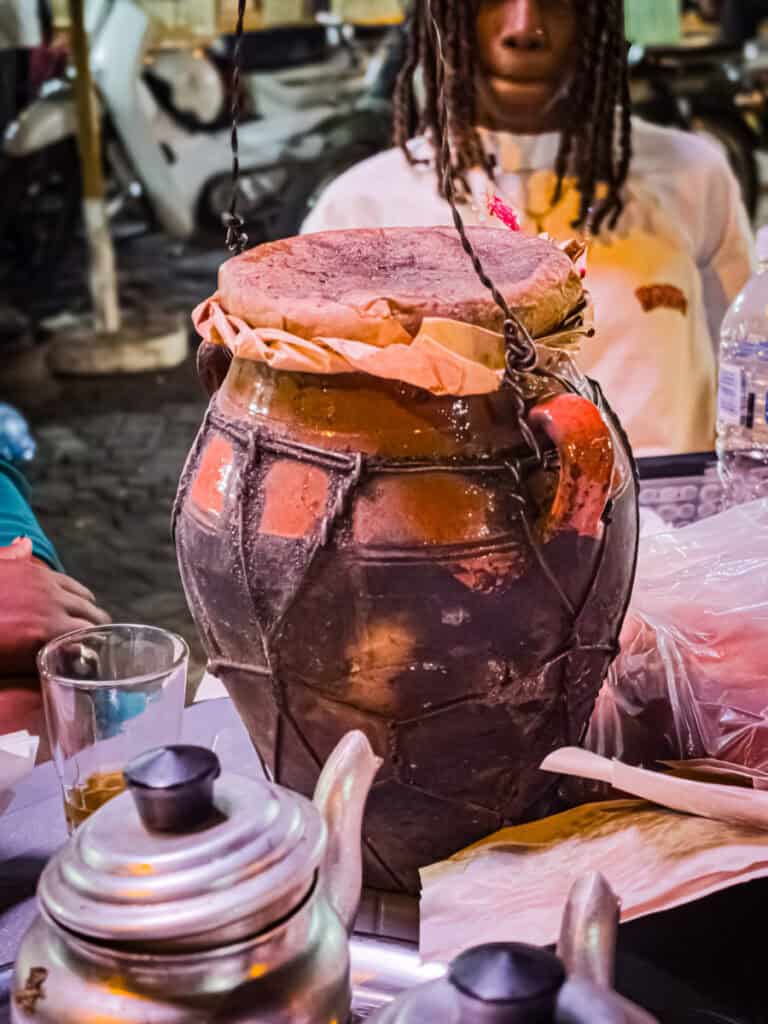
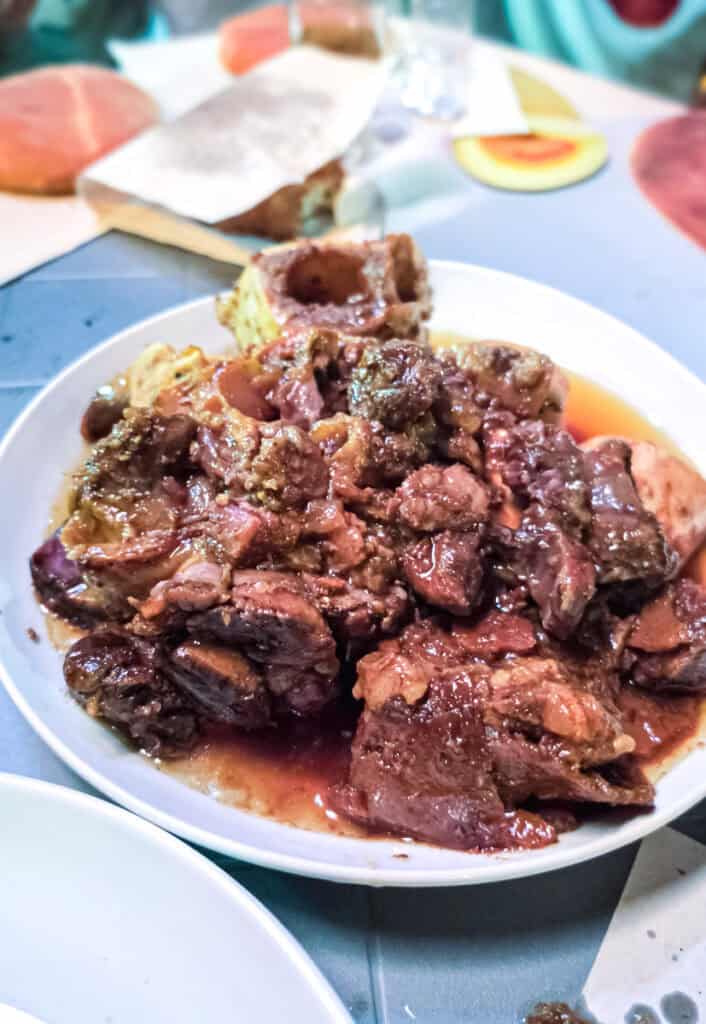
My favorite dish of the night came next, and it was a surprise. Chef Mustapha had cooked us tanjia, the Marrakech specialty of beef slow-cooked for hours in a sealed clay urn. He explained that it’s traditionally cooked in the embers of the furnace that heats the neighborhood hammam, which I’d never heard of before. (Smithsonian has a great piece on how tanjia is cooked in Marrakech’s bathhouses if you want to go deeper.)
It’s cooked with plenty of good fat like ghee, so it’s rich and filling, and it was salty, spicy and delicious. Bread came back out for this one, so the others ate it with bread and I had rice.
We ate Moroccan style, which means hands in and getting a little messy. Mustapha brings plenty of wipes, but my advice is don’t be shy. I’ve eaten this way many times in Muslim countries and I always enjoy it.
This stop gave me pause. I was chatting with the Brazilian participant, who lives in Portugal, and he said Portugal and Italy share this same slow, gather-around-the-table way of eating, where so much time goes into preparing food. America is fast and furious, and I said Australia is probably closer to America than to Portugal.
It made me think about how much of a grab-and-go person I am, and that’s the fast-paced culture I live in. I don’t have time to cook for four hours a day, and my food tastes like it. I felt a bit sad that I didn’t grow up with food as the delight of the day, with the trip to the market and the hours of cooking for a meal that’s gone in half an hour. It’s good motivation to eat slower, which is better for my body anyway. Now I just want to find more time to cook like this (or a personal chef).
Chicken, white beans and preserved lemon in the Kasbah
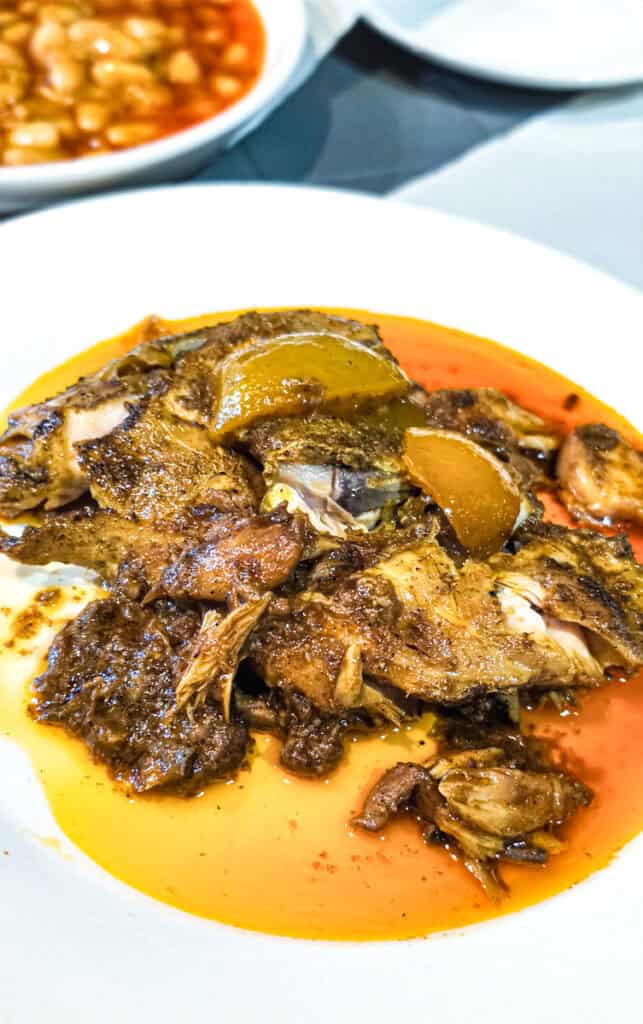
Our bellies were very full by now, and we still had two stops to go. Next was the Kasbah, the old walled quarter of Marrakech (and yes, I had a certain song in my head the whole walk). We sat on plastic chairs outside another small soup-kitchen-style spot for a spicy, flavorful chicken dish with white beans. I love beans, so this was a favorite.
All night Mustapha kept asking me, “Did you get a piece of lemon? Eat the lemon!” The preserved lemons in these dishes were delicious and worked with everything. I’m now hunting for lemon in every dish, and the next day I ordered a chicken tagine with preserved lemon and olives for lunch because I couldn’t get enough of those flavors.
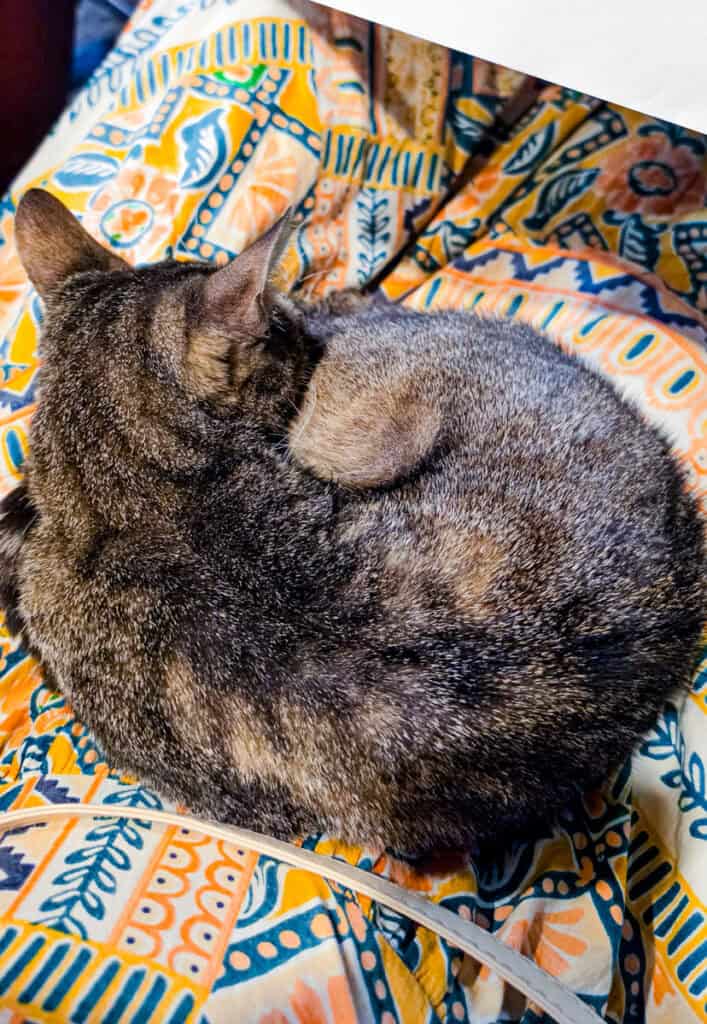
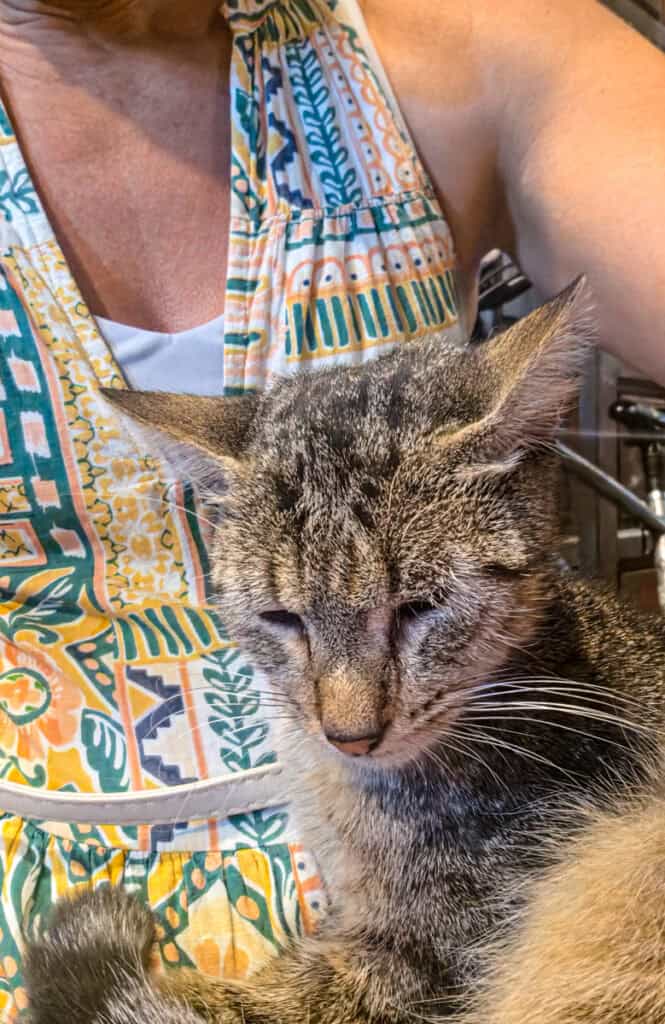
I also loved this stop because a little kitten sat calmly under our table. I said, “Come jump in my lap,” and she turned and jumped straight up into my lap. I couldn’t believe it. She curled up and wouldn’t budge, even when it was time to go, so Mustapha tossed a little chicken on the ground to coax her off.
Marrakech is a cat city. They’re everywhere, and they seem to know I’m their people. The next day at lunch, the smallest kitten I’ve ever seen jumped into my lap too, while the staff and other diners fussed about it roaming around.
Fresh juice and pastries to finish
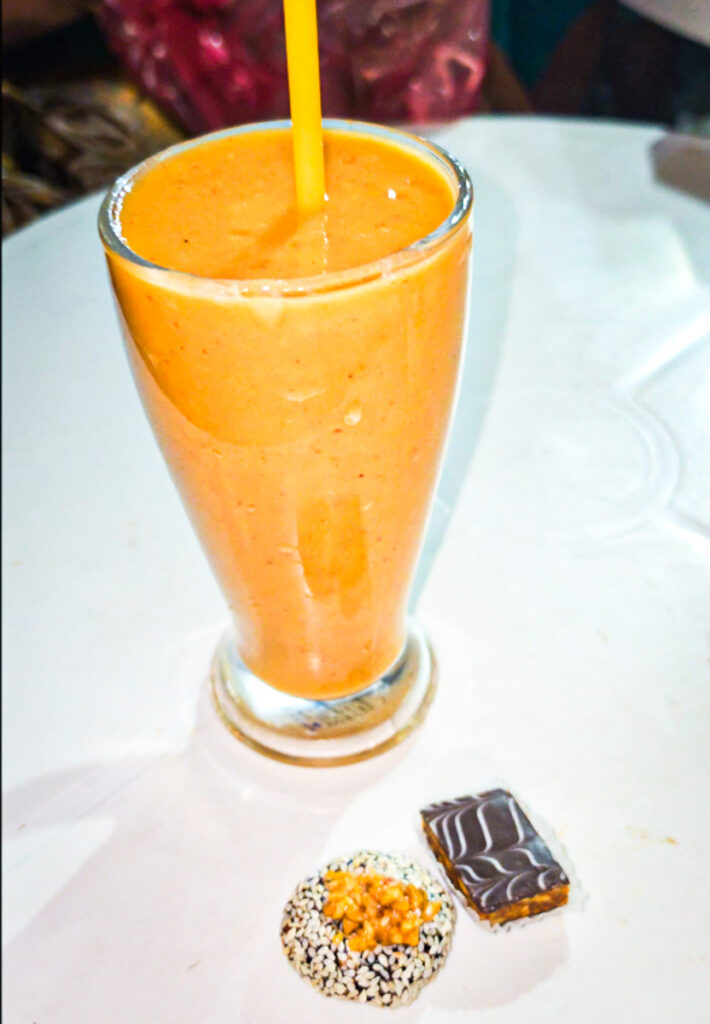
We walked back through the alleyways, past plenty more cats, and finished with a fresh mixed juice of mango and papaya. One sip took me right back to living in Thailand, when I had a mixed juice every day. It was so fresh, with no sugar needed.
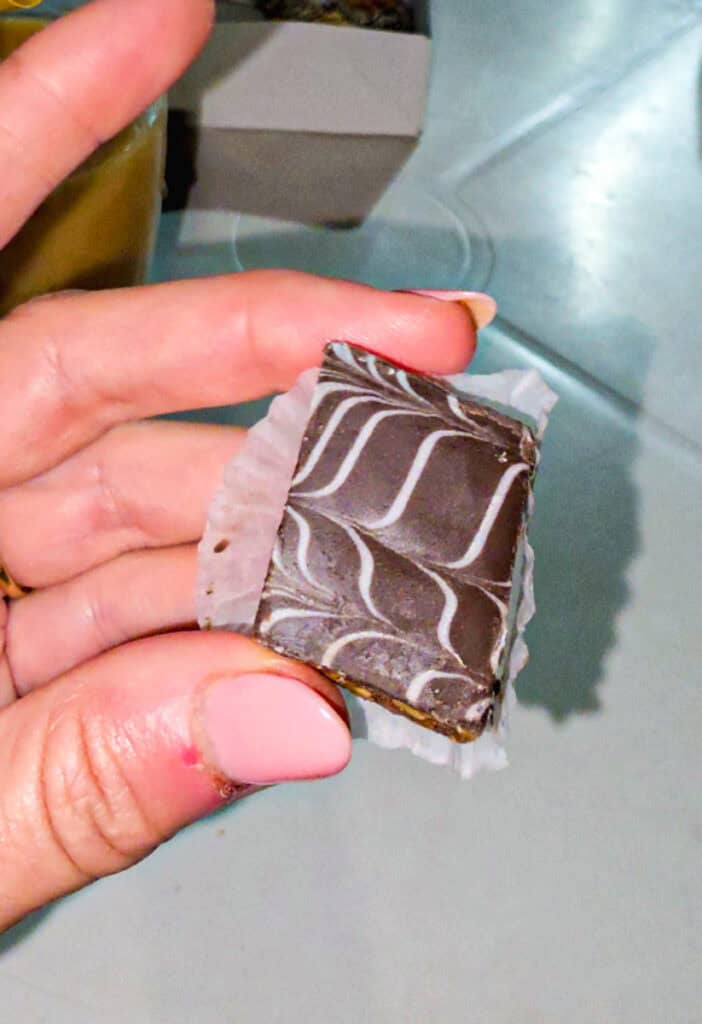
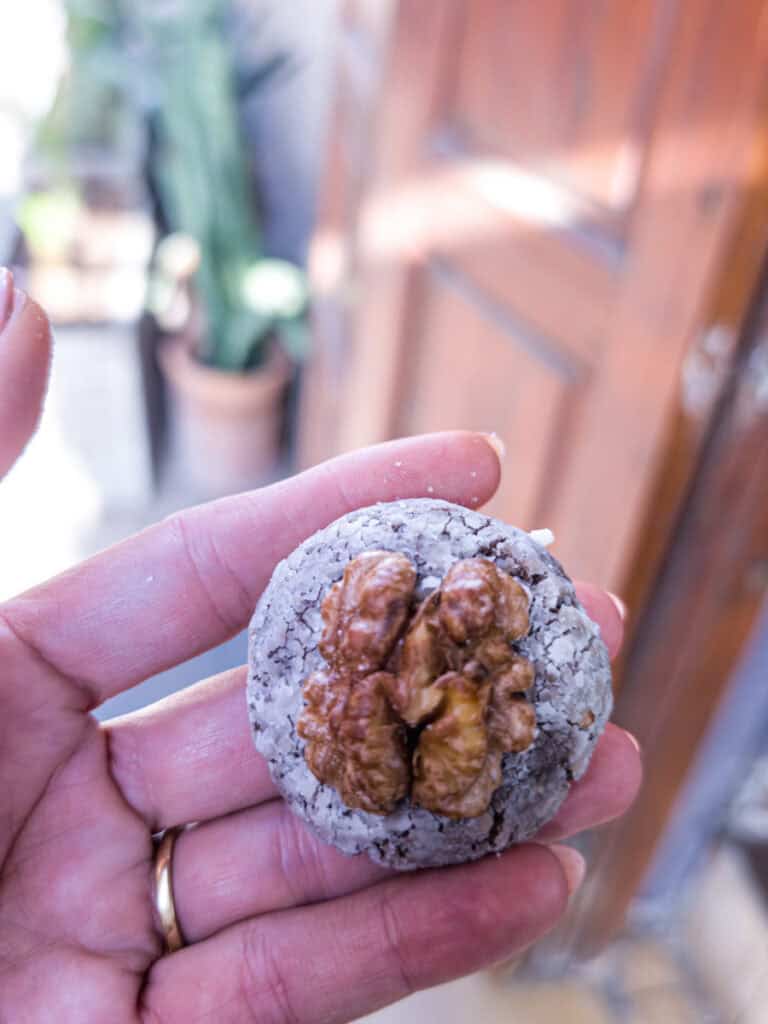
Then Mustapha surprised us with a box of little pastries. (I suspect he felt bad that I’d missed the doughnuts.) One was made with dates, orange blossom and walnuts (Walnut Ghriba), and I liked it so much I went back to a bakery for another the next day. I was so full by the end, I’m sure my belly had grown a size.
Eating gluten-free on a Marrakech food tour
Mustapha went out of his way for me. Out of seven food stops, there were only two dishes I couldn’t eat, and everything else came with an adaptation, like rice in place of bread or my sardines done without flour. He told me that with more notice he could have made alternatives for those two as well.
If you’re gluten-free or have another dietary need, message Mustapha through Airbnb as soon as you book. I booked late, which gave him very little time, and he still did a wonderful job.
Conversations about Moroccan culture over dinner
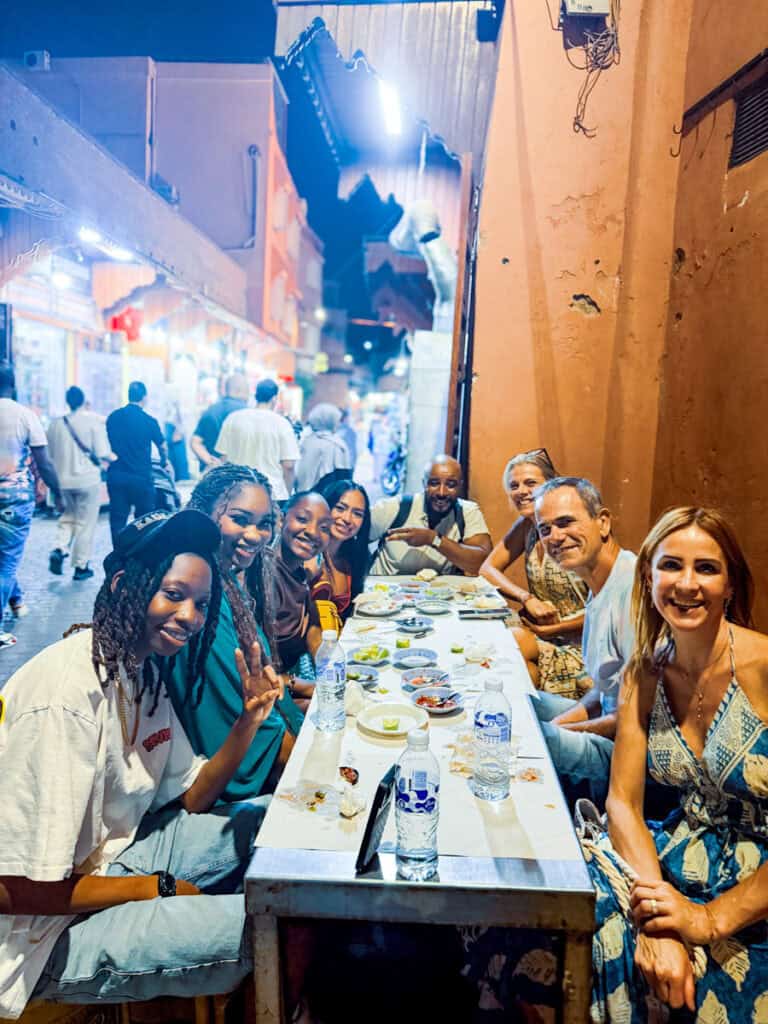
Some of my favorite moments were the conversations. Mustapha shared a lot about how the Quran guides daily life in Morocco, from what people eat and drink to how they marry and the choices they make, and he was clear that the legal consequences for things like drinking alcohol or sex before marriage are real here, including prison time. He explained that alcohol isn’t part of life for Moroccan Muslims, while tourists can drink in licensed hotels, bars and restaurants.
I love these open conversations, because they help me understand cultures I might otherwise judge quickly when they don’t fit with how I choose to live. I’m not living it, so it isn’t mine to judge. I can listen, be curious and try to understand, without being afraid of it.
It also made me think about my own faith and beliefs, and how rarely they guide me to make a choice like not drinking alcohol. I admire people who live by their beliefs with that much discipline. Of course, “everyone” is never everyone. Years ago in Sumatra, Indonesia, we ended up in a town where alcohol was forbidden and found ourselves down an alleyway with a local, buying a bottle of whiskey on the black market (which I don’t recommend, by the way, for your sake or theirs). I was 21 and that common sense part of my brain had not developed yet!
Over our chicken and beans, I said to one of the women in the group that I loved being able to walk around Marrakech without seeing loads of drunk people spilling out of bars. It felt safe and grounded to me, and she agreed.
Is Marrakech safe at night for women traveling solo?
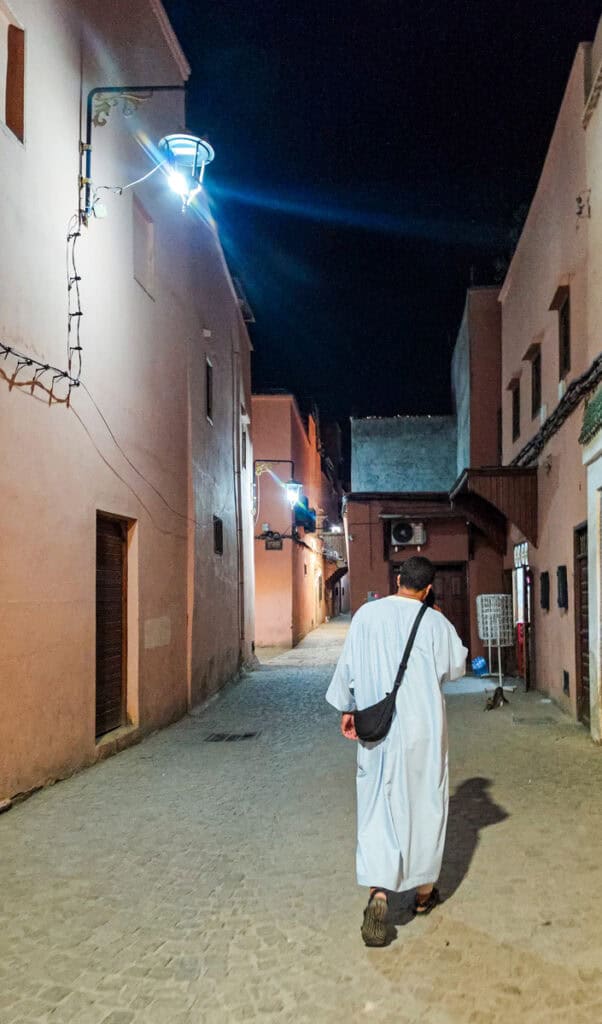
This was my biggest worry before the tour. My riad sat at the end of an alleyway that, when I first walked down it in the middle of the day, I decided Jack the Ripper would have enjoyed. The riad manager assured me it was safe to walk from the riad to Jemaa el-Fna and back late at night, but I was still a little nervous.
After the tour, I showed Mustapha my 20-minute route home on the map and asked if it was safe. He said, “Yes, I think you’ll be fine,” and warned me that parts of the souk might be closed and someone might send me another way, which is exactly what happened. The souks close around 9pm, but plenty of people were still out walking, and there were only a couple of stretches where it was just me, or me and one other person.
I questioned my sanity a couple of times, but my gut told me I was okay, and I trust my gut. When I reached my alleyway it was lit, a very friendly man was walking down it, and there were cats everywhere, so I felt surprisingly safe. After more time wandering Marrakech since, I feel very safe here. If anything, keep your guard up around other visitors who might be drinking. Do what feels comfortable for you.
Tips for the Marrakech street food tour
- Book the evening tour. Marrakech comes alive at night. I spent time in Jemaa el-Fna during the day, and it didn’t have the same energy.
- Skip lunch, or keep it small. This tour is a full dinner and then some.
- Message dietary needs when you book. The more notice Mustapha has, the more he can adapt.
- Eat with your hands. It’s part of the experience, and Mustapha brings wipes.
- Eat the lemon. Trust me on this one.
- Plan your walk home. The souks close around 9pm, so routes through them can change after dark. Ask your guide to check your route on a map.
- Shop before the tour. If you want time in the souks, go earlier in the day before they close.
Booking the Marrakech street food tour
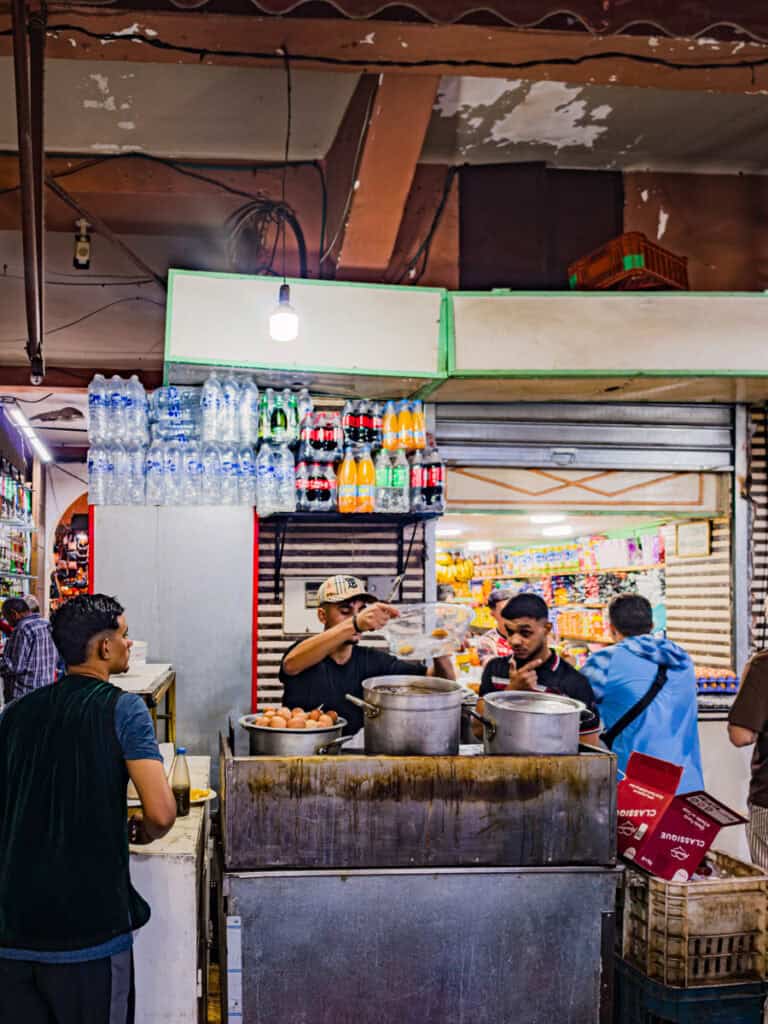
There are plenty of food tours in Marrakech, by day and by night. I’d choose Mustapha’s nighttime Marrakech street food tour, because he’s a chef who understands food, explains every dish, and takes you to local street food spots he knows better than anyone. He was open, warm, and friendly, and quite fun to be around. At $41, I thought it was great value for the depth of flavor, the variety and the sheer amount of food.
As Mustapha said, this is the real Marrakech. Because locals don’t drink, evenings are spent out in cafes and at street stalls, eating and moving from place to place, and you feel that energy all around you. When I left at 9:45, the stalls in Jemaa el-Fna were the busiest they’d been all day, and the Mustapha told me they stay that way until midnight or 1am, and later in summer.
More things to do in Marrakech
I’ll be writing more about things to do in Marrakech and Morocco soon, so think of this as a starting list from my first days in the city.
Spend an evening in Jemaa el-Fna
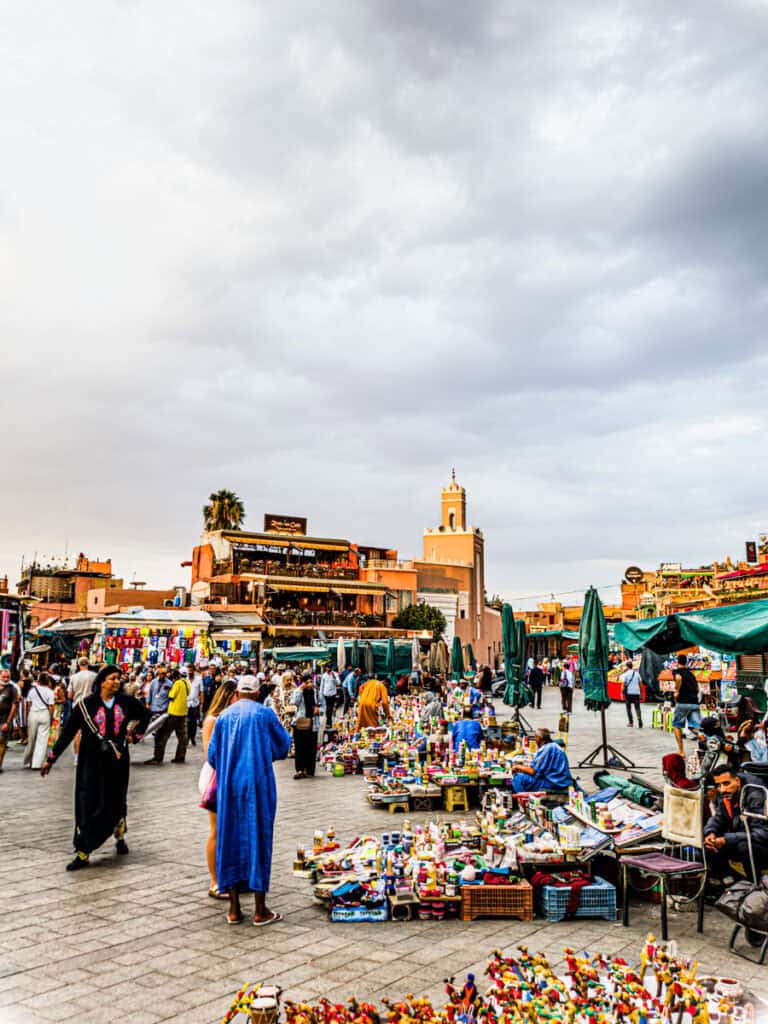
Jemaa el-Fna, the main square, is a hive of activity, ringed with market stalls, cafes and rooftop restaurants. You’ll find snake charmers, herbalists, musicians and juice sellers with fresh juice for about 20 MAD. During the day the middle of the square is a big empty space, and at night it fills with food stalls. Find a busy one, sit down and eat. Prices are much better than at the restaurants, and this is when Moroccans love to come out.
If you get lost in the souks, ask someone to point you toward the square. It’s the central point everyone moves in and out of, and once you find it, you’re not lost anymore.
Get lost in the Marrakech souks
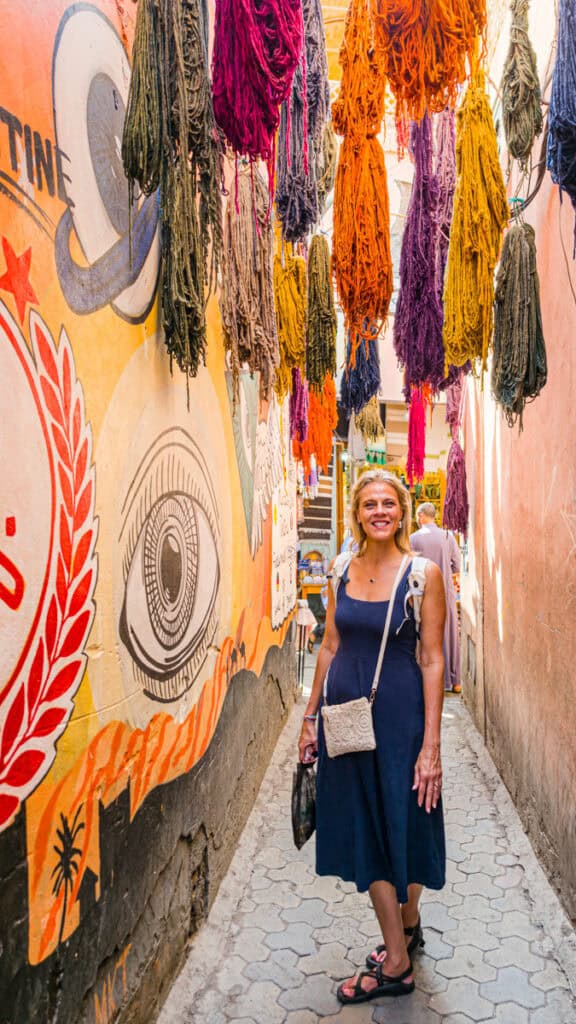
I had such a fun morning getting lost in the souks, and I stumbled into areas full of metalworkers clanging, woodworkers chopping and dyers making the colors for the silk and cotton scarves you see everywhere. A crafty salesman spotted me taking photos and gave me a tour of every step, wrapped scarves around my head in different Moroccan styles, then delivered me to a little shop of spices, herbal medicines, argan oil and face creams that are going to make me look so much younger.
I paid 450 MAD for my collection, and I know he won. He came down to just above my first offer far too quickly, so I laughed and said, “I messed that up, didn’t I? I gave you too high a first price.” He chuckled, threw in a few free gifts, and I still managed to get him a little under my first price. My tip is to start low, around two-thirds of what they ask or less, so you have room to meet in the middle at a fair price. The laughs were worth what I overpaid.
Walk around the Koutoubia Mosque gardens
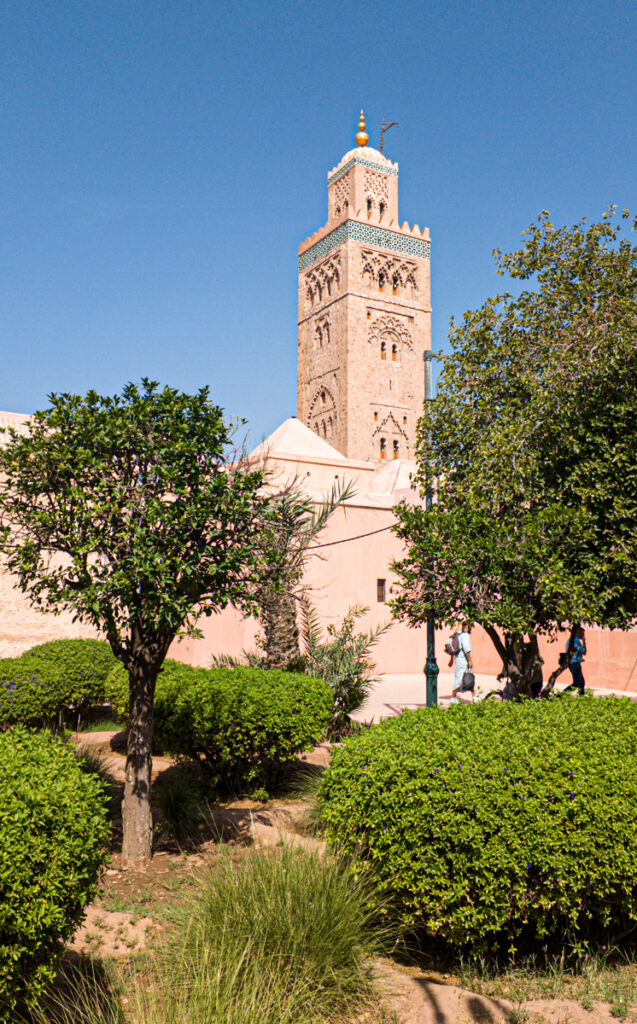
When the medina gets intense, and it does (the smells of spices and incense, the motorbikes squeezing down alleyways, the calls to prayer), I took a break walking around the mosque just outside the square. Non-Muslims can’t go inside, but the architecture is gorgeous, there are small gardens out front, and it’s a lovely spot for photos and a breather.
Grab a flat white at Kesh Coffee
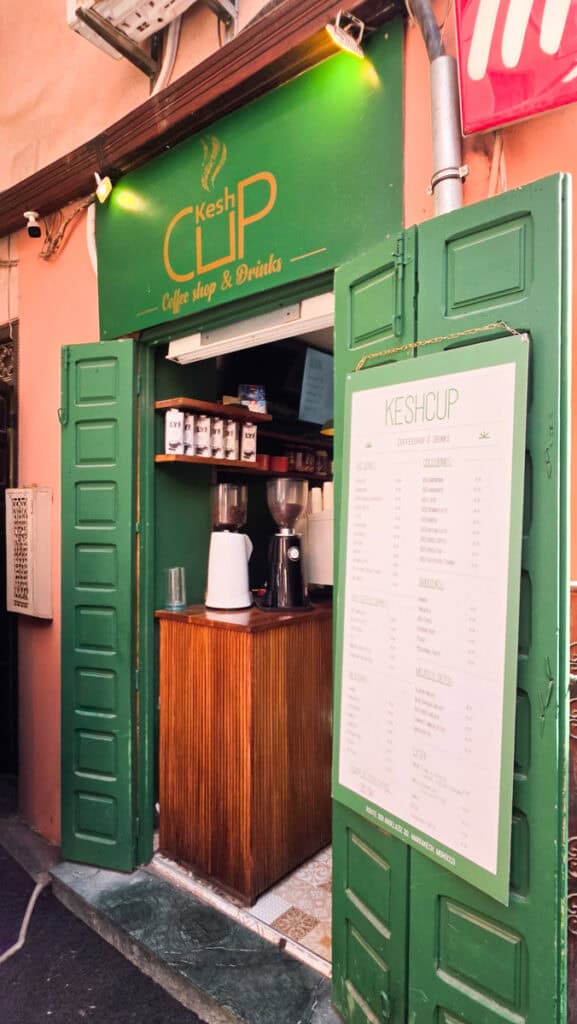
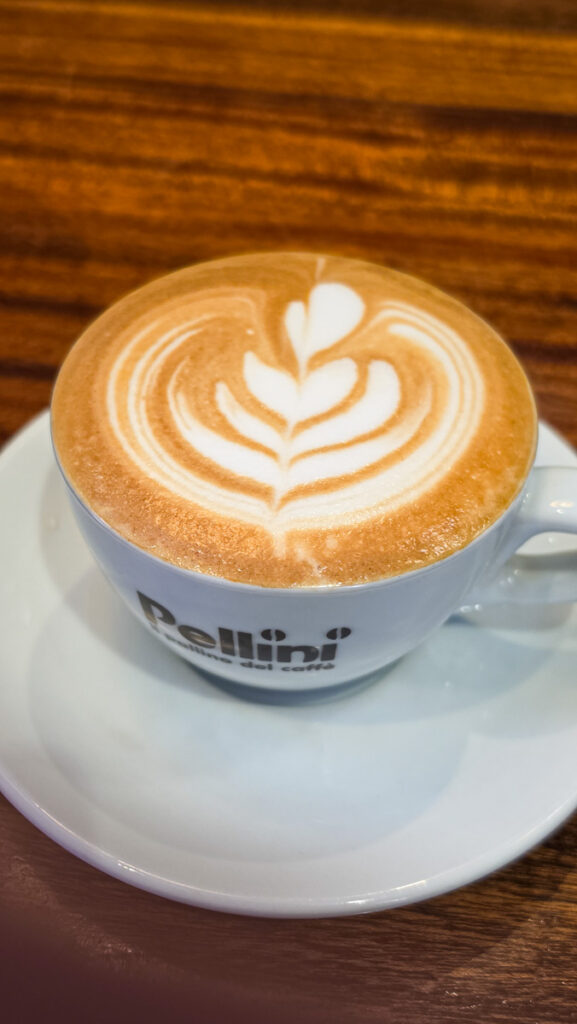
Kesh Coffee is a tiny, beautifully designed hole-in-the-wall cafe in the medina, and it made an outstanding flat white with a double shot for about €4. I squeezed onto a stool beside a man from Tunisia, who told me the barista working that day was their best and probably the best in the city.
Lunch at Daba Daba near Jemaa el-Fna
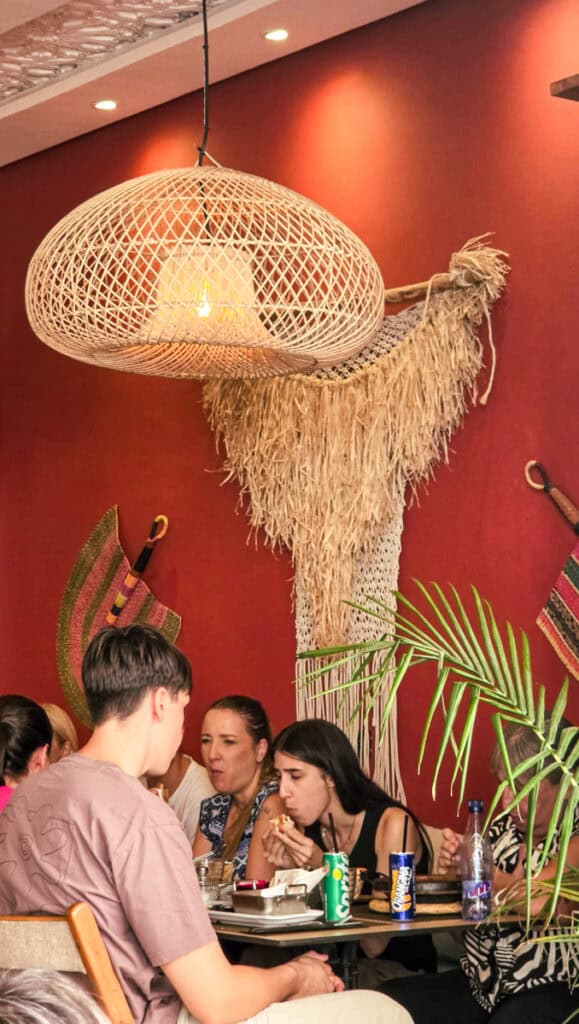
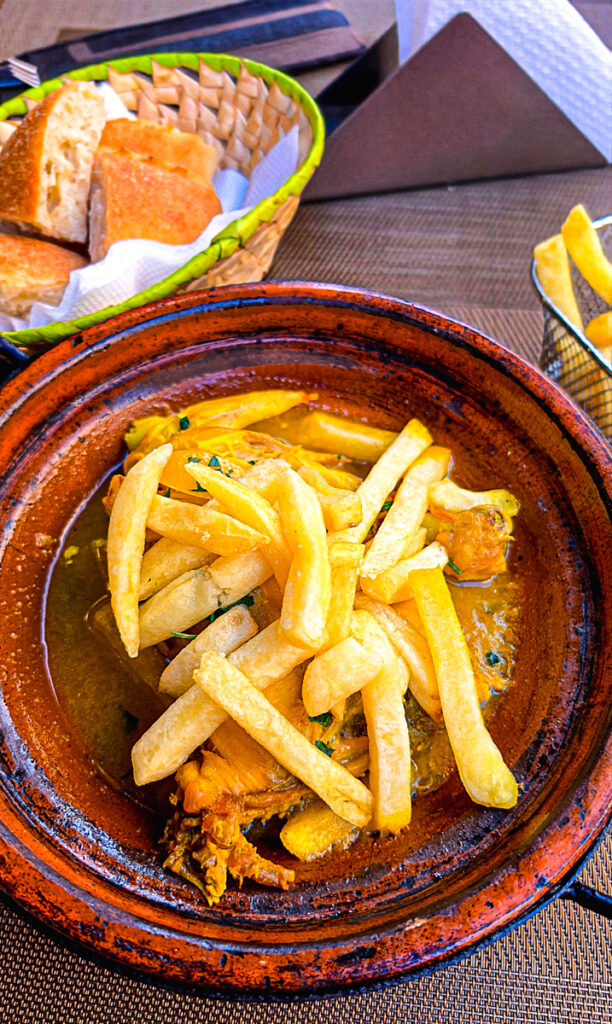
Daba Daba, a Moroccan kitchen and street food cafe just off the main square, was busy (always a good sign), beautifully designed and fairly priced compared with the rooftop restaurants, which charge close to American prices. When I went, the lunch special was 80 MAD for kebabs or a tagine with a water or soft drink.
Where to stay in Marrakech
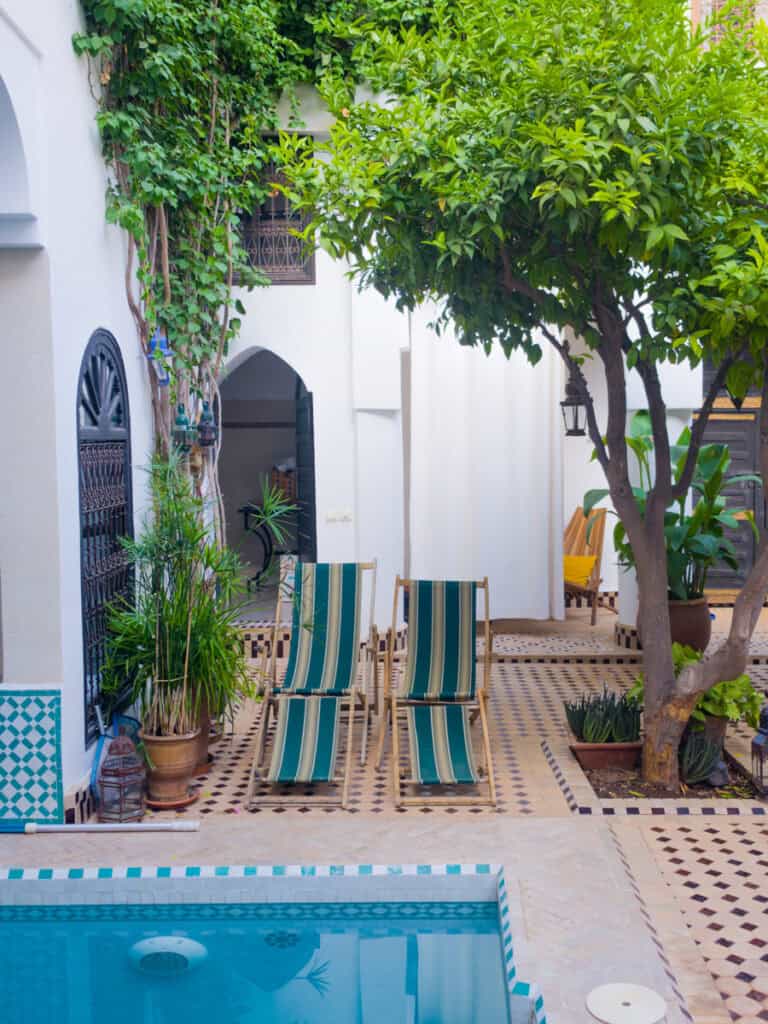
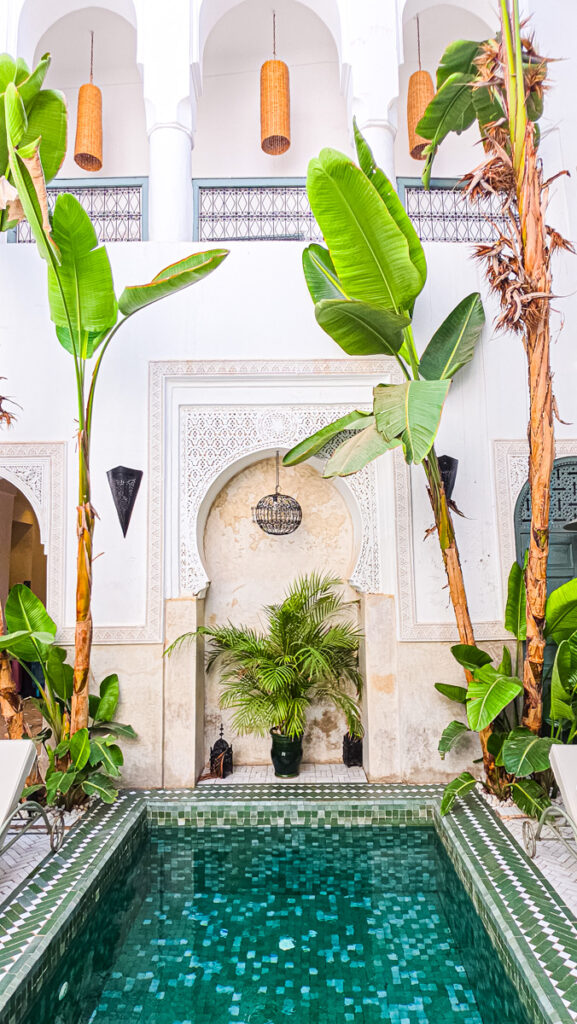
For a first visit, stay in a riad inside the medina. Riads are traditional houses built around an inner courtyard, and staying in one puts you within walking distance of Jemaa el-Fna, the souks and the food stalls, which matters if you want to be out in the evenings. Expect the walk from the nearest road to involve a few alleyways.
My first riad was Riad Al Wifak, about a 20-minute walk from Jemaa el-Fna, down that alleyway I was so nervous about on day one (and perfectly fine in the end). And then basically next door was my second riad, Riad Sierra, where I stayed in for three nights with 11 other women on the YLA trip I was leading. Both were stunning, with a delicious breakfast included, and amazing hospitality, and well worth staying at
If you’d rather have wider streets and newer hotels, look in Gueliz or Hivernage, the modern neighborhoods outside the medina walls, and take a short taxi ride in for the evenings.
Common questions about Marrakech street food tours
How much does the Marrakech night street food tour cost?
As of October 2026, Mustapha’s Nighttime Marrakech street food with a local chef tour on Airbnb Experiences starts at $41 per person.
Where does the Marrakech street food tour meet?
The tour meets in front of Café de France on Jemaa el-Fna, the main square in the Marrakech medina.
Is the Marrakech food tour enough for dinner?
Yes. My tour had seven tasting stops, and it was more food than I’ve eaten on any food tour. Skip lunch or keep it light.
Can you do a Marrakech street food tour gluten-free?
Yes, with notice. Mustapha adapted all but two dishes for me with very little warning, and he can do more if you message him when you book.
What time do the Jemaa el-Fna food stalls close?
The stalls set up in the evening and stay busy until around midnight or 1am, and later in summer, according to the stall staff I spoke with. The souks around the square close around 9pm.
If you’ve eaten your way around Marrakech, I’d love to hear what you’d add, so tell me in the comments. And if you want the rest of my Morocco stories as I write them, join me in The Golden Thread, my weekly travel newsletter.