

This post may contain affiliate links. We may receive a small commission, if you make a purchase. Read Disclosure.
Madrid is a city of elegance, vibrancy, and luxury. Its streets are lined with expansive parks, bustling markets, boulevards full of art galleries, and designer stores. It’s a place where art lovers can get inspired by world-class European art, or be dazzled by the baroque architecture of the Royal Palace and Armory.
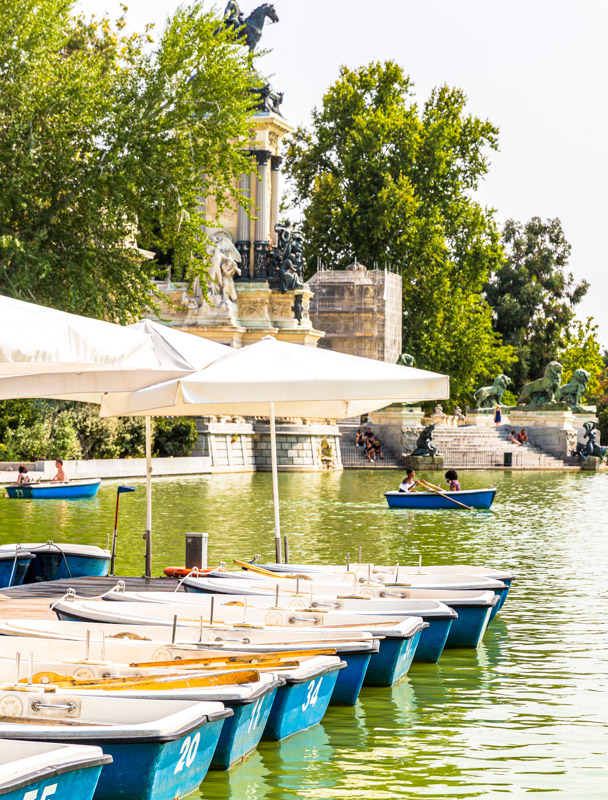
There are so many unmissable things to do in Madrid that it can be tough knowing what attractions to add to your itinerary. To help you out, we interviewed Lauren Aloise from Spanish Sabores, who has been living in Madrid since 2012. Lauren has shared with us her insider tips on the best attractions in Madrid and places to visit, including where to eat, sleep, drink, shop, and explore.
Let’s take a look…
- Madrid at a glance 🔍
- 1. Marvel at amazing art at Prado Museum
- 2. Have a picnic in Retiro Park
- 3. Watch a Flamenco Show
- 4. Explore the neighborhoods in Madrid
- 5. Try some of the local cuisine
- 6. Explore the nightlife in Madrid
- 7. Get lost in the markets in Madrid
- 8. Enjoy one of the top festivals in Madrid
- 9. Take a day trip from Madrid
- 10. Learn about The History of Real Madrid at Santiago Bernabéu Stadium
- 11. Check out The Royal Palace of Madrid
- 12. Eat Chocolate and Churros at Chocolatería San Ginés
- 13. See more art at The Museo Nacional Centro de Arte Reina Sofia Museum
- 14. Check out Plaza Mayor and Puerta del Sol
- 15. Watch an Opera at Teatro Real
- 16. Check out The Temple of Debod, An Ancient Egyptian Temple
- 17. Take the Cable Car to Casa de Campo
- Is Madrid worth visiting?
- Are 2 days enough for Madrid?
- Best time to visit Madrid
- Getting to and around Madrid
- Where to stay in Madrid
- Tips for visiting Madrid
- Final Thoughts
- More Spain Travel Tips
- Pin To Save It On Pinterest
Madrid at a glance 🔍
- Accommodation options: Madrid has many budget-friendly guest houses, hostels, and boutique hotels for under $100 USD per night, as well as luxurious hotels for $150-$350 USD per night.
- Getting around: Madrid is very walkable, but you can take buses and the metro for longer distances.
- Unmissable sights: Check out the artwork in the Prado Museum, relax in Retiro Park, take the cable car to Casa de Campo, and visit Santiago Bernabéu Stadium.
- Money saving tip: You can save money on attractions in Madrid by getting yourself a GoCity Attraction Pass. This can give you discounts of up to 50% on 20+ of Madrid’s top attractions, restaurants, and entertainment options.
Looking to reserve an apartment in Madrid? Click here to browse.
1. Marvel at amazing art at Prado Museum
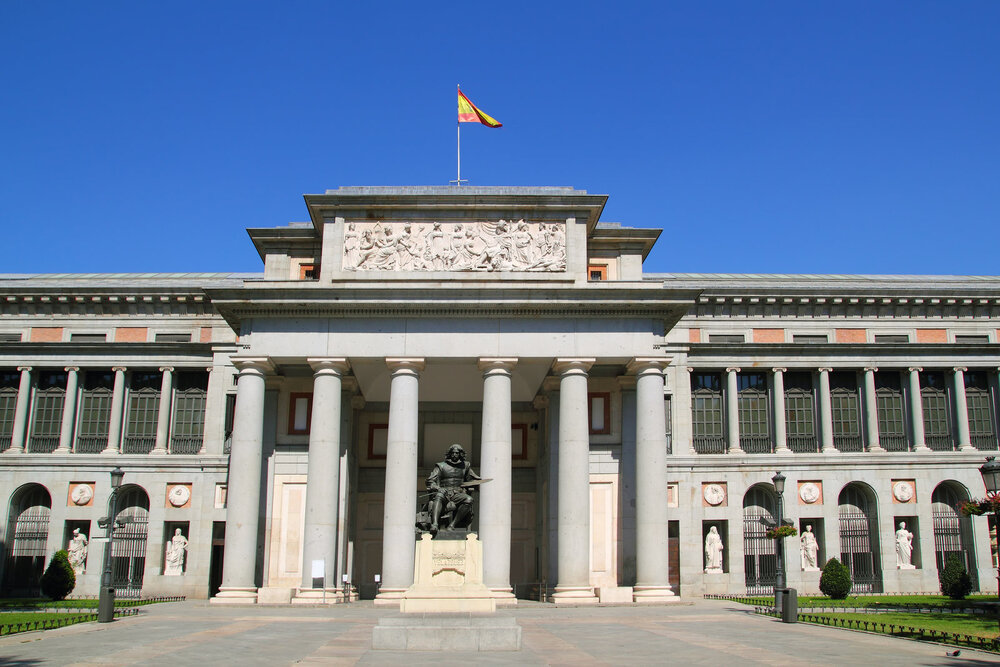
Everyone who visits Madrid must visit the Prado Museum, art lover or not. It is overwhelmingly big, but you can take advantage of the free entry hours to get just a taste of what’s inside. And there is a reason why it’s one of the most famous museums in the city! The Prado opened in 1819 and houses a collection of over 8,600 paintings and 700 sculptures. It mostly features Spanish, Italian, and Flemish artwork, plus other European masterpieces. The most notable works in the museum include Velázquez’s “Las Meninas,” Goya’s “The Third of May 1808,” and El Greco’s “Adoration of the Shepherds.” There is also a vast collection of paintings by Hieronymus Bosch.
This is one of the top things to do in Madrid, and so you can expect a lot of people. Be sure to get your skip-the-line ticket beforehand to avoid standing in long queues.
2. Have a picnic in Retiro Park
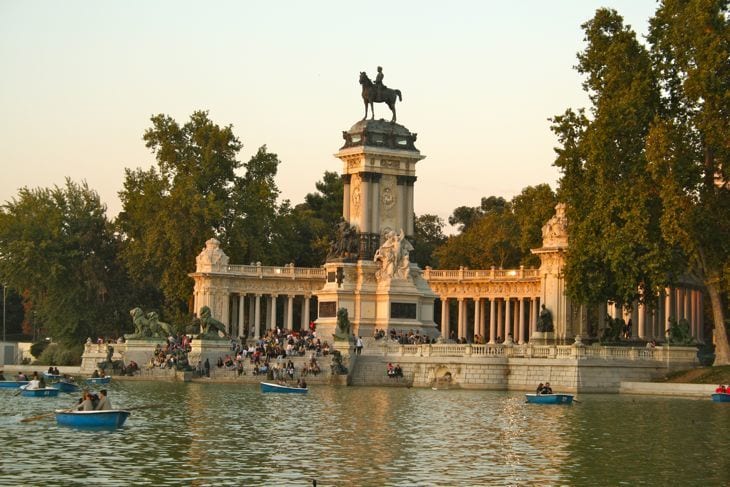
I also take my visitors to Madrid for a walk through the lovely El Retiro Park, a great place to bring a picnic when the weather is nice. It’s the largest urban park in Madrid and features a lake, manicured lawns, and flower gardens. The park once belonged to the Spanish Monarchy but was given to the public in the late 19th century.
In 2021, it became a UNESCO World Heritage Site combined with the nearby Paseo del Prado. One of the main reasons to visit Retiro Park is for the events. Every year, the park hosts everything from Book Fairs to fireworks displays. During every holiday, you’ll want to come to the park to see what entertainment it has in store. And best of all, it’s free to enter. If you’re looking for free things to do in Madrid, this is your number one place.
3. Watch a Flamenco Show
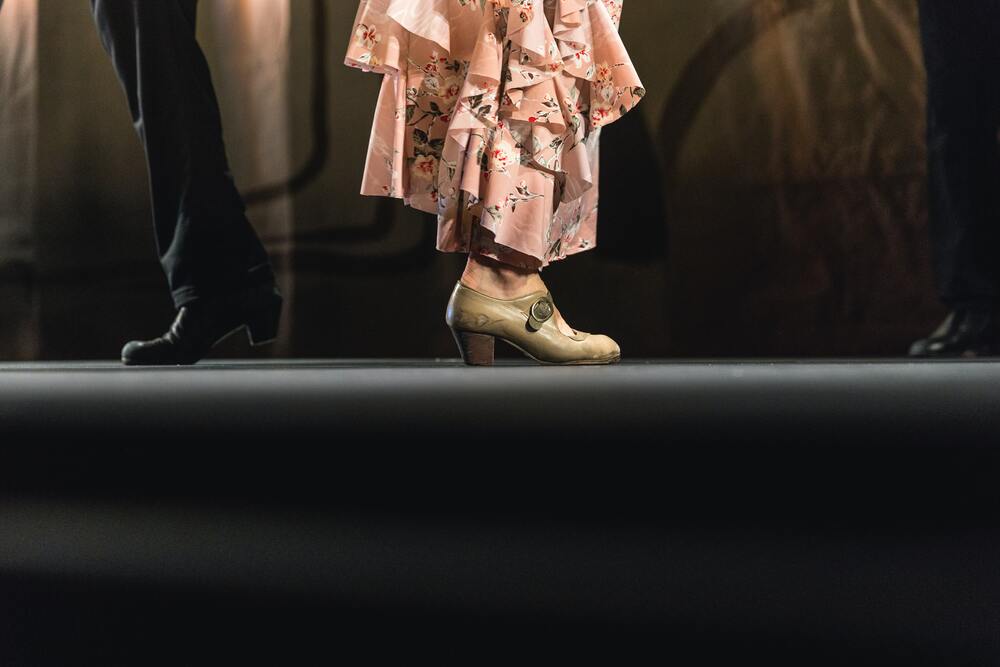
Some of the best flamenco dancers in the world perform in Madrid, so if you enjoy the arts, a flamenco show is a must. If you’re not familiar with flamenco, it’s a form of folk dance from Southern Spain that has been a huge part of Spanish culture since the late 1700s. You’ll find many venues offering flamenco performances, but one of my favourites is the historical Torres Bermejas Tablao. It opened in the 1960s and has a stunning, ornately designed interior inspired by Arabic influence. As you watch the beautiful dances, you get to dine on traditional Spanish food, whilst watching the performance of a live band with singers, guitarists, and clappers.
4. Explore the neighborhoods in Madrid
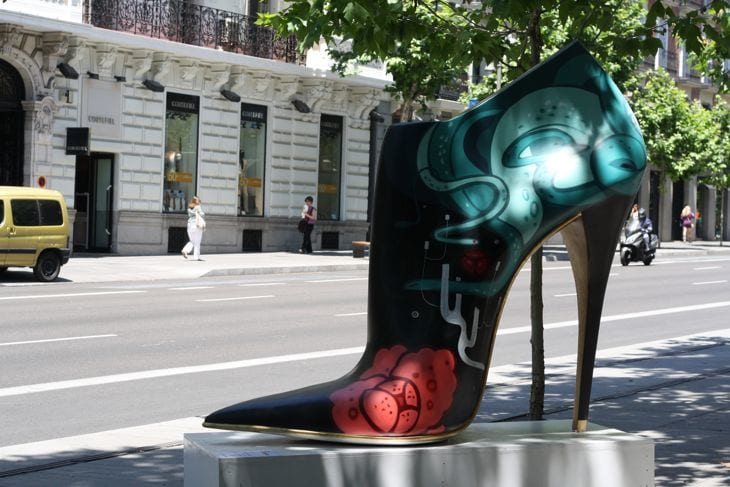
One of my favourite things to do in Madrid is to just wander around the neighborhoods and get lost. There is no better way to experience the charm and vibrancy of a city than to wander down its streets and see what’s up. Here are some neighborhoods I suggest you check out:
- El Centro (the center) of Madrid is crammed with history and things to see and do. Highlights include the Plaza del Sol area and the Mercado de San Miguel.
- Barrio de las Letras is another historic neighborhood where literary icons such as Hemingway used to spend their days bar hopping. You can find some of the city’s best bars and a great nightlife scene too.
- Malasaña is the city’s up-and-coming alternative neighborhood. You’ll find lots of little stores and artistic shops, as well as plenty of non-Spanish restaurants.
- Lavapies is the place to go to find some inexpensive ethnic food and artsy community centers.
- Chueca is where you’ll find some of the city’s most exciting nightlife, rooftop bars, and trendy restaurants.
- Retiro is a nice neighborhood to take a leisurely walk and check out the lovely park.
- Salamanca neighborhood is an absolute must for those who like to shop; it’s home to all the best designers.
Want to explore Madrid in a unique way? Check out this E-Bike Tour of Madrid!
5. Try some of the local cuisine

The great thing about Spain is that everywhere you go, there is a unique regional dish to get stuck into. It’s not all about paella and gazpacho! Some of the most delicious Spanish food can be found here, in the capital of Spain. So don’t visit Madrid without trying…
- A runny tortilla de patatas (Spanish potato omelet)
- Pimientos de Padrón (small green chiles fried in olive oil and sprinkled with sea salt)
- Chocolate con churros (piping hot churros with hot chocolate)
Now you may be wondering where it is good to eat? Don’t worry, here are some of my favourite restaurants in the city: For traditional Madrileño, head over to Docamar, which is a bit further out of the center (15 minutes by metro) but serves Madrid classics like Calamari sandwiches and an incredible Spanish omelet at low prices.

For Pinchos, Juana la Loca is the place to go for creative Basque-inspired tapas (called Pinchos) and has both a busy bar and a more exclusive restaurant. If you’re interested in Tapas, try Calle Cava Baja near the La Latina metro stop (or a five-minute walk from the center). Almost anything on this busy street full of bars and restaurants is good – though prices vary, so see the menu first!

If you are pressed for time, try a Madrid Food Tour. Their tasting tour offers you the best of Madrid’s traditional foods in only four hours.
Hot Tip! Madrid is a menu-of-the-day type of city, and lunchtime is full of some great deals all around town. One of my favorites is Mercado de la Reina, a nice restaurant in busy Gran Vía with a fantastic three-course menu for about 12-16 euros!
6. Explore the nightlife in Madrid
Madrid is just as vibrant at night as it is during the day. You’ll find many bars and clubs, as well as some unique places to drink. Here are some of my favourite places…
- 1862 Dry Bar: The place in Madrid to have a gin and tonic (the city’s cocktail of choice). It is a show just to see the bartenders working; they know their stuff! A drink will set you back a fair penny, but you pay for their expertise.
- Café de la Luz: This small café is the perfect place to go for inexpensive (but delicious) cocktails and coffees.
- Museo Chicote – Coctelería desde 1931: One of the city’s most famous and historic bars, Museo Chicote is a must for anyone who wants to drink elbow-to-elbow with the city’s elite.
- La Sureña: If you want to go out in Spanish student style, try La Sureña, a chain you’ll find all over the city. Here you can order a beer bucket with five small bottles for only a few euros!
7. Get lost in the markets in Madrid
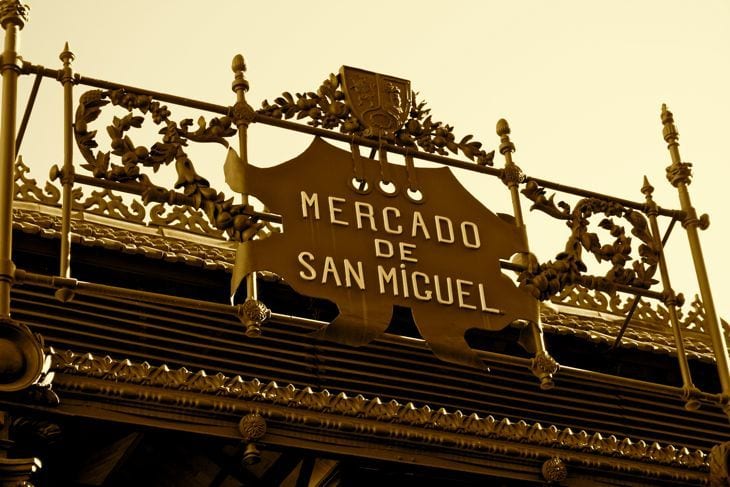
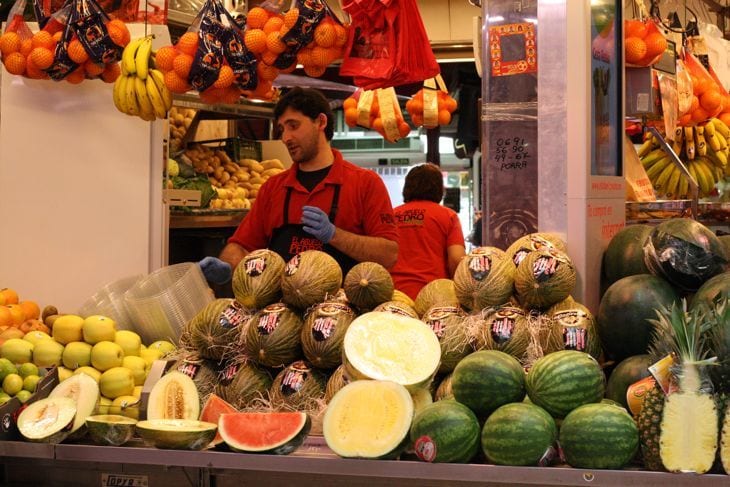
You should also check out the historic San Miguel Market, located in the center of the city. Here you can go from stand to stand, trying delicious Spanish foods like stuffed olives, Spanish omelet, and acorn-fed Iberian ham. For food shopping (the best souvenirs in my opinion), check out the different stands at the Mercado de la Paz in the Salamanca neighborhood. For big-name designers, stay in Salamanca and check out the side streets for lesser-known, up-and-coming Spanish designers.
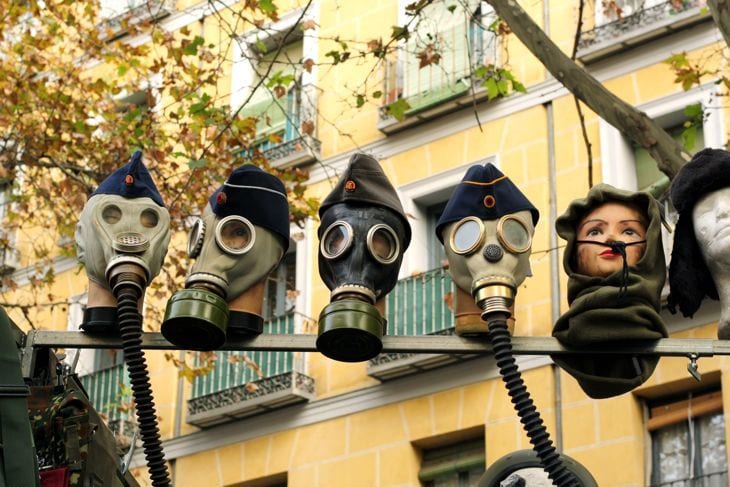
For trendy shopping and vintage boutiques, head over to the Malasaña neighborhood, and for one of the biggest flea markets in Europe, a stop at El Rastro on Sunday mornings (metro La Latina) is obligatory. For food, the Mercado de San Miguel is great for trying a bit of everything and is where people go for their pre-meal aperitif.
8. Enjoy one of the top festivals in Madrid
Madrid has many holidays and festivals throughout the year, and the smaller towns surrounding Madrid have even more! If your Spanish is decent, try the website Madrid Diferente for their cultural agenda, and, if not, Cheap in Madrid notifies you about all the up-and-coming budget events. Here are some yearly festivals I love attending:
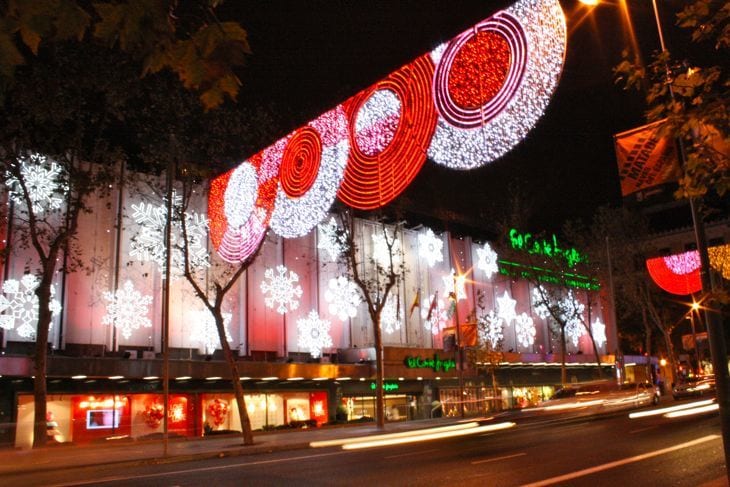
- Christmas Lights: Every December, the city comes alive with the Christmas spirit as beautiful Christmas lights adorn the city center. The Christmas tree in the Plaza del Sol is the main event and a great place to take a picture. I prefer walking (and stopping every now and then for hot chestnuts), but there is also a special bus to see all of the lights around town.
- Las Uvas on New Year’s Eve: On the 31st of December, the people crowd into the city’s central square, the Plaza Mayor to bring in the new year. The tradition in Spain is to eat one grape (una uva) for each of the twelve seconds prior to midnight. Tricky, but definitely possible!

- La Cabalgata de los Reyes Magos: This big parade on January 5th shows off the Reyes Magos (Three Wise Men), what Spain traditionally celebrates instead of Santa Claus. The three men throw candy to the crowds, and the greediest spectators catch the candy in an inside-out umbrella.
- San Isidro: San Isidro is Madrid’s patron saint, and the Madrileños don’t take his festival lightly. There are traditional costumes, pastries, stews, and dances that everyone likes to partake in during these days, the 11-15 of May.
- Madrid Orgullo: Orgullo means pride, and Madrid’s gay pride celebration is every June/July.
9. Take a day trip from Madrid
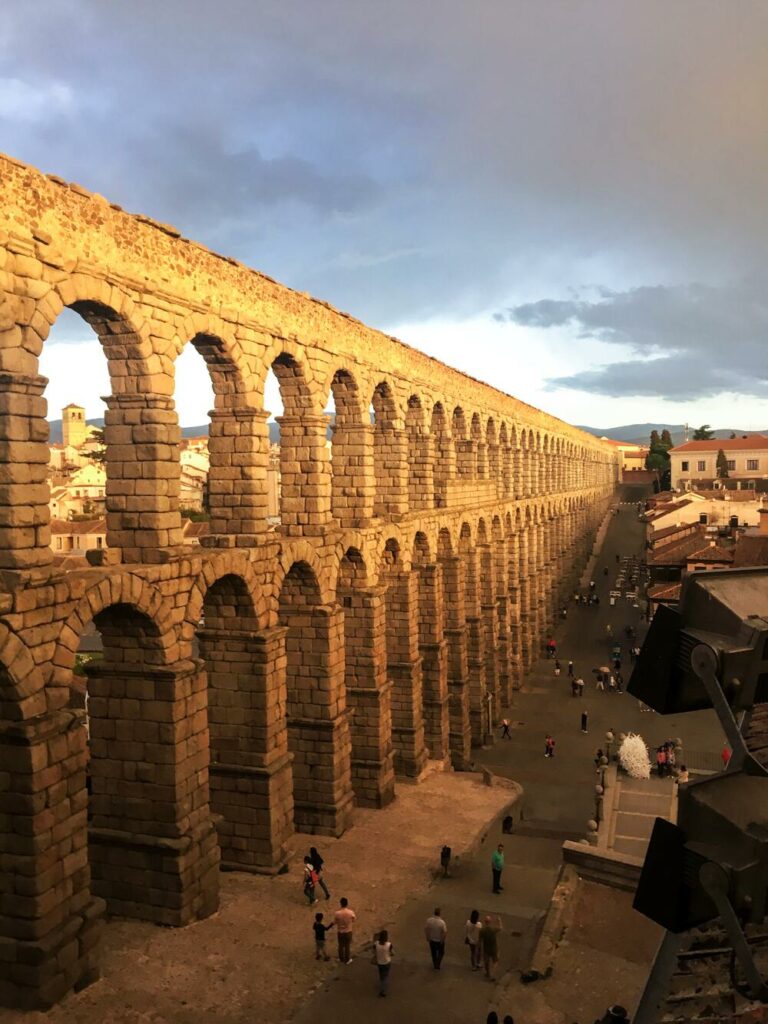
Madrid has the incredible advantage that if you tire of the big city, there are plenty of small towns nearby, just waiting to be explored. Here are my picks for some lovely day trips from Madrid:
- Toledo: On the top of everyone’s list and with good reason. Toledo is a gorgeous and very historic city, with fantastic architecture and views. It is easy to see Toledo on a budget too.
- Alcalá de Henares: This small city is one of my favorite day trips from Madrid. Tapas here are free (included in the price of a drink) and the pastries are to die for. See here for where to go for tapas in Alcalá; as a major foodie, I come here often! The town is also the birthplace of Cervantes and has some beautiful monuments and plazas.
- Aranjuez: This was where Spanish royalty had their summer palace, and you can take a tour of the impressive site in Aranjuez. The town is also a gorgeous place to spend a leisurely day strolling around, especially in its pretty park and Royal Gardens.
- Segovia: a historic city that contains centuries-old historic landmarks, including the old medieval walls, Romanesque churches and Gothic Cathedral, and the former royal palace. Don’t miss the striking Roman aqueduct with 160 arches!
10. Learn about The History of Real Madrid at Santiago Bernabéu Stadium
Estadio Santiago Bernabéu is the home of the Real Madrid football team and can hold over 80,000 spectators, making it the second-largest stadium in Spain and the third-largest football stadium in the world. If you’re a football fan, you’ll want to take a visit here to see behind the scenes, as well as learn about the history of the team at the Bernabéu Stadium museum. You’ll get to explore the stands, the pitch, the trophy room, and locker rooms, as well as learn about legendary players and events in the museum. The museum also contains some of the kits, boots, and equipment that have been used by the team over the years.
11. Check out The Royal Palace of Madrid
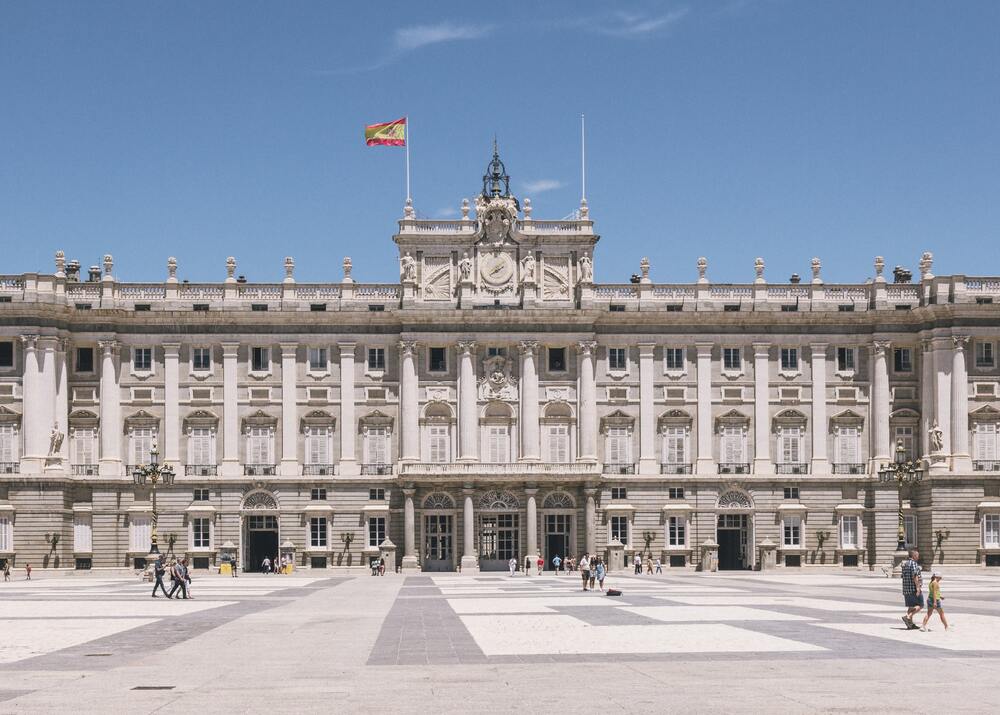
The Royal Palace of Madrid is the official residence of the Spanish Royal family and the largest royal palace in Western Europe. Although the family doesn’t live here anymore and only uses it for state ceremonies, the palace is still an important part of Spanish heritage. You can explore the grounds and galleries, and some of the most important rooms in the palace (you can’t see them all, there are 3,418 of them!
The museum contains a huge collection of furniture and upholstery, as well as other items used by the royal family such as porcelain and antique clocks. It also has a huge collection of armor and weaponry, and of course, many pieces of historical artwork including paintings by Goya and Velázquez. You’ll be able to see the private rooms where the royal family lived, the throne room, the royal dining rooms, and the mirror room of Charles IV and the Royal Chapel. Don’t miss a chance to wander around the beautiful Plaza de Oriente on the east side of the palace.
12. Eat Chocolate and Churros at Chocolatería San Ginés
This is probably the most famous chocolate shop in all of Madrid! It was founded in 1894 and is most famous for its chocolate and churros. What’s special about this chocolate shop is that it’s open 24 hours! The building itself is stunning, with two floors decorated with ornate 19th-century detailing. From the traditional white marble tables to the mirrored walls, it’s a true piece of decadence in the heart of Madrid. If you’re looking for somewhere for breakfast, you can find delicious pastries and coffee here, and on a warm summer morning, you can sit outside and watch the world go by as you eat.
13. See more art at The Museo Nacional Centro de Arte Reina Sofia Museum
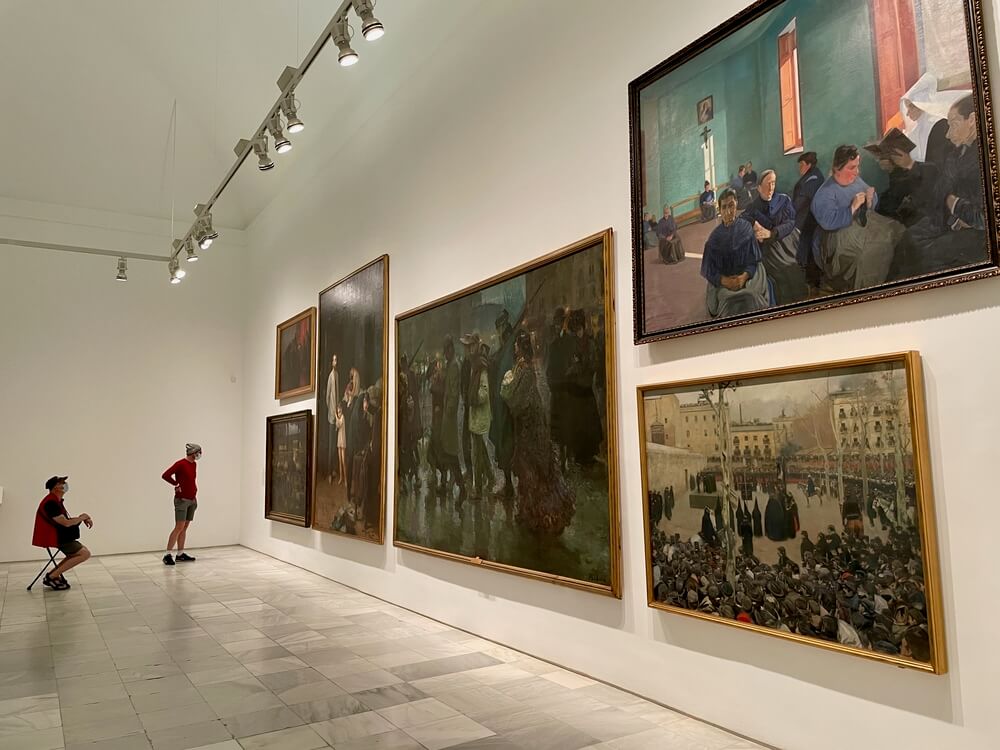
If you’re still hungry for more art, you’ll want to explore more art museums in the Madrid “Golden Triangle of Art” – they are the Prado Museum, the Thyssen-Bornemisza, and the Museo Nacional Centro de Arte Reina Sofia Museum, or just Reina Sofia for short. The Reina Sofía contains works of 20th-century art and opened in 1992. It houses more than 21,000 pieces, including works by Salvador Dalí, Joan Miró, and, of course, the most famous Spanish painter of all time, Pablo Picasso. The most famous piece in the museum is Picasso’s “Guernica.”
Be sure to allow a couple of hours to explore the entirety of the museum as it is huge! You can also avoid the queues by purchasing a skip-the-line ticket beforehand.
14. Check out Plaza Mayor and Puerta del Sol
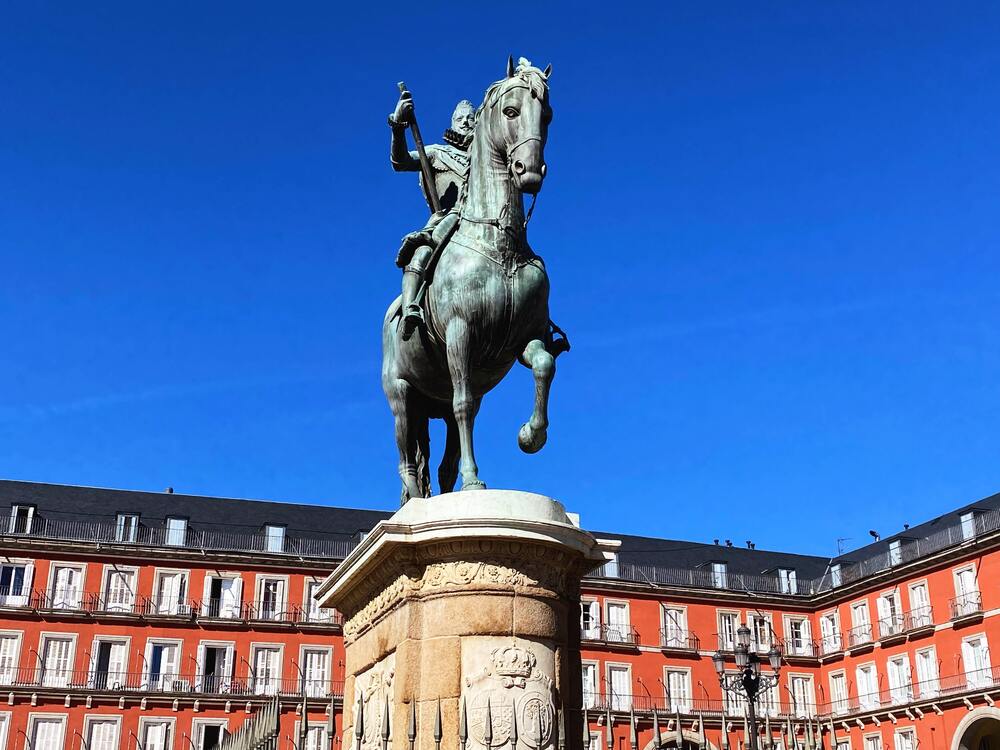
If you’re looking for relaxing things to do in Madrid, then you might want to check out some of the most famous town squares and plazas in Madrid. The most famous plaza is Plaza Mayor, which is a huge public space that marks the former centre of Old Madrid. It was first built during the reign of Estatua de Felipe III, who is depicted on a statue in the middle of the square sitting on a horse. Just a short walk away is another famous plaza in Madrid, the Puerta del Sol. This plaza connects to many small side streets full of high street stores, cafes and restaurants. If you want to do some shopping, the area around here is a good place to do it.
15. Watch an Opera at Teatro Real
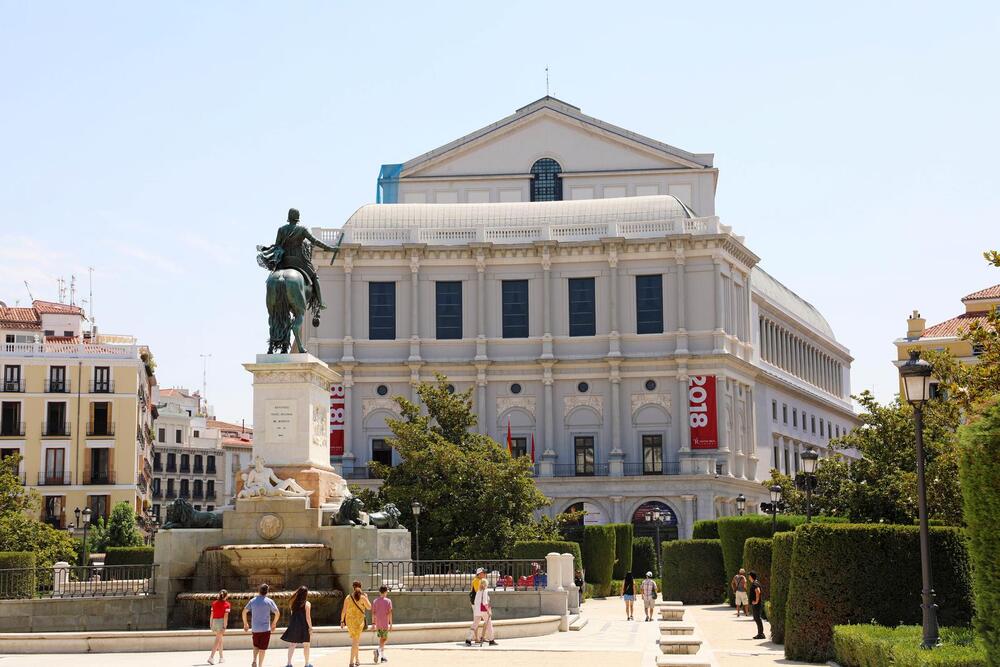
The Teatro Real is a stunning opera house on the Plaza de Oriente, near the Royal Palace. It’s considered one of the top theatres in the country for musical and performing arts in the country and is one of the most prestigious opera houses in Europe. If you’re looking for things to do in Madrid at night, then a visit to the Opera is surely a memorable experience.
16. Check out The Temple of Debod, An Ancient Egyptian Temple
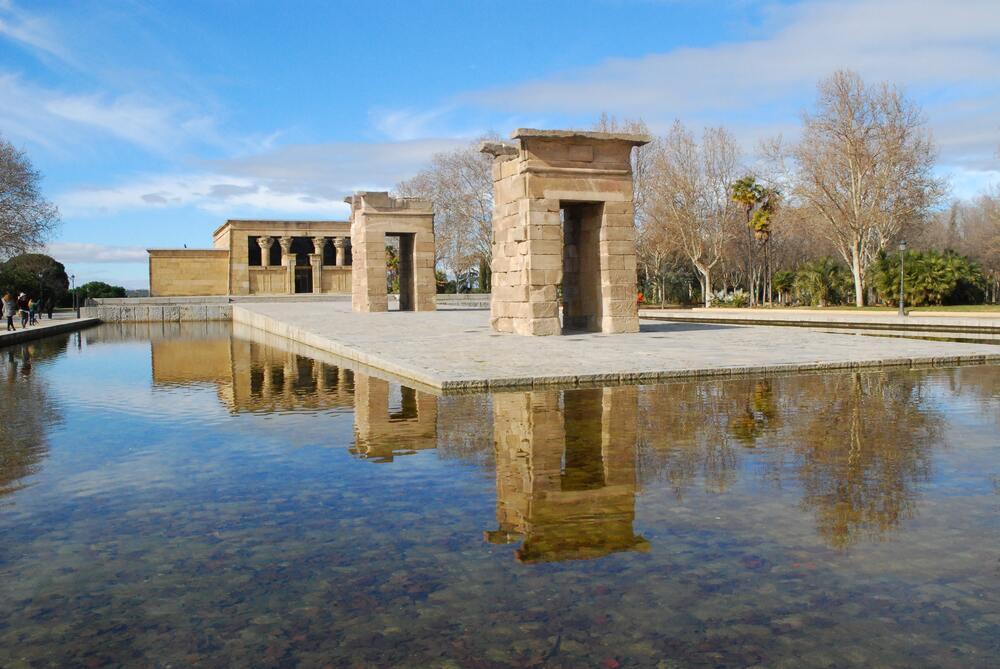
I bet you weren’t expecting to be taken back to ancient Egypt on your trip to Madrid! This ancient Egyptian Temple was dismantled and rebuilt in Madrid in 1972. The move was part of the International Campaign to Save the Monuments of Nubia. This 2,000-year-old structure was at risk of being destroyed after the construction of the Aswan High Dam. It was the decision of UNESCO and the Egyptian government to move the site to save its historical legacy. The temple is a small, one-room shrine that was built to worship the Egyptian god Amun. Today it sits in the Parque del Oeste, near the Royal Palace of Madrid.
17. Take the Cable Car to Casa de Campo
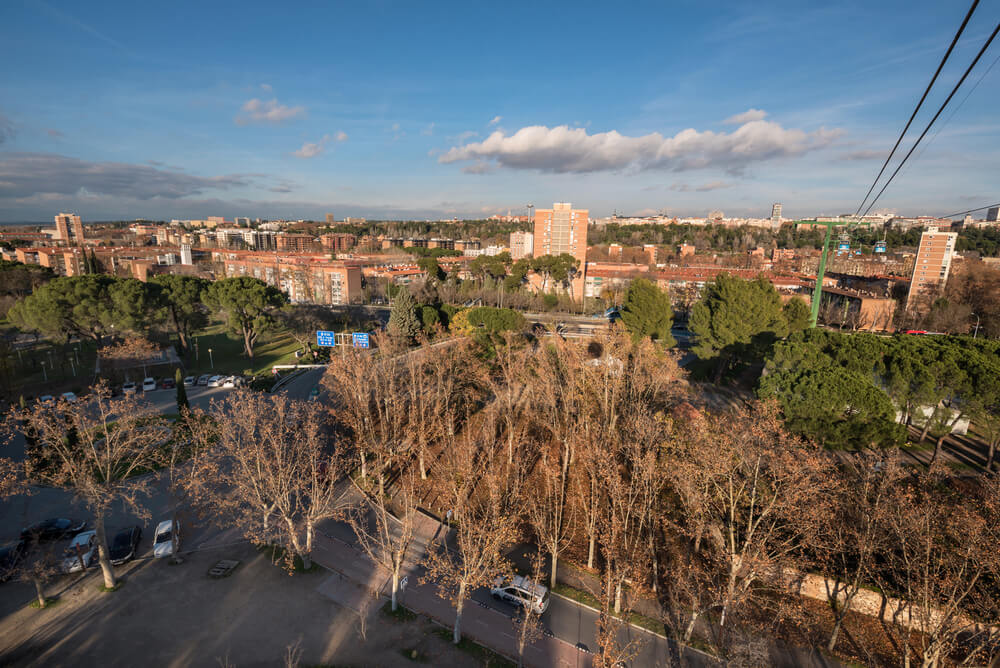
If you’re looking for stunning views of the city, you will want to make sure you take the cable car up to Casa de Campo. The Casa de Campo is the largest public park in Madrid and was once a royal hunting estate. It was built in the early 16th century but was opened to the public in 1931.
The park is a huge green space with a lake that you can go boating on, plus several walking trails around the huge space. It’s also where you’ll find the Parque de Atracciones amusement park, as well as the Zoo Aquarium, which has animals from every continent. For a unique experience, take the cable car over the city to the park. The ride takes around 11 minutes each way.
Is Madrid worth visiting?
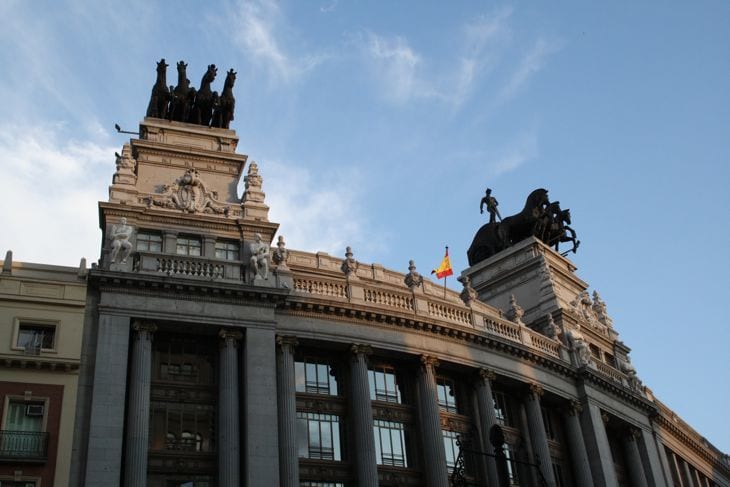
Madrid is a city that has something for everyone, and you’ll feel like you belong from the very first day. Offering world-class museums, shopping on every budget, incredible cuisine, and gorgeous architecture, Madrid keeps tourists coming back year after year. It is a big city, but feels more like many small towns, as every neighborhood has a very distinctive character. It’s a place where people-watching is fun, you can order a beer at any time of day, and it is impossible to run out of things to explore and discover. For this reason, I think Madrid is worth visiting.
Are 2 days enough for Madrid?
If you’re not sure how many days to spend in Madrid, I would say allocate two full days at the minimum. This is the least amount of time you need to see all the highlights. If you can, stretch your trip over three days so you don’t have to rush to see it all in.
Best time to visit Madrid
September and October are usually gorgeous in Madrid, and April and May can be quite beautiful too. This is when the temperatures are pleasant, and the summer crowds have gone. Winter gets very cold, although sunny days are common and it can be wonderful as long as you are bundled up. Summer can be brutally hot and busy; I’d avoid visiting Madrid in July and August.
Getting to and around Madrid
The main airport in Madrid is Adolfo Suárez Madrid-Barajas Airport, which can be reached by direct flight from many major cities in the U.S. If you’re visiting from Spain, the Spanish trains (RENFE) are wonderful when traveling from one part of Spain to another, although the high-speed trains are definitely pricey. From European destinations, low-cost airlines such as EasyJet and Ryanair also fly in and out of Madrid, making it a very cheap option to visit from other European cities.
When it comes to getting around Madrid, the public transport is excellent. The metro is reliable and comfortable and runs often during the day. Buses are equally dependable, and there are special night buses that continue service all night after the normal buses and metros stop running. You can use your contactless debit or credit card on public transport, or Apple or Google Wallet, which makes buying a ticket easier. My preferred means of transportation is definitely on foot. Madrid is extremely walkable, and the only excuse to rely on public transportation is when traveling outside of the city center.
Where to stay in Madrid
Madrid is full of great places to stay, and you can find something at every price point. I prefer staying in the center to be able to fully enjoy Madrid on foot. For first-time visitors, Sol is hard to beat. It’s right in the heart of the city and is within easy reach of major sights including Plaza Mayor, the Royal Palace and the bustling shopping streets of Gran Vía. Neighbouring Gran Vía is a favourite for its historic hotels, theatres, rooftop bars and lively atmosphere that continues well after dark.
Just to the east, Barrio de las Letras (Literary Quarter) has traditional taverns and boutique hotels. It’s also a short stroll from the city’s renowned Art Triangle, making it an ideal base for museum lovers. Nearby, Huertas also has a central location, but also has a vibrant nightlife scene centred around tapas bars and late-night cafés.
For a more local feel, Malasaña is known for its independent boutiques, vintage stores, speciality coffee shops and creative energy, whereas south of the centre, La Latina, is known for its narrow medieval streets, traditional tapas bars and bustling Sunday flea market, El Rastro. It’s particularly atmospheric in the evenings, when plazas fill with locals enjoying drinks outdoors.
You can find accommodation options on the following interactive map.
Tips for visiting Madrid
I recommend just getting lost in the city and stumbling upon the city’s hidden gems. But here are a few off-beat suggestions I think are worthwhile:
- The city’s cable car is really cool and offers a unique view of the city.
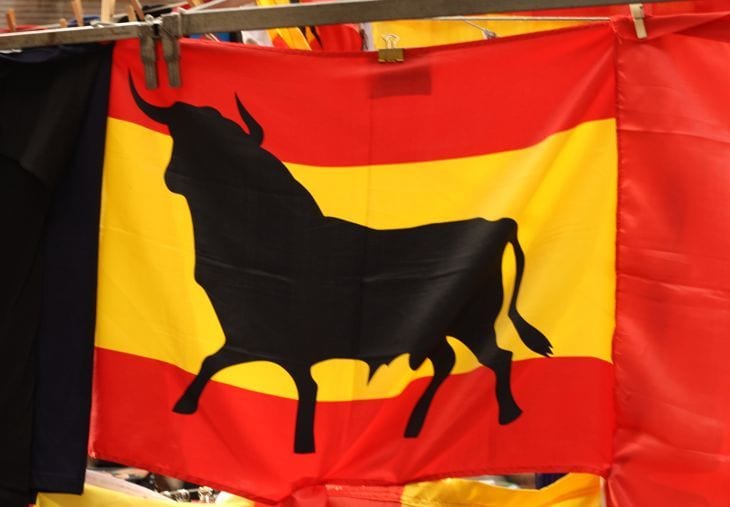
- The city’s bull ring (Las Ventas Plaza de Toros) is a bit out of the center but worth a look for the impressive architecture, and the tour is also really interesting. After, you can try any of the neighborhood bars for stewed bull’s tail or, if you’re lucky, delicious bull’s tail croquettes.
- My other advice for active travelers is to try to run a 5k or 10k while visiting. They close down the central streets for many races, and you get a truly unique look at the normal traffic-filled streets of Madrid.
Don’t miss these top selling tours and attractions in Madrid.
Final Thoughts
I love Madrid; it’s an incredibly complex and beautiful city with a lifetime of things to do and see, and incredible food and people too! I hope this guide helped you to plan your trip to Madrid and gave you some ideas of what to add to your itinerary. As you can see, there are so many great attractions in Madrid that it can be hard to narrow down what to add to your to-do list.
Bio: Lauren is a food and wine obsessed girl currently exploring her passion for Spain’s incredible cuisine in delicious Madrid. When she’s not out eating and drinking, she is usually traveling, writing, or planning her next food project. You can find her blogging at Spanish Sabores, or over on Twitter @SpanishSabores and on Facebook too.
More Spain Travel Tips
- Unmissable Things to Do in Valencia
- 3 Day Itinerary for Visiting the Unique Basque Region of Spain
- A Local’s Tips on Things to Do in Barcelona, Spain
- Things to do in the Canary Islands
- Hidden Secrets Not to Miss in Seville, Spain
Pin To Save It On Pinterest
Are you excited to do any of these things to do in Madrid? Let us know in the comments!