

This post may contain affiliate links. We may receive a small commission, if you make a purchase. Read Disclosure.
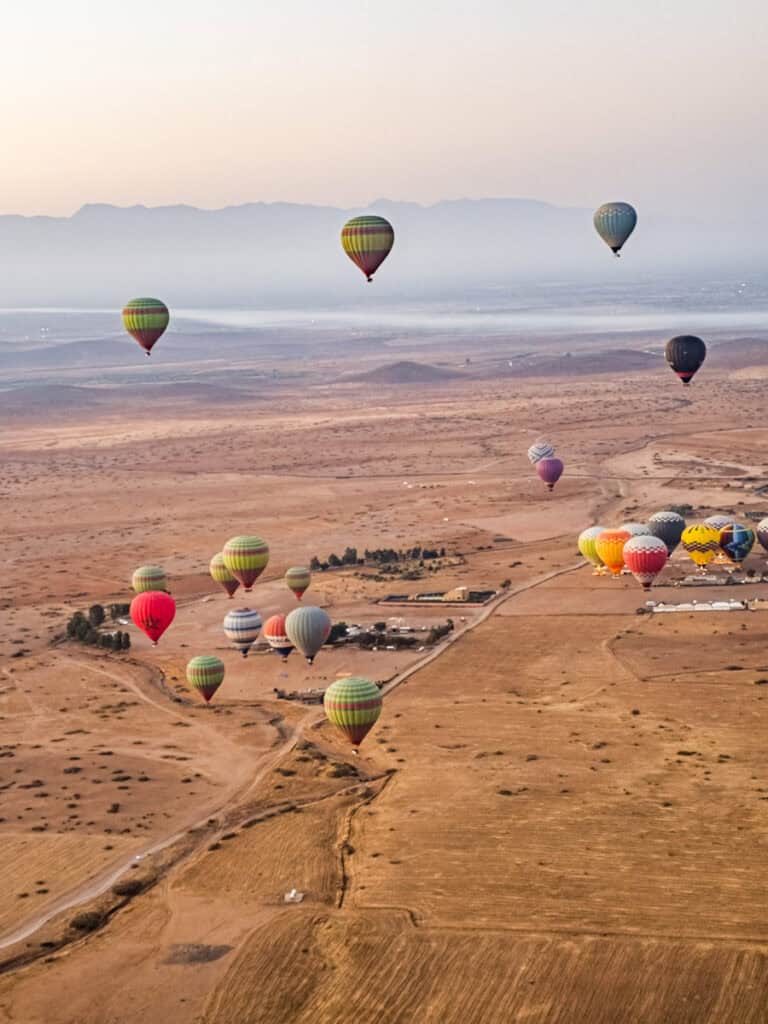
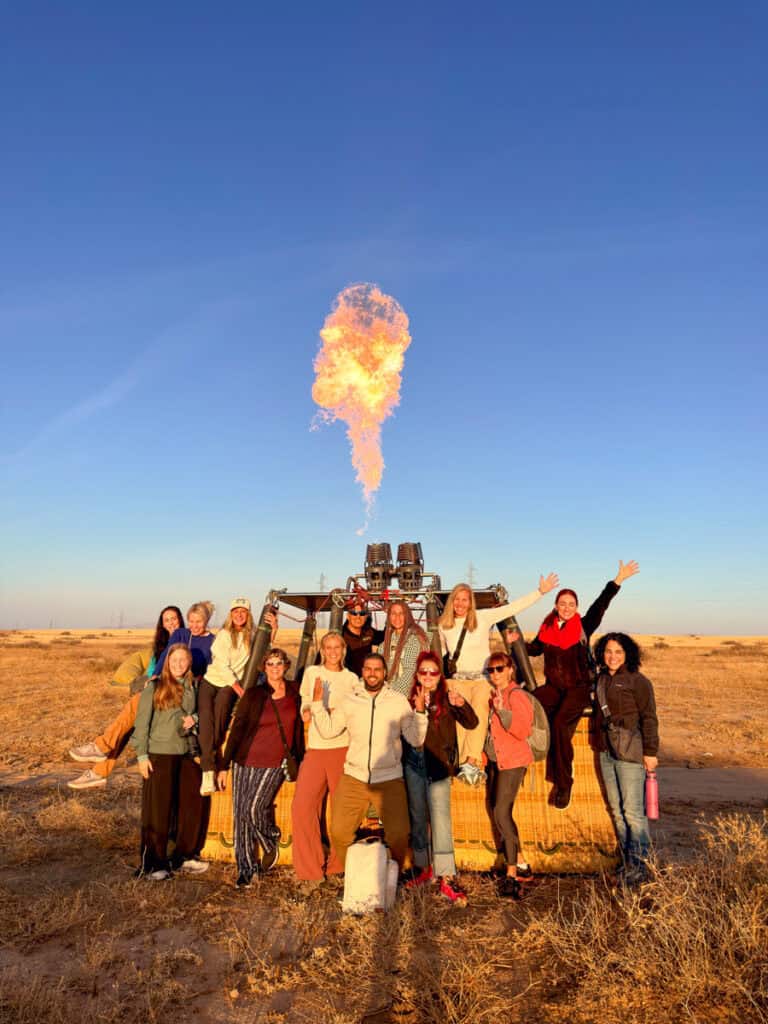
At 4am on day three of our Morocco trip, a group of women who’d met two days earlier climbed into hot air balloon baskets outside Marrakech, half asleep, and floated up as the sun rose over the Atlas Mountains. Most of them had never been in a balloon before, and a few of them cried.
That was one morning of the 10-day Morocco itinerary I led for Your Limitless Adventures in October 2026, and I’d do almost all of it again. We started in Marrakech, drove over the High Atlas to Aït Benhaddou and the Dades Valley, rode camels into the Sahara for two nights near Merzouga, and finished in the medina of Fes (also spelled Fez), before flying out of Casablanca. I added two days alone in Marrakech before the group arrived, which stretched it to nearly two weeks.
This is our exact route, day by day, with the drive times, what to book ahead, where we stayed and what I’d change. (Short version: carry more cash and leave room in your suitcase.)
What’s a good 10-day Morocco itinerary?
As of November 2026, a classic 10-day Morocco itinerary is three nights in Marrakech, two in the Dades Valley via Aït Benhaddou, two at a desert camp in the Erg Chebbi dunes near Merzouga, and three in Fes, with a final drive to Casablanca for your flight. Marrakech to Merzouga is about 560 km (8 to 9 hours of driving) and Merzouga to Fes about 587 km (roughly 7 hours), so the travel days are long and a private driver makes them far easier.
10-day Morocco itinerary at a glance
| Day | Overnight | Highlights | Travel |
|---|---|---|---|
| 1 | Marrakech | Arrive, settle into your riad, Jemaa el-Fnaa after dark | Airport transfer |
| 2 | Marrakech | Koutoubia Mosque, Bahia Palace, the souks, a herbal pharmacy, Le Jardin Secret | On foot |
| 3 | Marrakech | Sunrise hot air balloon, Ben Youssef Madrasa, hammam and massage, dinner in Gueliz | About 1 hour each way to the balloon site |
| 4 | Dades Valley | Tizi n’Tichka pass, Aït Benhaddou | Full driving day |
| 5 | Dades Valley | Monkey Fingers hike in the Dades Gorge, mint tea in a nomad cave | On foot from the hotel |
| 6 | Desert camp, Erg Chebbi | Berber women’s carpet cooperative, scarf shopping, camel ride at sunset | Full driving day, then 90 minutes by camel |
| 7 | Desert camp, Erg Chebbi | Sunrise on the dunes, an oasis, Gnawa drumming in Khamlia, nomad lunch, quad bikes and sandboarding | 4×4 and quad bike |
| 8 | Fes | Erfoud fossils | About 587 km, a full day |
| 9 | Fes | Fes viewpoint, ceramics workshop, Al-Qarawiyyin, Chouara tannery | On foot and short taxi rides |
| 10 | Fes | Mosaic and tile painting class, Café Clock, cooking class | On foot |
| 11 | Fly home from Casablanca | Early start | About 3 hours by /sroad |
- 10-day Morocco itinerary at a glance
- Days 1 to 3: things to do in Marrakech
- Fuel up at Kesh Cup with a more modern flat white
- Days 4 and 5: over the High Atlas to Aït Benhaddou and the Dades Valley
- Days 6 and 7: the Sahara desert at Erg Chebbi
- Buy a carpet from a Berber women's cooperative
- Get a scarf for the desert
- Ride a camel into the Erg Chebbi dunes at sunset
- Sleep at a luxury desert camp
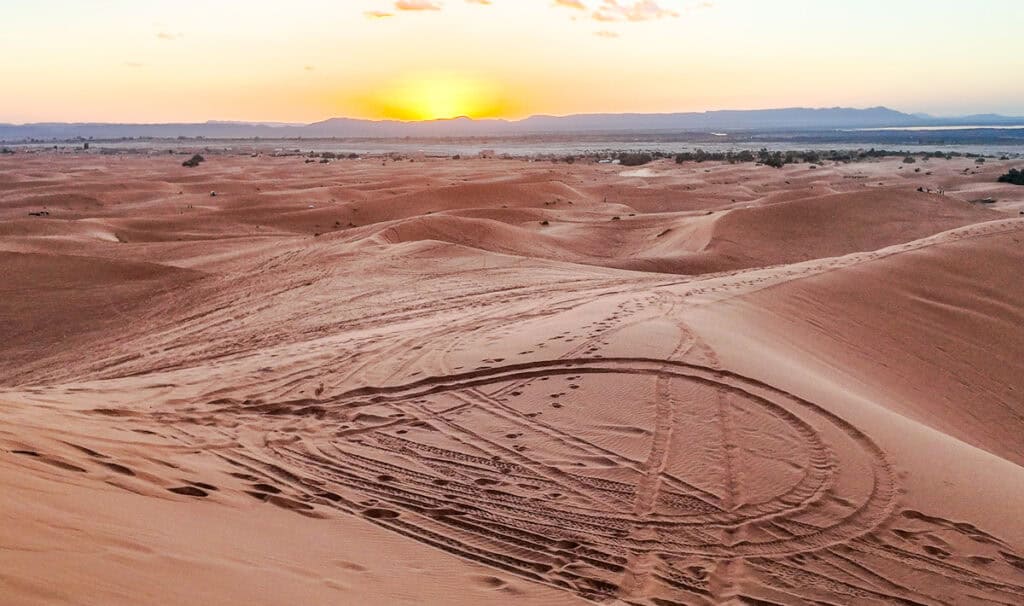
- Watch sunrise over the dunes
- Take a 4×4 tour of the desert communities
- Learn Gnawa drumming in Khamlia
- Eat lunch with a nomad family
- Ride quad bikes and sandboard the dunes
- Day 8: from the Sahara to Fes via Erfoud
- Days 9 and 10: things to do in Fes
- Take in the view over Fes
- Watch the potters at a Fes ceramics workshop
- Walk through Bab Bou Jeloud, the blue gate
- Peek into Al-Qarawiyyin
- Stand above the Chouara tannery
- Eat behind an unmarked door in the Fes medina
- Spend free time getting lost in the medina
- Make a mosaic tile at a ceramics class
- Eat lunch at Café Clock
- Take a Moroccan cooking class
- Day 11: Fes to Casablanca
- How to turn this into a 2-week Morocco itinerary
- Where we stayed on our Morocco itinerary
- Getting around Morocco
- Morocco travel tips
- Doing this Morocco itinerary with a group
- Common questions about a Morocco itinerary
- How many days do you need in Morocco?
- How far is Marrakech from the Sahara desert?
- Is Morocco safe for women travelers?
- Should I visit Marrakech or Fes?
- What's the best time of year for a Morocco itinerary?
Days 1 to 3: things to do in Marrakech
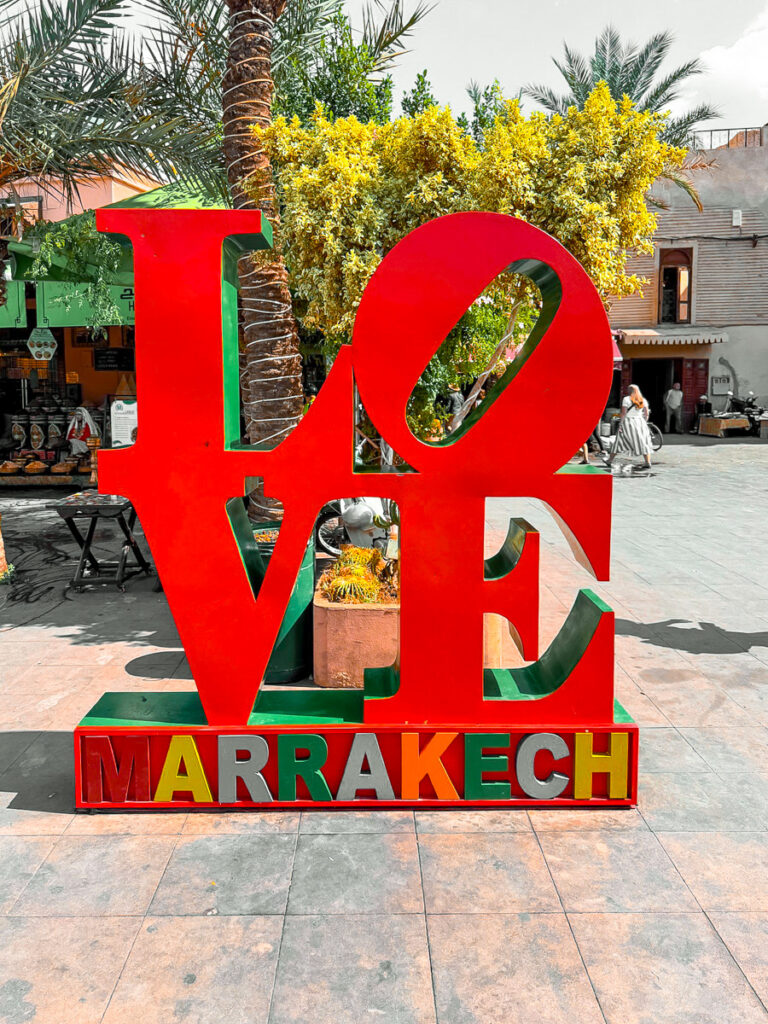
Three nights in Marrakech is enough to see the big sights and get properly lost, and if you can add a day or two before the rest of your trip starts, take them. My full guide to things to do in Marrakech has more, and these are the stops that earned their place in our itinerary.
Settle into a riad in the Marrakech medina
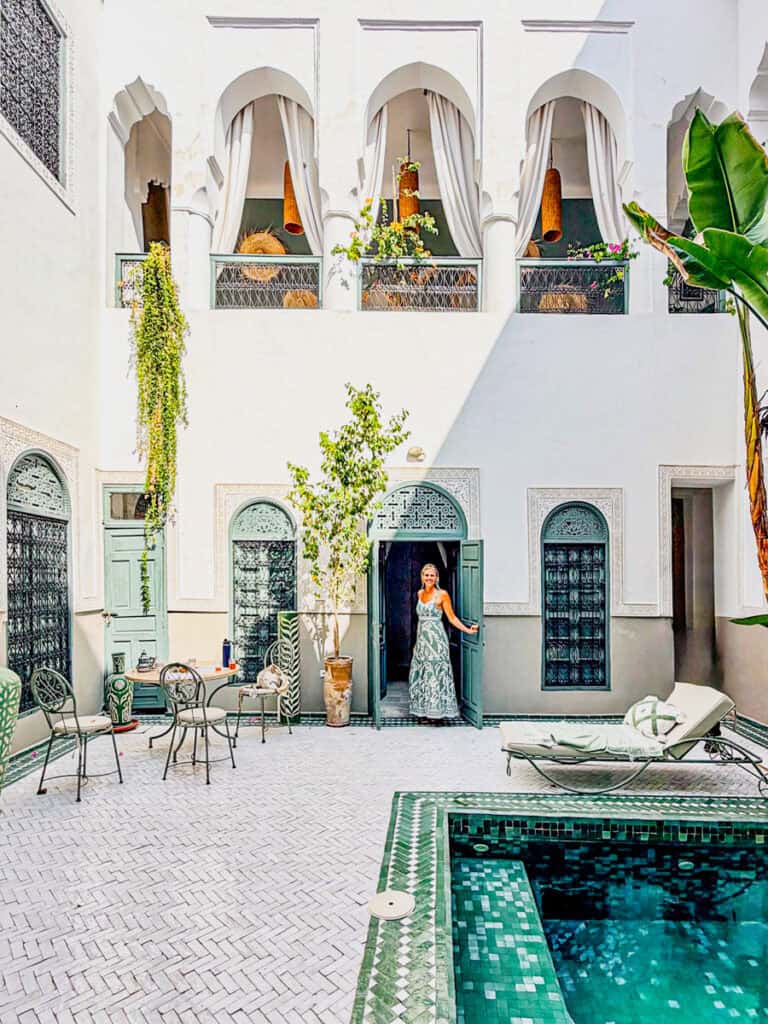
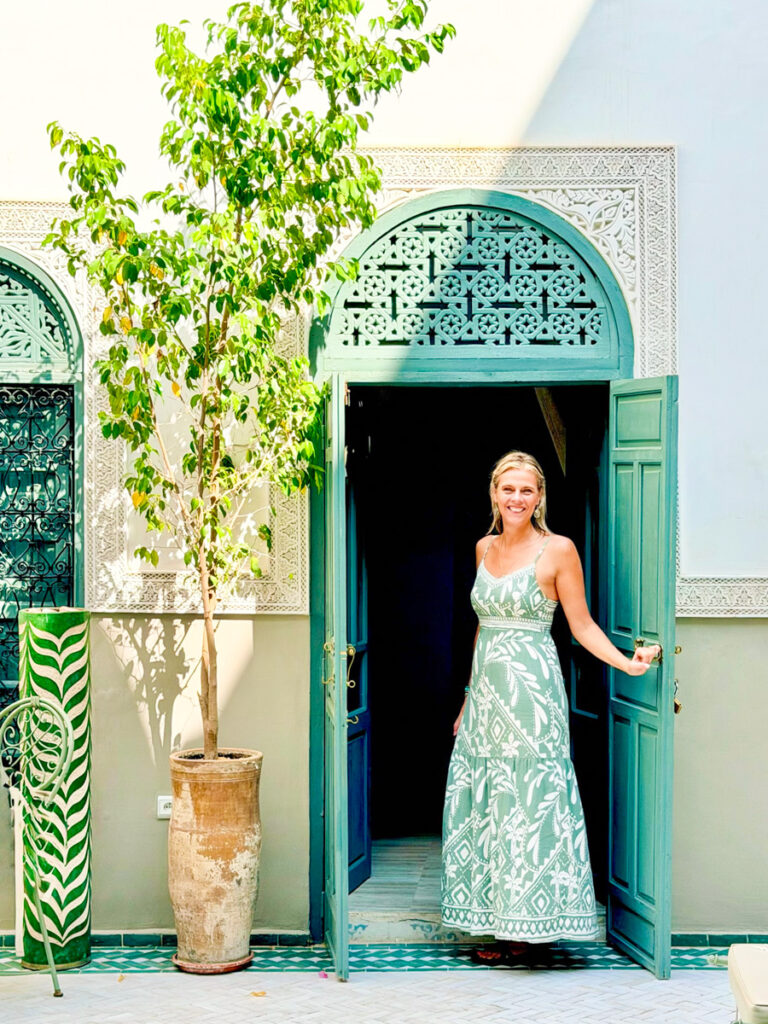
A riad is a traditional house built around an inner courtyard, usually with a small pool or fountain and a rooftop terrace and staying in one is part of the Marrakech experience. Ours, Riad Sierra, sat at the end of a narrow alleyway about a 20-minute walk from the main square. When I first walked down that alley at noon, I decided it looked like somewhere Jack the Ripper would enjoy. By the end of the week, it was just the lane with all the cats. I also stayed at Riad Al Wifak a few doors down for two nights before the group trip, and I loved it just as much!
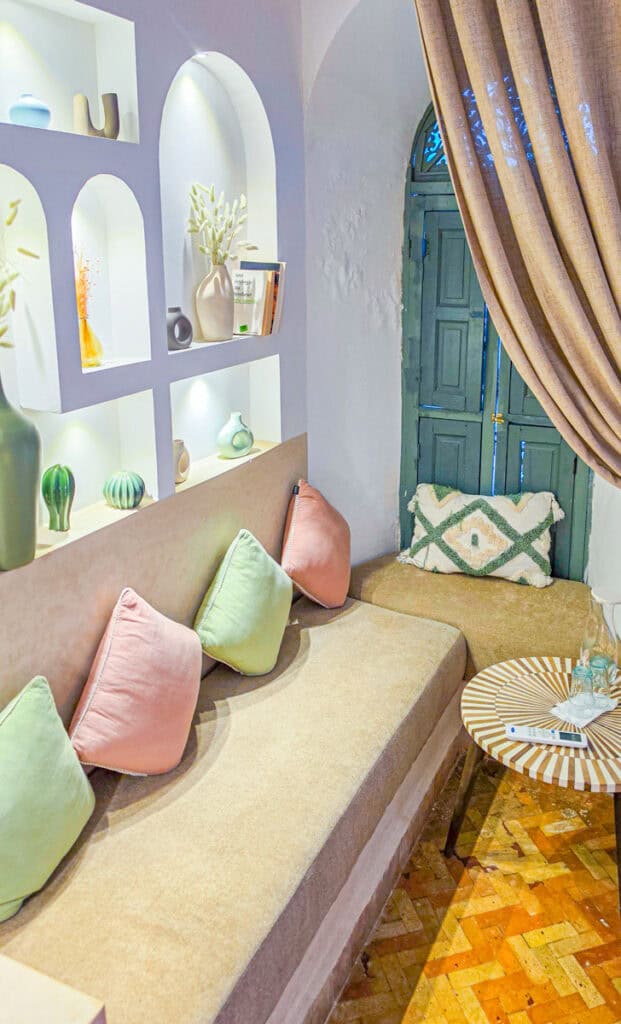
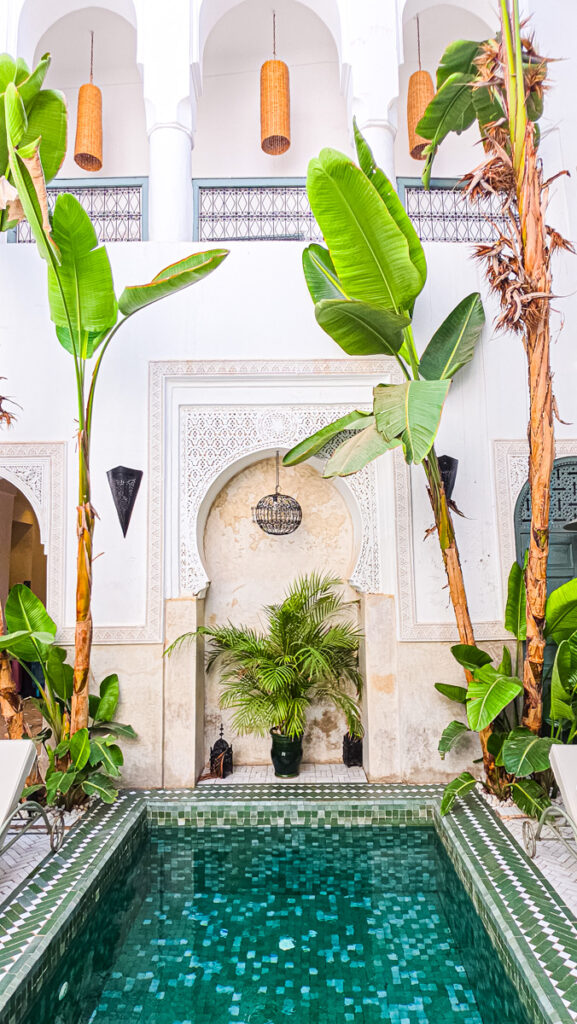
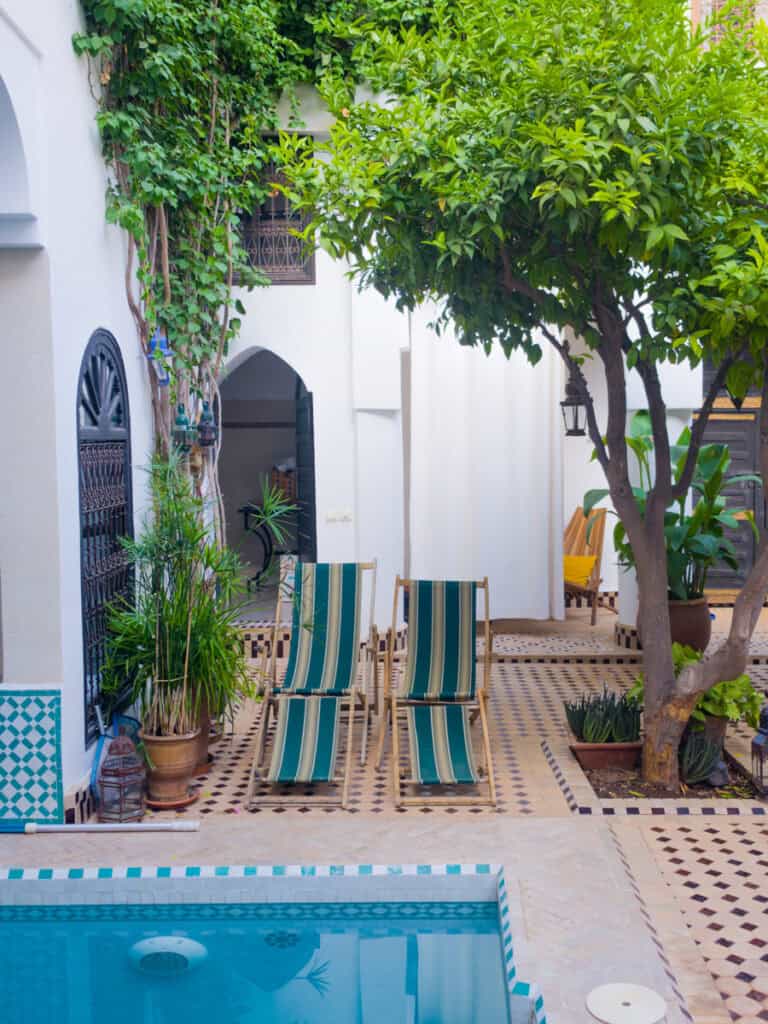
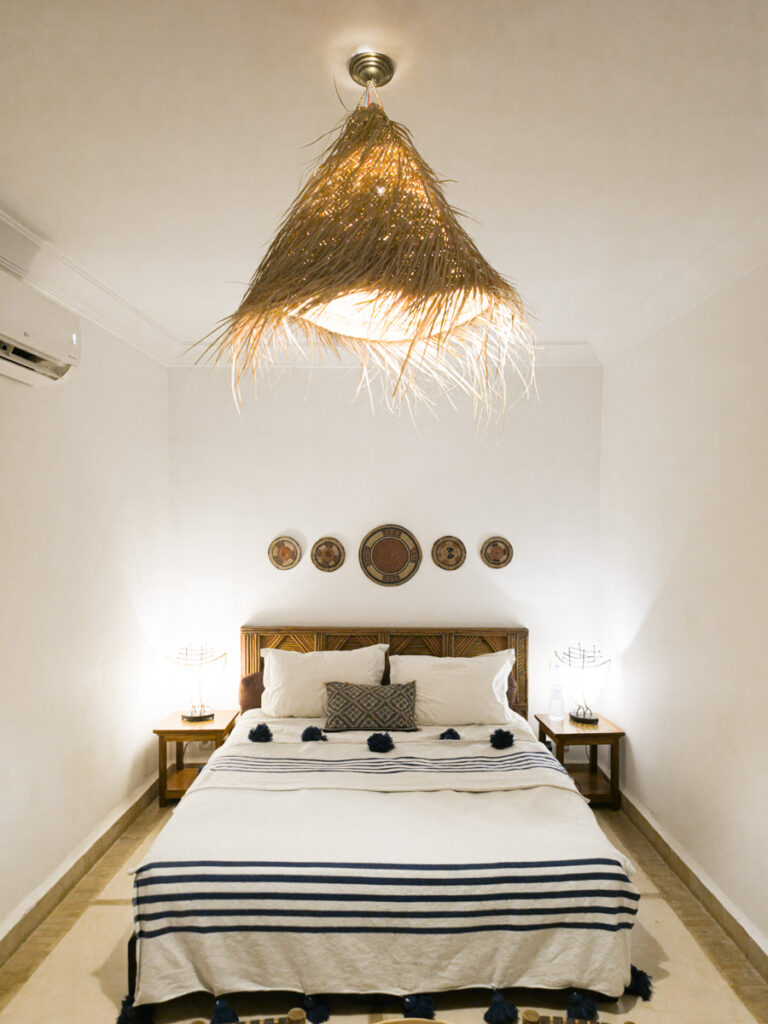
The catch with riads is noise. Every room opens onto the courtyard, so sound carries, and as a group of 12 chatty women we had complaints even when we were only talking in our rooms at 7am. Pack earplugs, keep your voice low early and late, and ask for a room with glass in the windows.
Walk Jemaa el-Fnaa square after dark
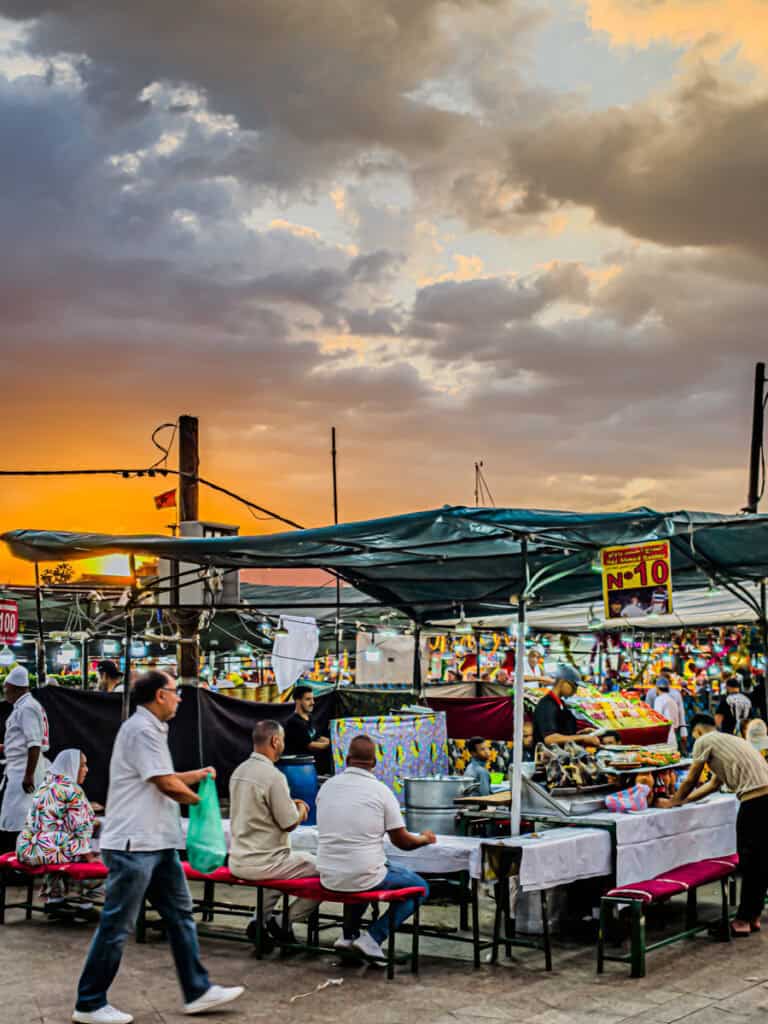
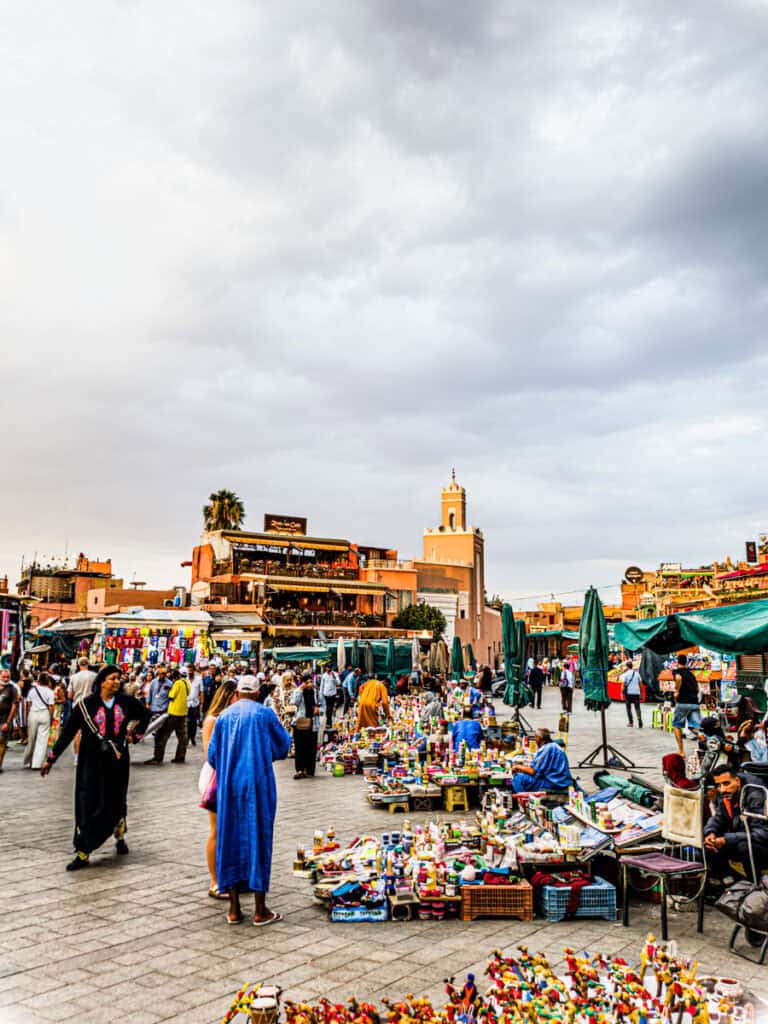
Jemaa el-Fnaa is the main square of the Marrakech medina, and UNESCO has listed its storytellers, musicians and street life as intangible cultural heritage since 2001. By day half of it is empty space, with snake charmers, henna artists, juice sellers (a fresh mixed juice was 20 MAD) and drummers who’ll want a few dirhams for a photo.
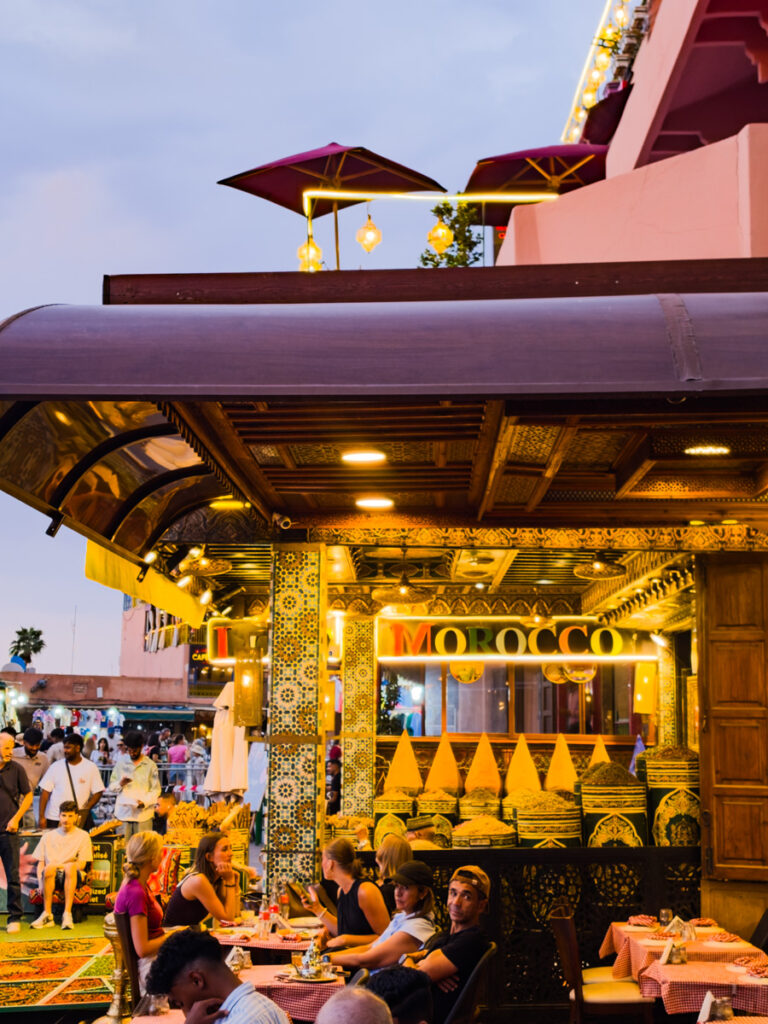
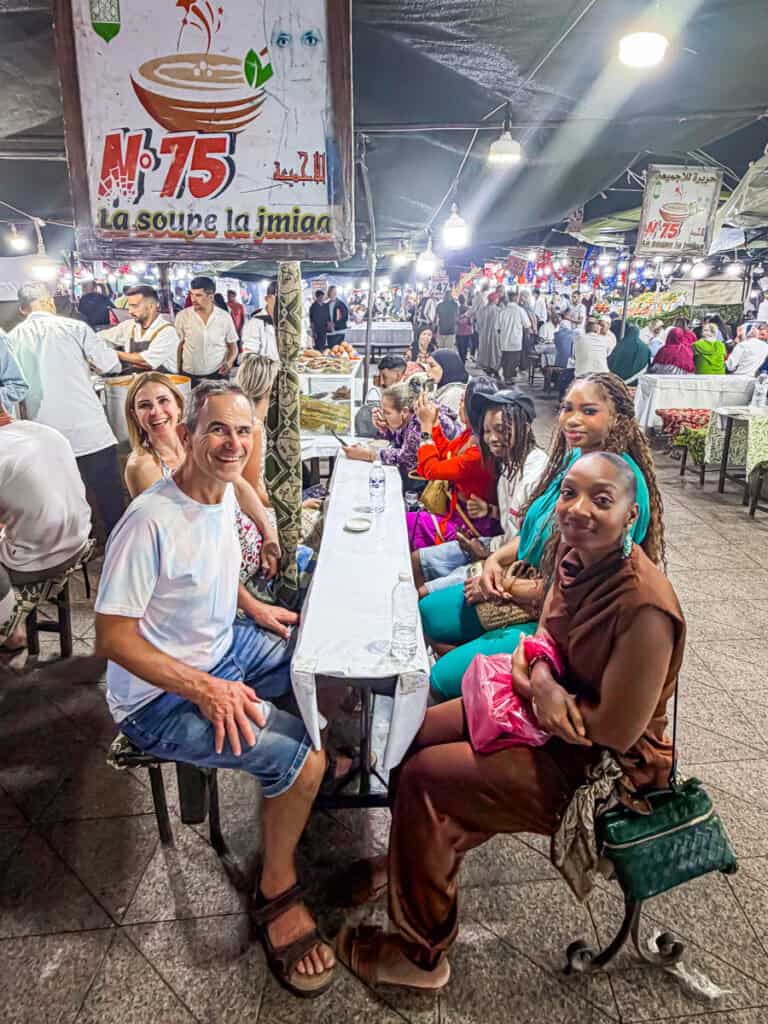
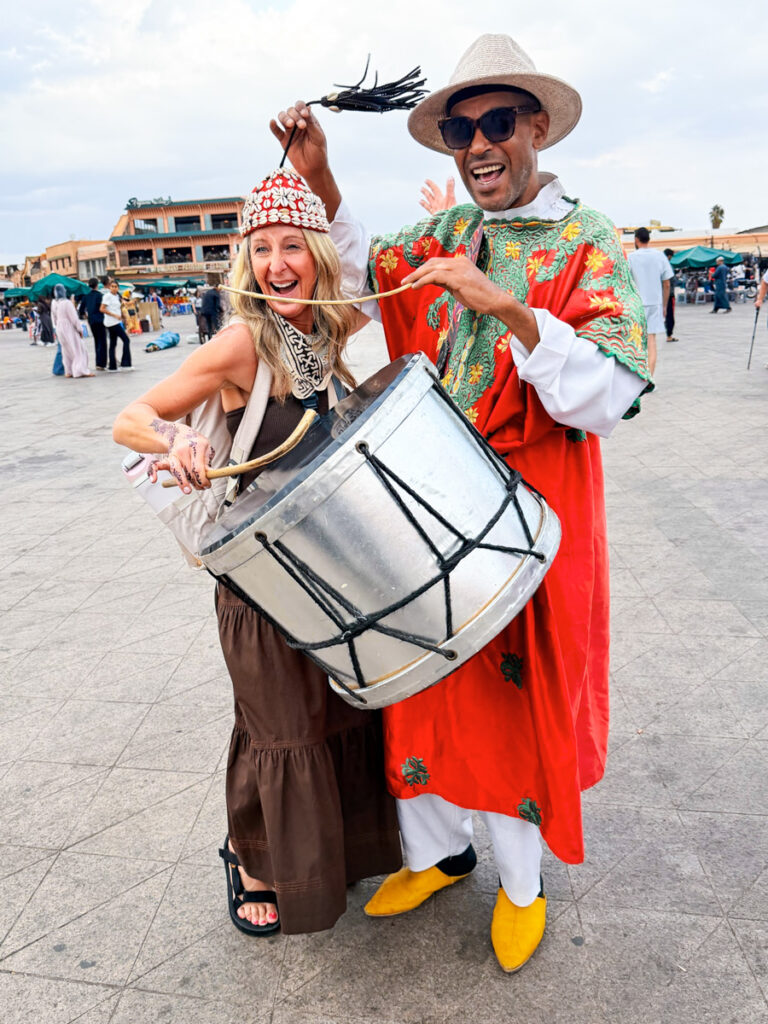
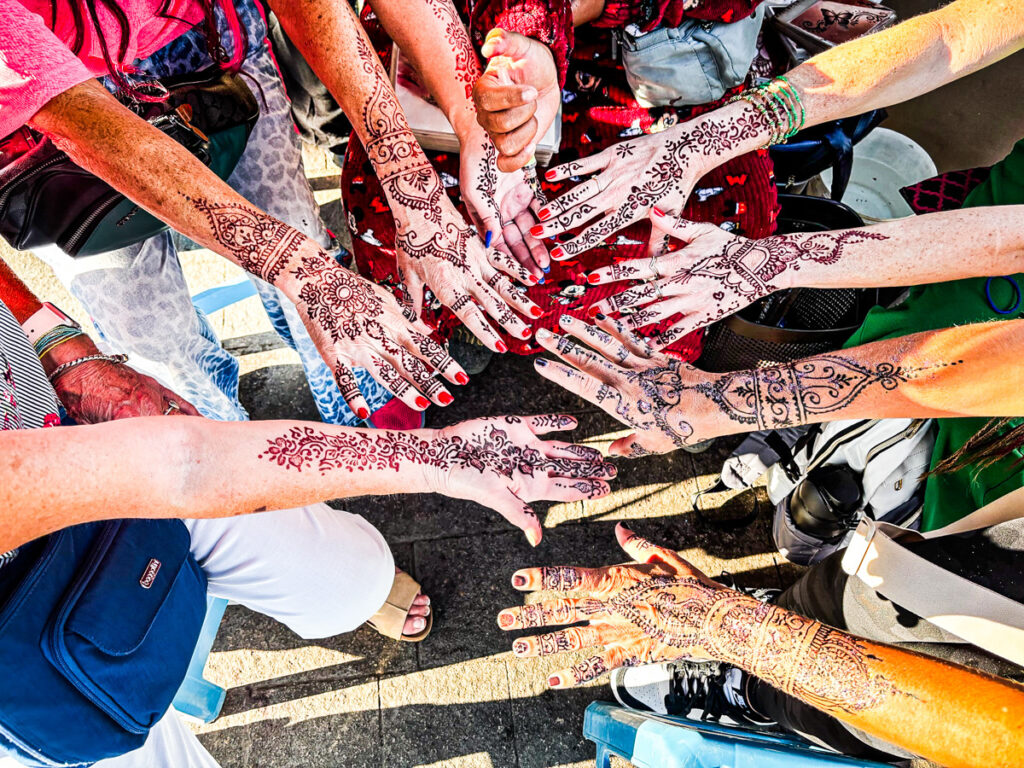
Come back after dark. The empty half fills with food stalls, hawkers sing and clap to pull you in, and local families arrive to eat and wander until midnight or later. It’s the closest thing I’ve found outside Asia to a night market, and it was the busiest the square had been all day when I walked through at 9:45pm.
If you get lost in the souks at any point, ask anyone to point you toward Jemaa el-Fnaa. Every lane feeds back to it.
See the Koutoubia Mosque and its gardens
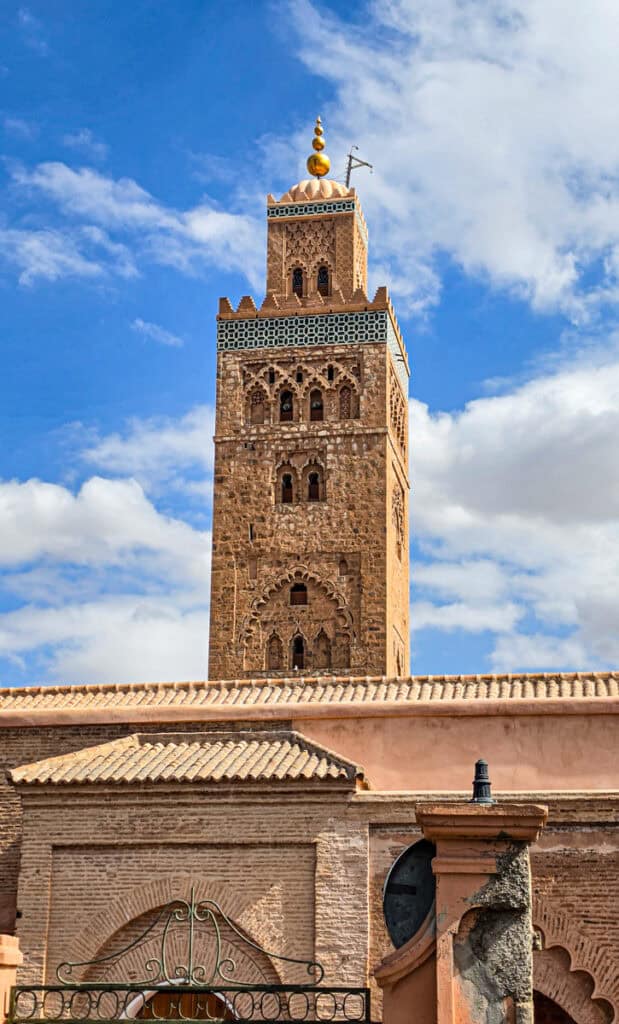
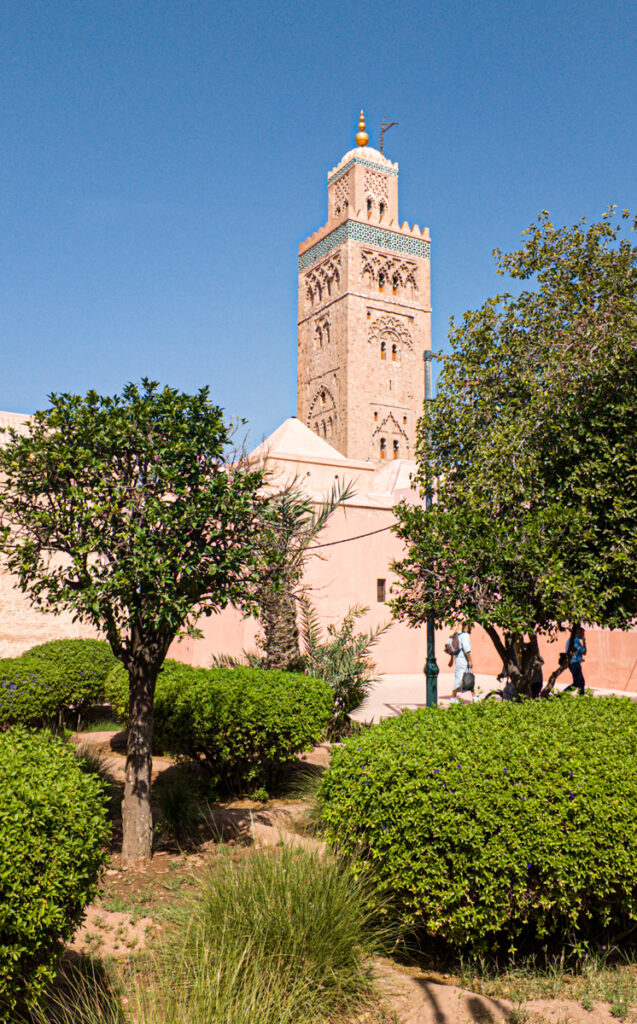
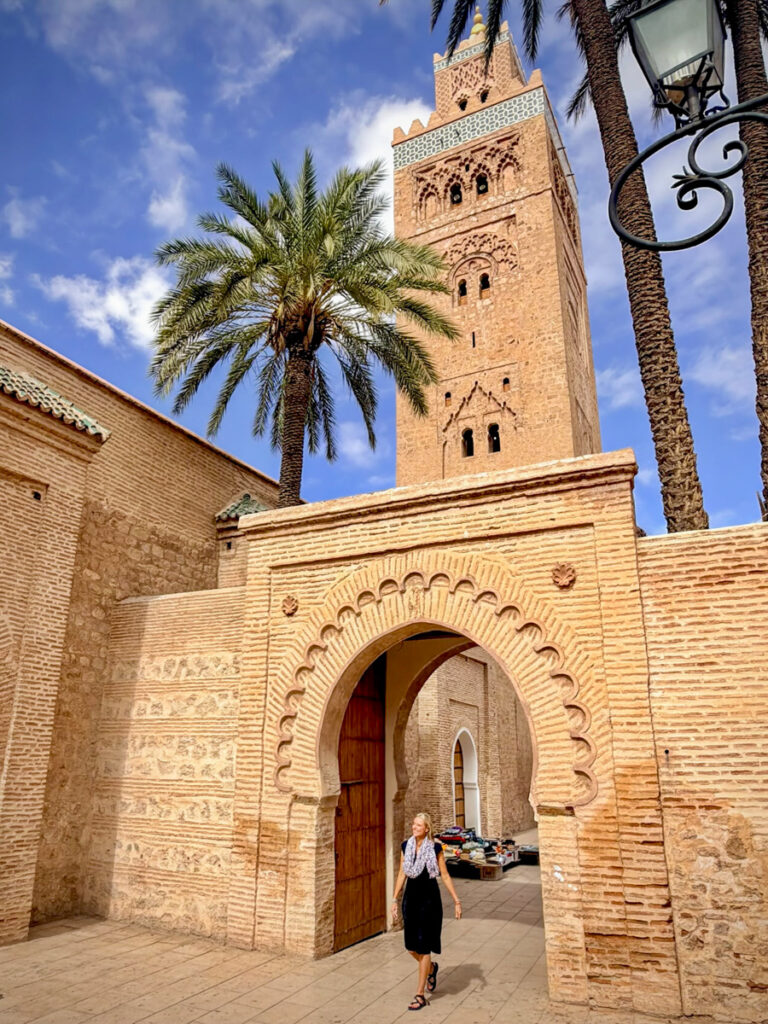
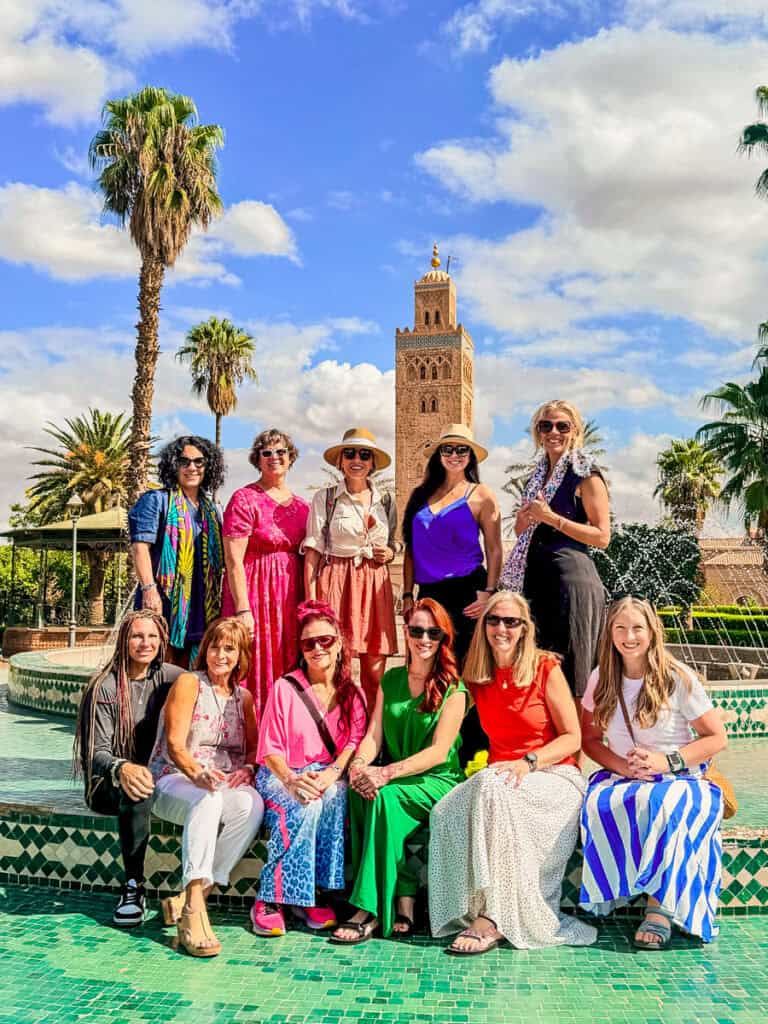
The Koutoubia’s minaret is the landmark you’ll navigate by. It stands 77 meters (253 feet) tall and was completed under the Almohad caliph Ya’qub al-Mansur around 1195. Non-Muslims can’t go inside the mosque, but you can walk around the grounds and the rose gardens beside it. The small garden at the back was where I went when the souks got to be too much.
Tour Bahia Palace
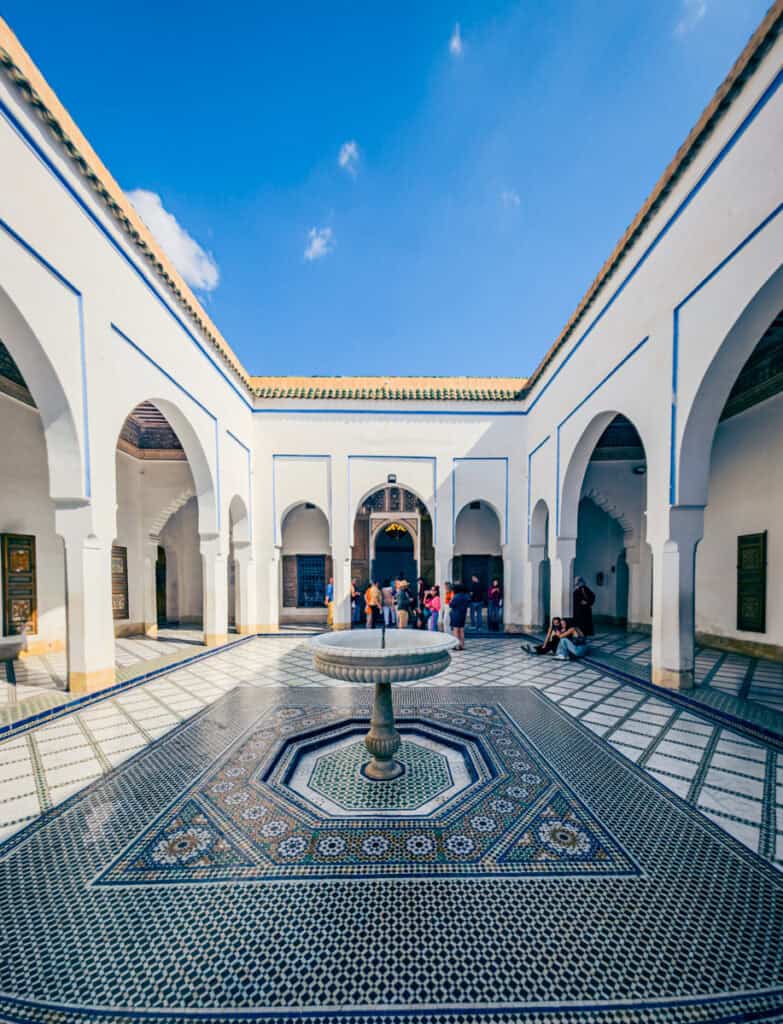
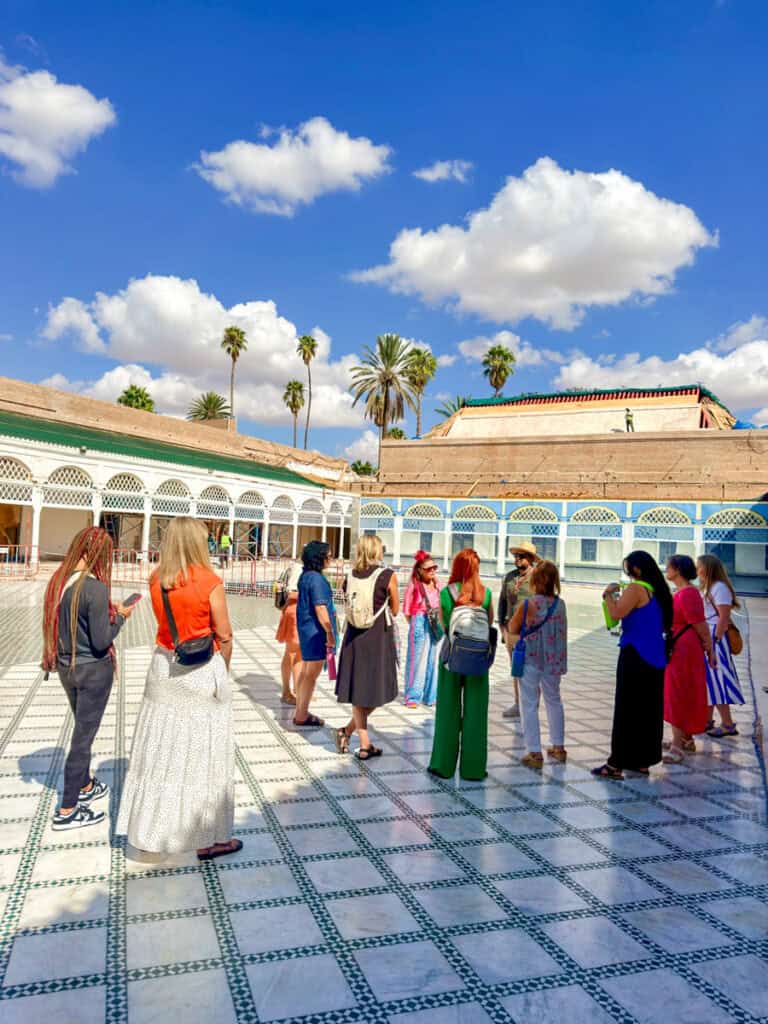
Bahia Palace was built in 1866 and 1867 for Si Moussa, the sultan’s grand vizier, and later expanded by his son, Ba Ahmed, who lived there with four wives and several concubines (which, for a group of women, sparked plenty of conversation). The name means brilliance, and the verdant courtyards, carved cedar ceilings and tiled fountains live up to it. Make sure to spend time looking up, down, and sideways as the design of everything is stunning.
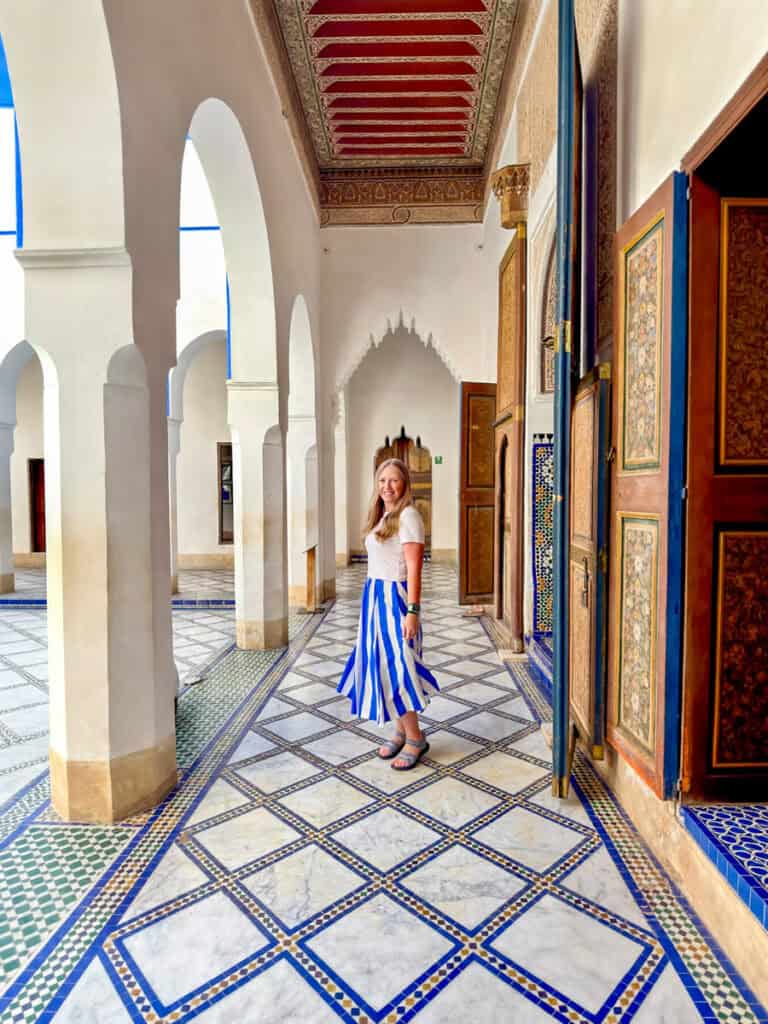
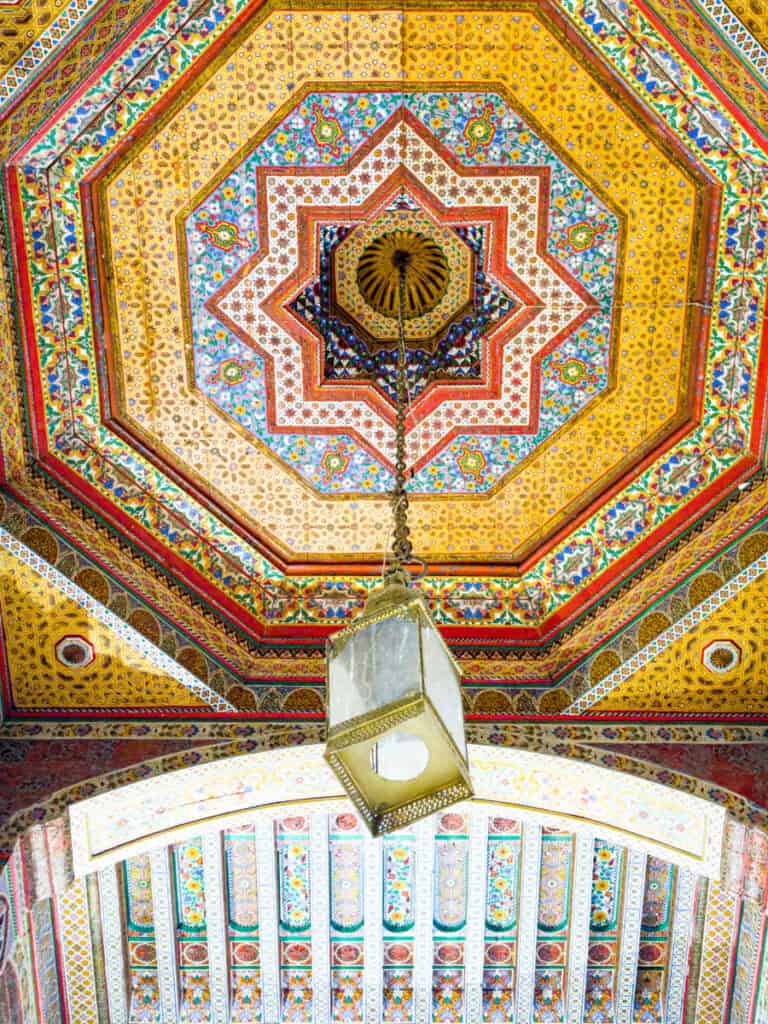
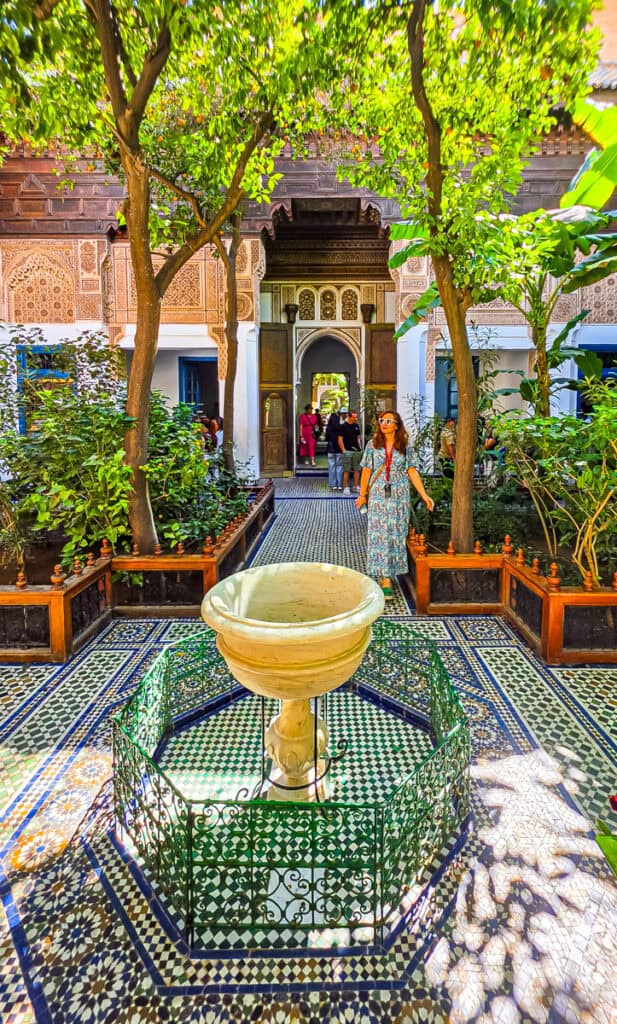
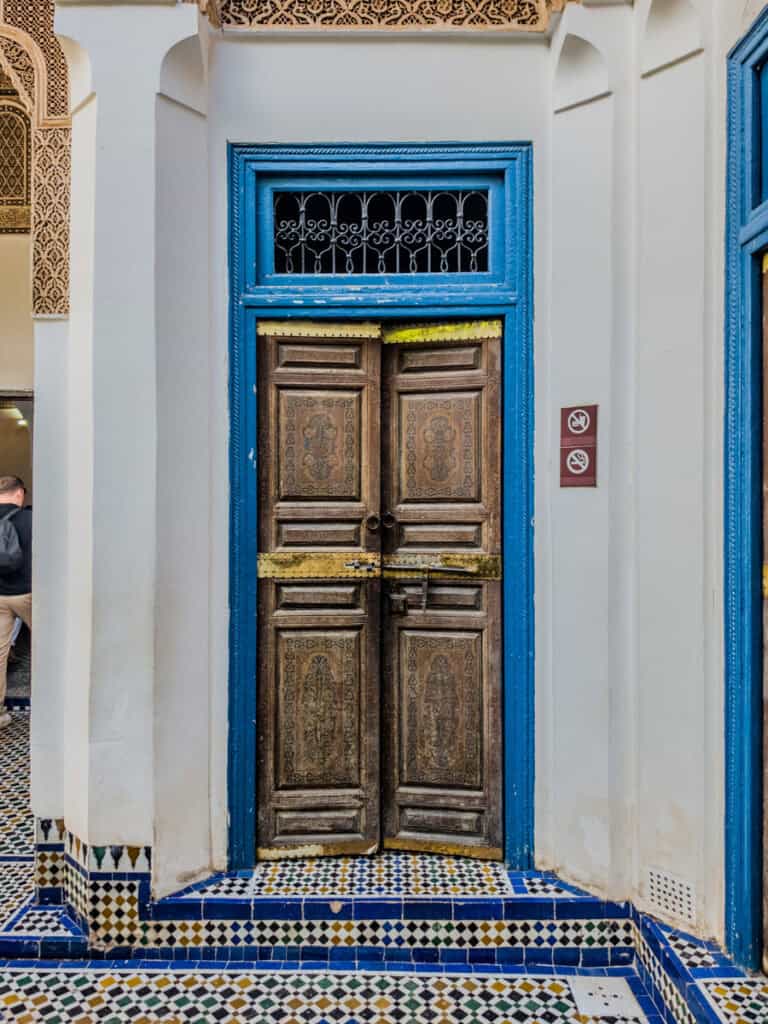
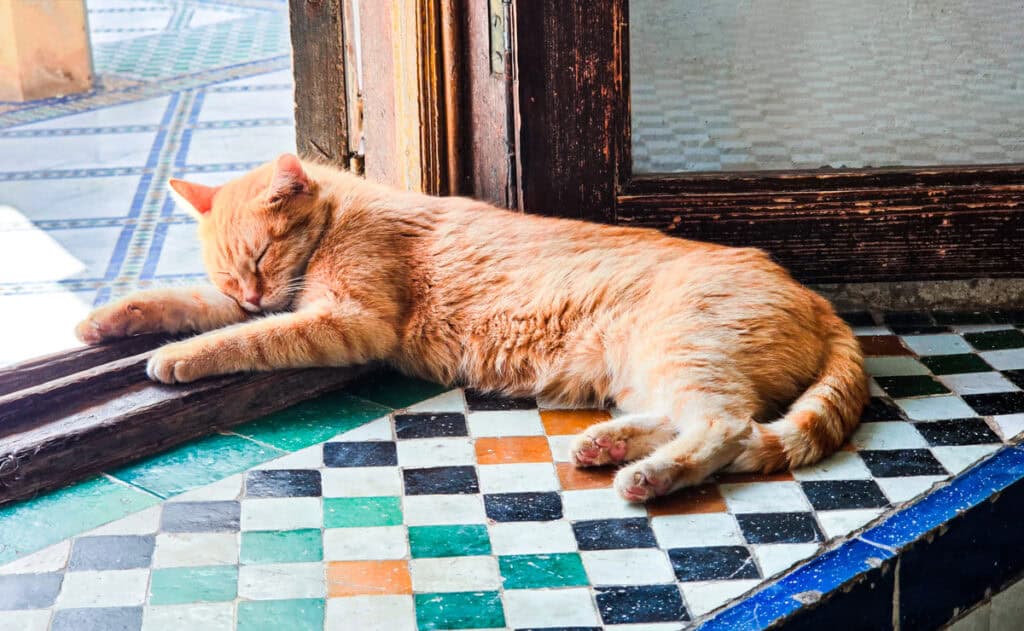
It was packed when we visited, with renovations underway, so photos were hard. Get skip-the-line tickets, join a guided tour, or go at opening time. Our guide, Mo, had pre-booked ours, and we walked straight past a long queue. My favorite resident was the cat asleep on the floor, half hanging out of a window, clearly in charge of the place.
Get lost in the Marrakech souks
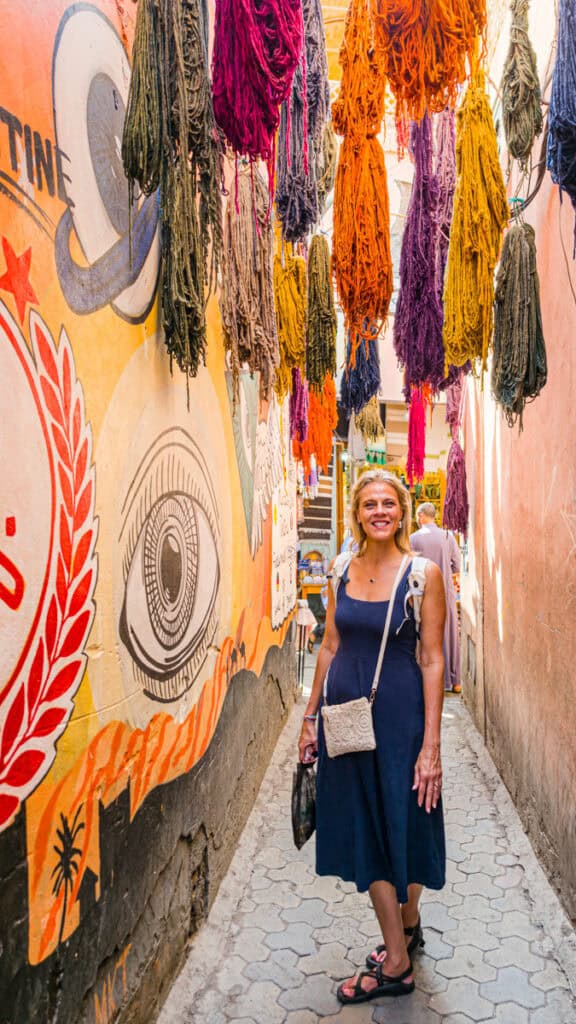
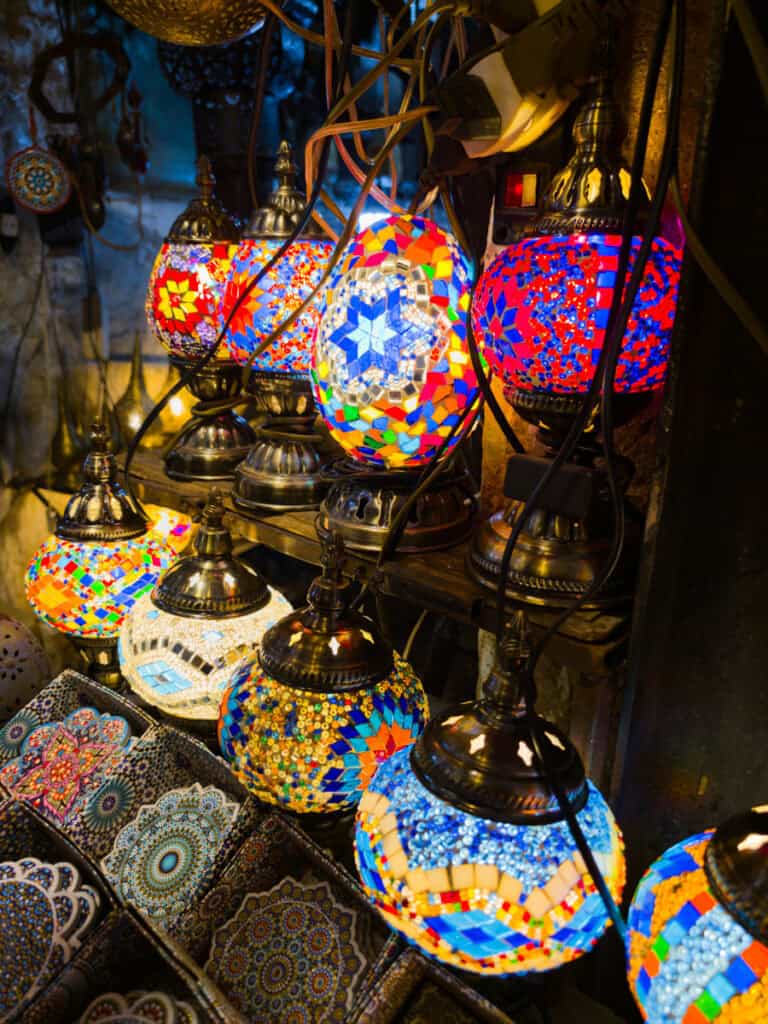
The souks are a maze of covered lanes selling spices, lamps, leather, carpets and argan oil, and behind the shopfronts you’ll find metalworkers hammering, woodworkers carving and dyers coloring the silk and cotton for the scarves you see everywhere and the carpets high on your shopping list.
You can get a good look at the yarn hanging over the alleys and their dyeing workshops in Souk des Teinturiers, the Souk of a Thousand and One Colors, created through the hard work of the Sebbaghine dyers.
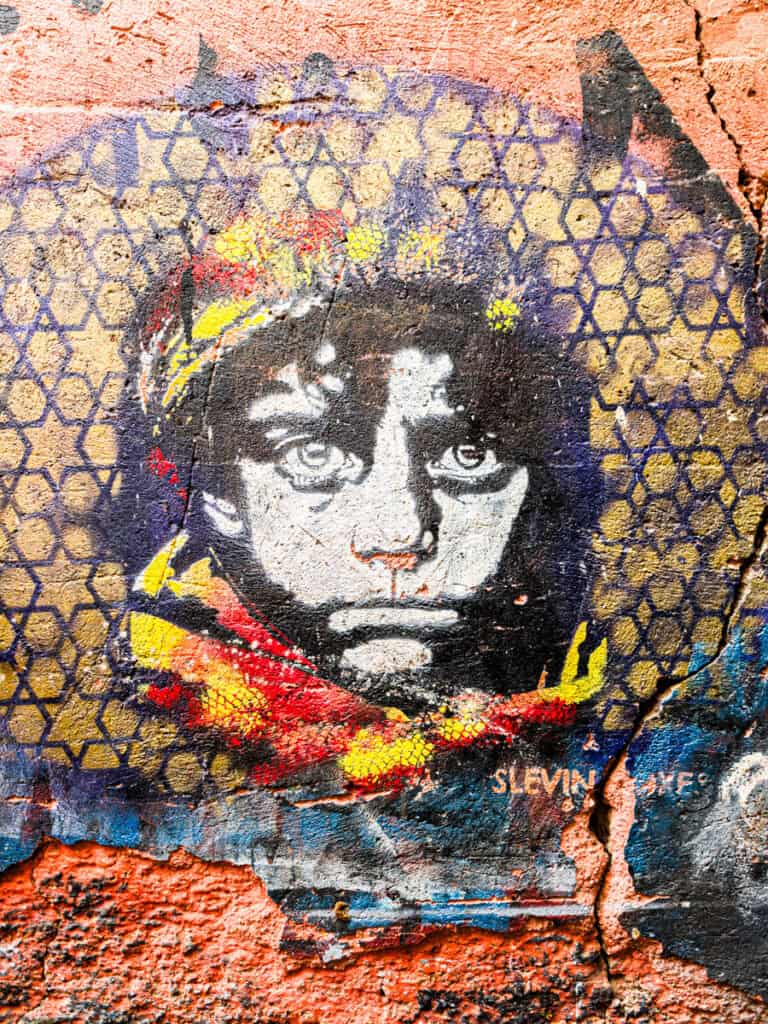
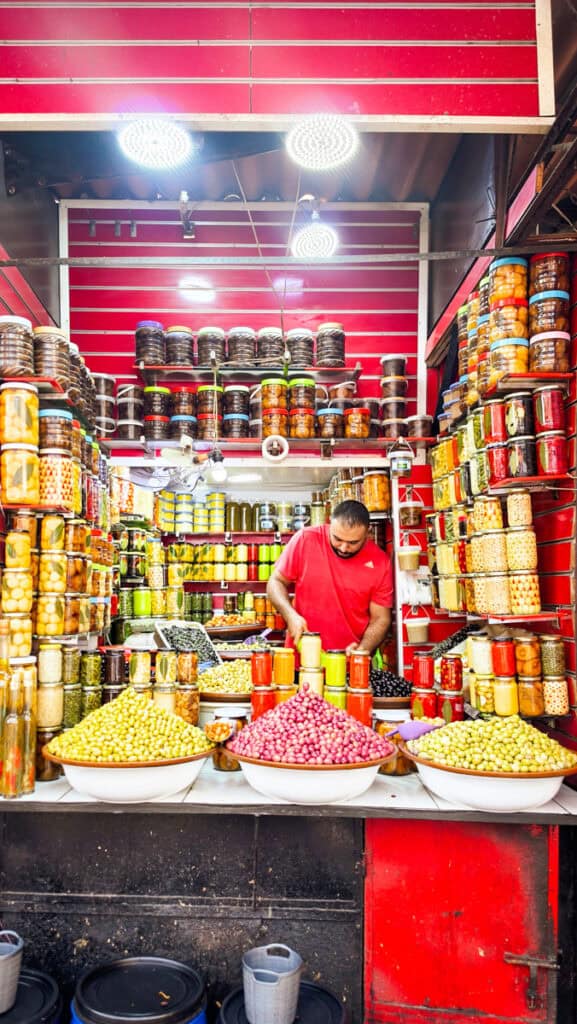
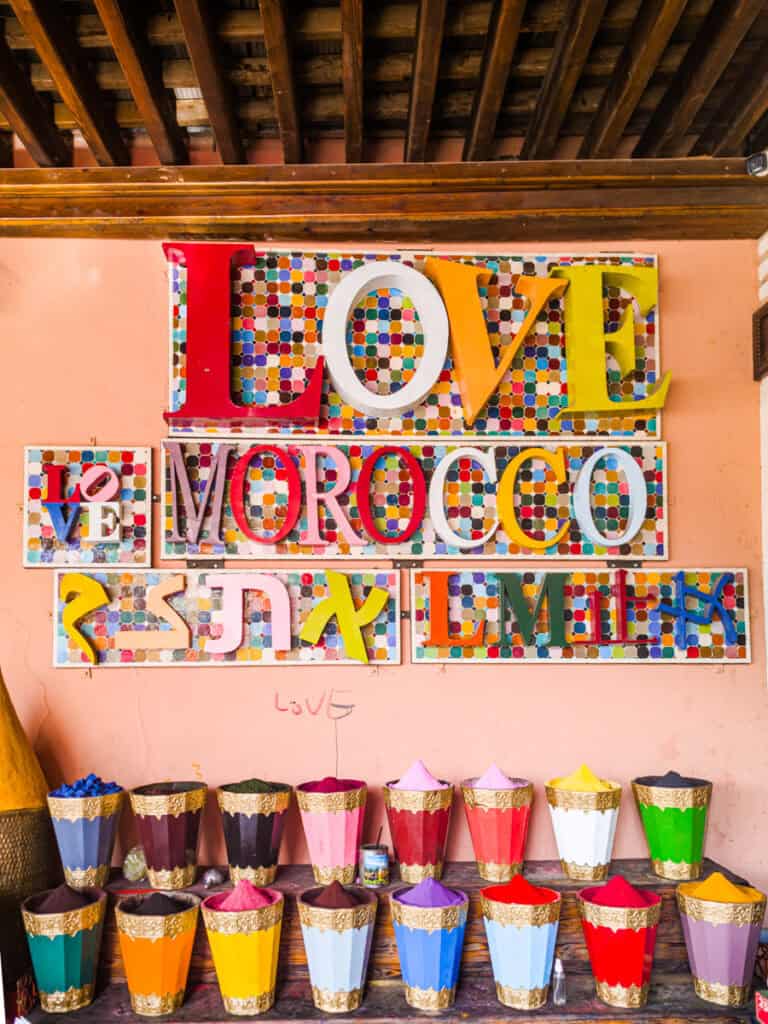
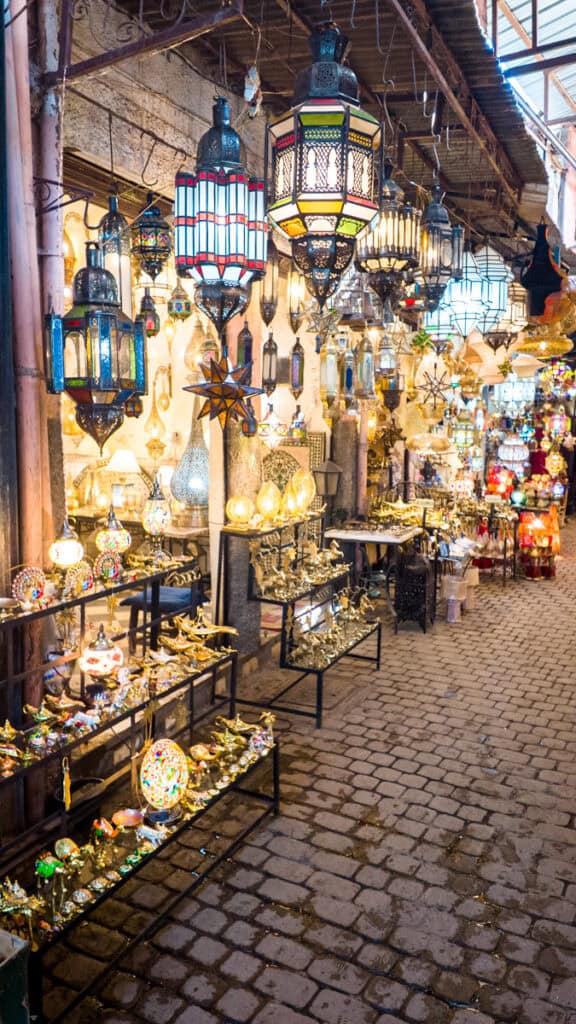
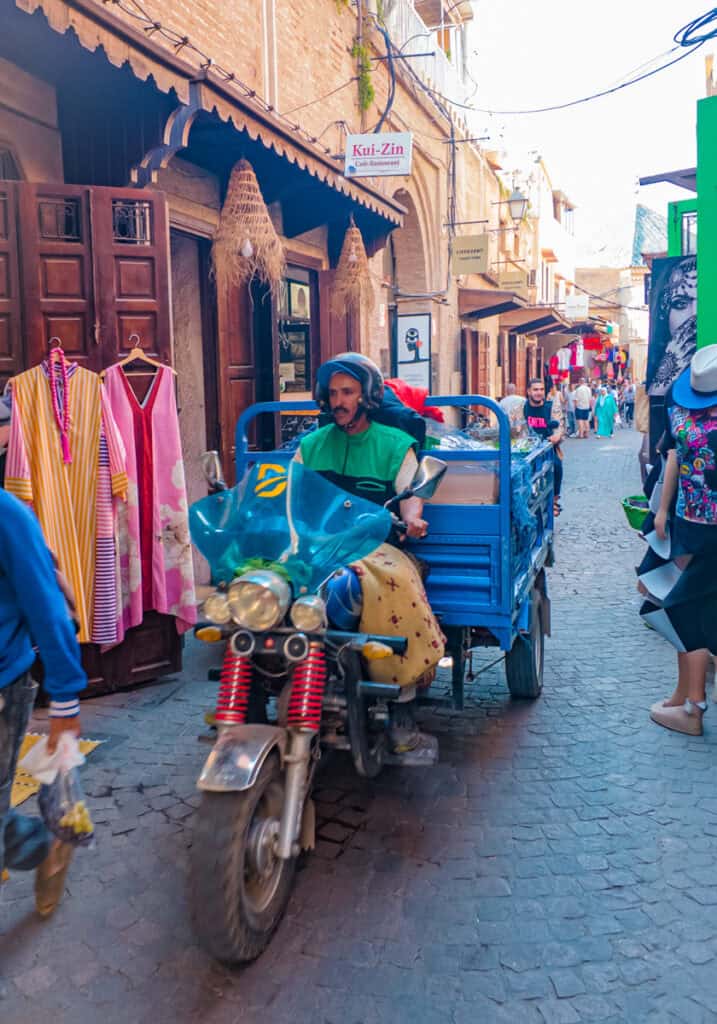
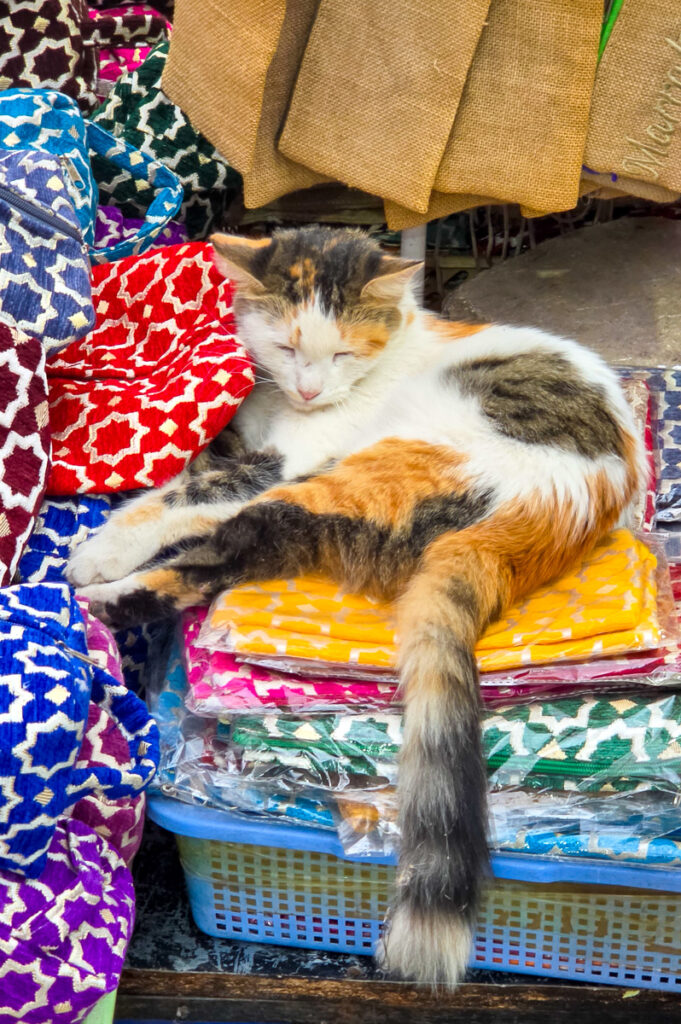
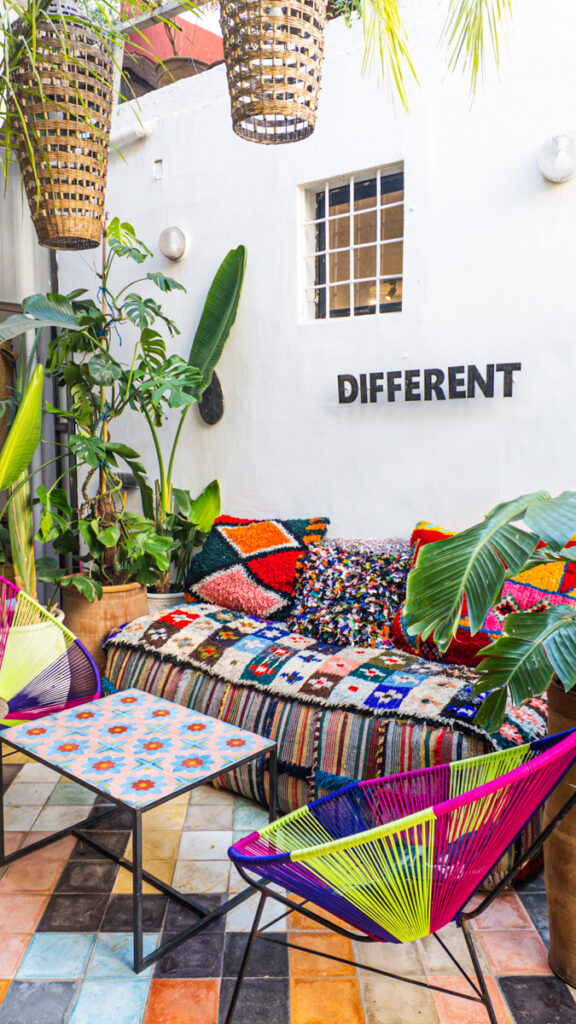
Go when the souks open, around 9 or 9:30. The lanes are quieter, and sellers believe the first sale of the day brings good luck, so the prices are better. Most shops close around 9pm.
Start your offer at about a third of the asking price and expect to settle somewhere near half. I opened too high on a bag of spices and face creams, and the seller agreed so fast I laughed and said, “I messed that up, didn’t I?” He threw in a few free gifts. Losing a deal when you travel is part of the fun story, IF you have a good attitude about it.
If you are traveling solo and feel a little overwhelmed by the souks (trust me they’re fun), you can take a guided tour through them., Here are a few options, and I did consider this Airbnb experiences tour of the souks, but I ran out of time.
Visit a herbal pharmacy
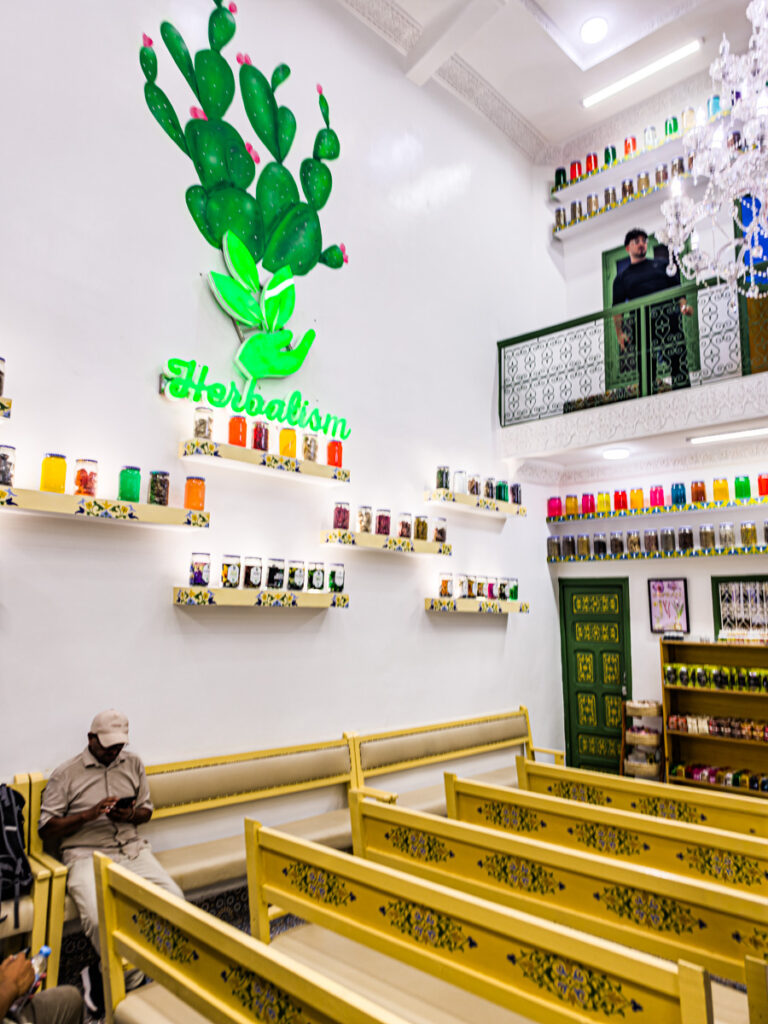
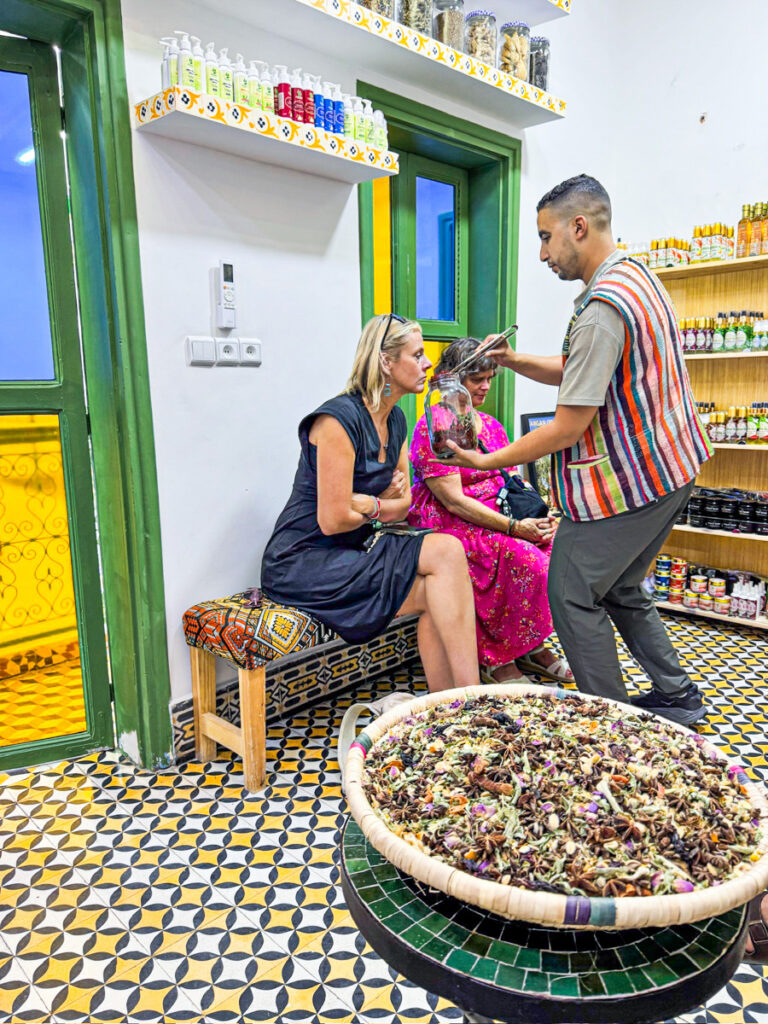
Mo took a few of us to Herbalism Pharmacy, a herbal pharmacy (inside what looked like a church, pews included) where a pharmacist walked us through argan oil, cactus oil, black cumin and orange blossom, and promised every remedy would take 10 years off.
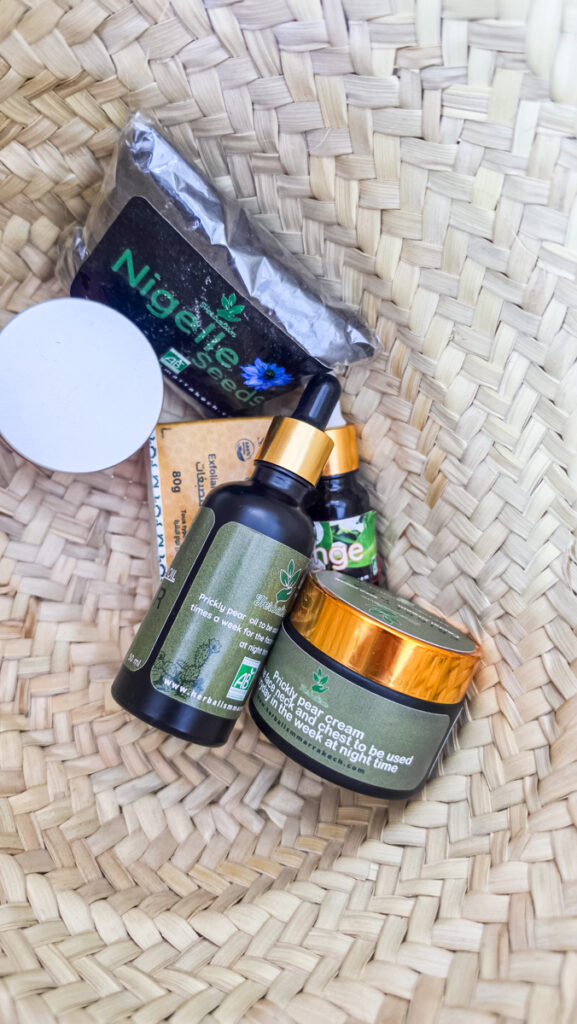
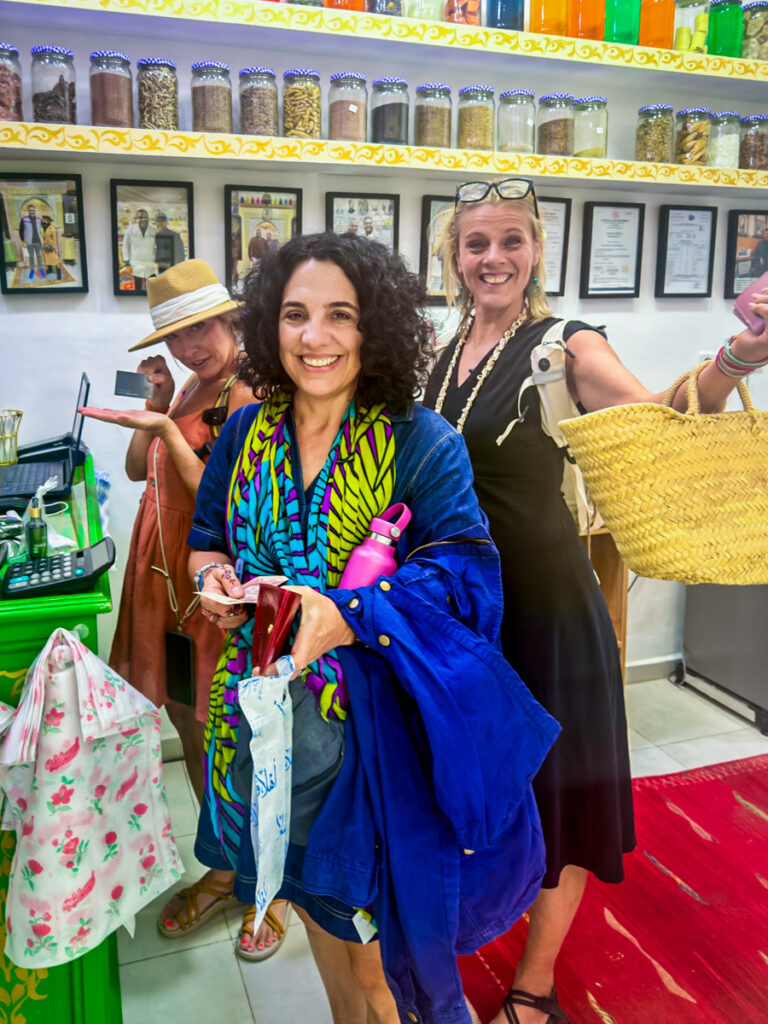
We all walked out with a basket. A trusted pharmacy costs more than the souk stalls, but you know what you’re getting. I bought argan oil, cactus oil, black cumin and orange blossom, and I wish I’d bought more. And I’m wondering if i can convince Mo to buy my supplies and ship them to me!
Drink sand-brewed Moroccan coffee
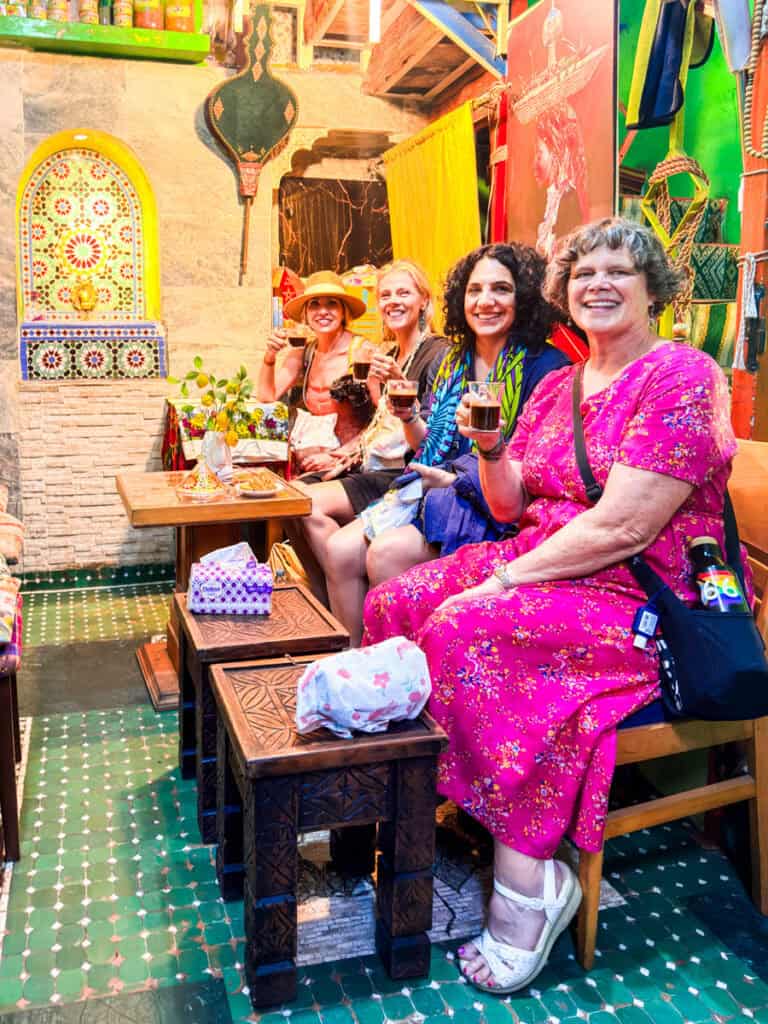
In a tiny coffee stall deep in the souks, we watched coffee brewed with Moroccan spices in a small pot swirled through hot sand, which heats it evenly and builds a crema on top. It was smooth and rich, and it takes about as long as it takes to sit down. I really enjoyed seeing coffee made in this way.
Fuel up at Kesh Cup with a more modern flat white
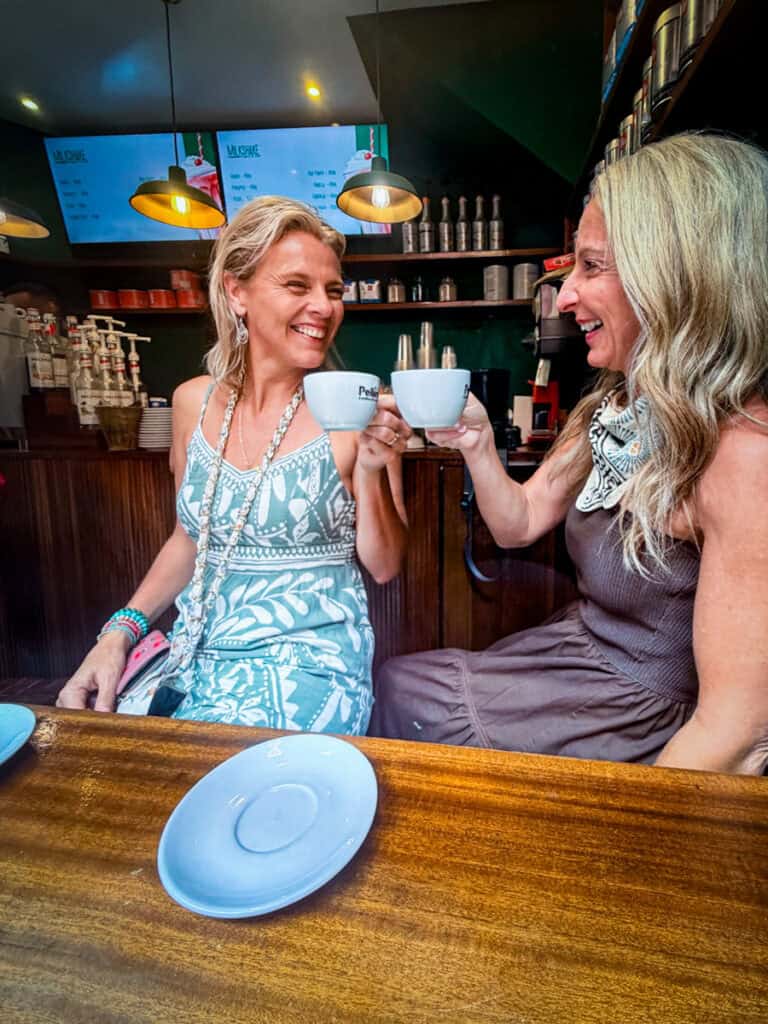
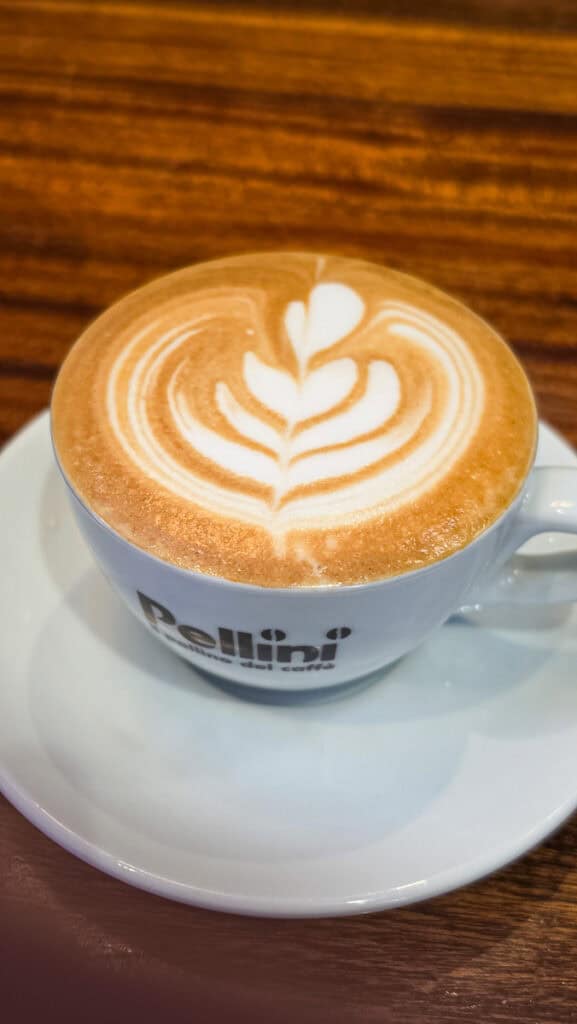
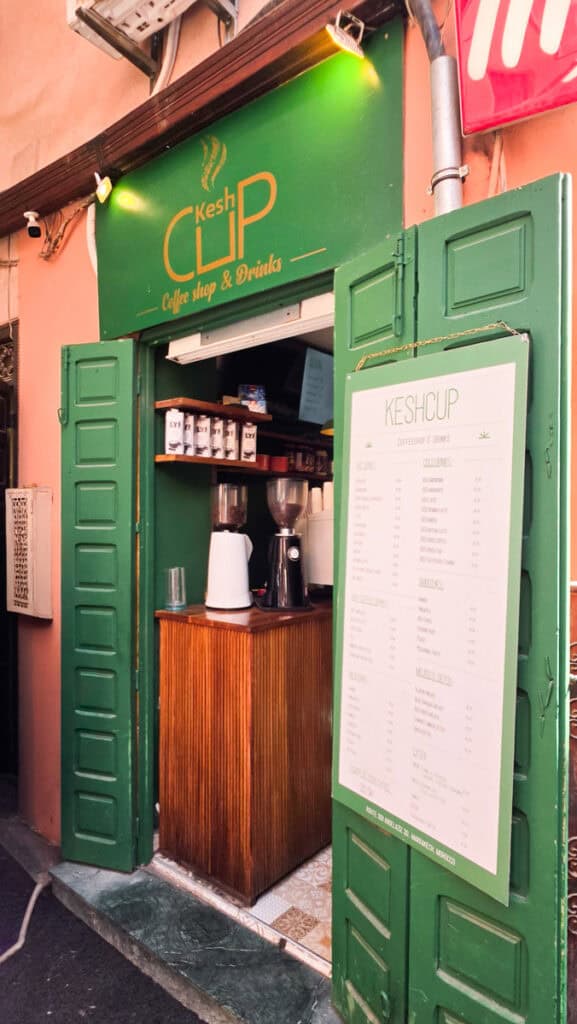
Speaking of coffee, if you like the third wave craft kind, pop into Kesh Cup, a tiny cafe located in the souks. They made my Aussie coffee snob self very happy with a perfected flat white! The best I had on my Morocco trip. I convinced Allie she needed to have a flat white with me here … I heard her ordering more flat whites throughout the rest of the trip!!
Escape to Le Jardin Secret
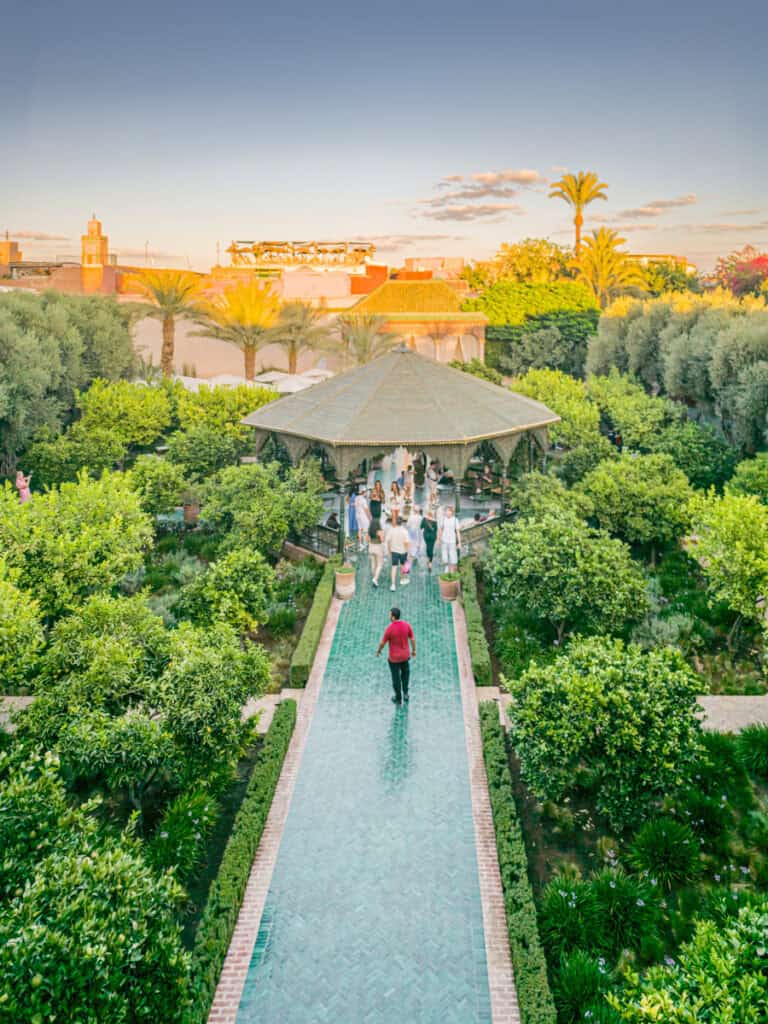
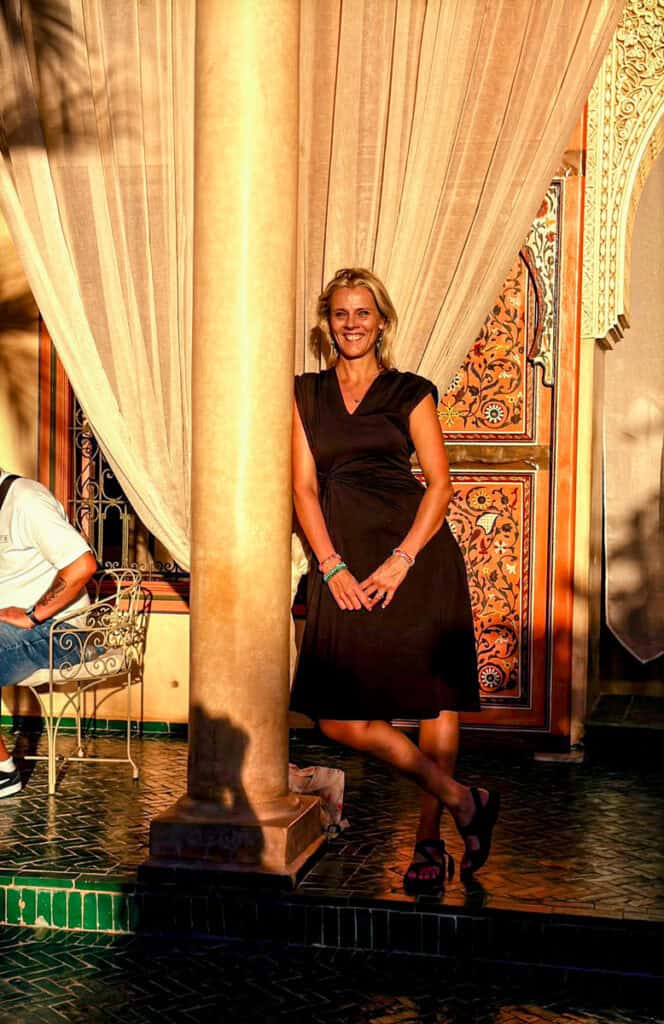
Le Jardin Secret is a restored riad garden on Rue Mouassine, right in the medina, and it’s a quiet green break from the souks, and perfect for photos. Climb the tower (for an extra fee) for the view over the garden. OR, settle instead for the free terrace like we did. As of November 2026, entry is 100 MAD (tower 40 MAD), and it’s open 9:30am to 5:30pm in November and December, later in spring and summer.
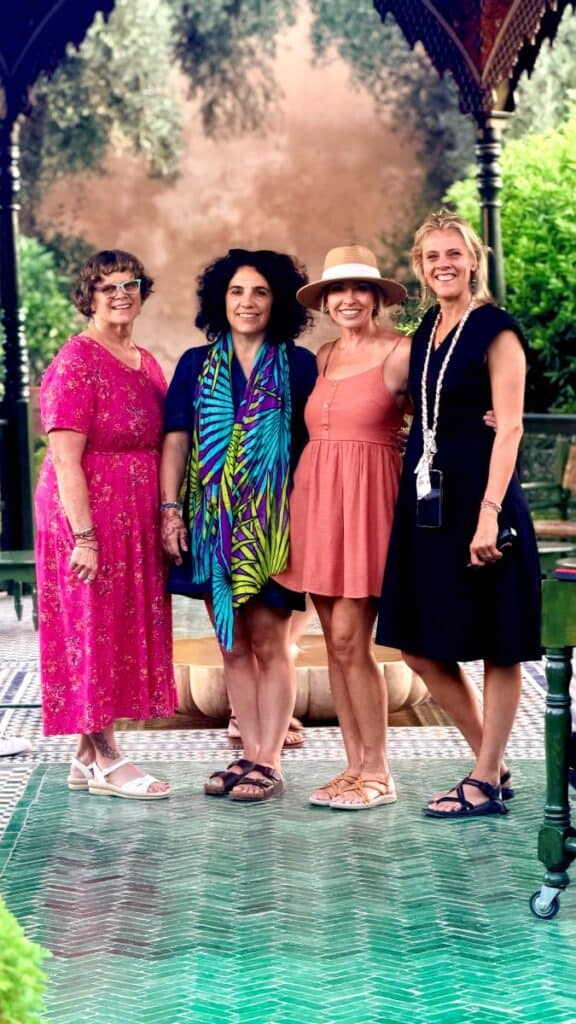
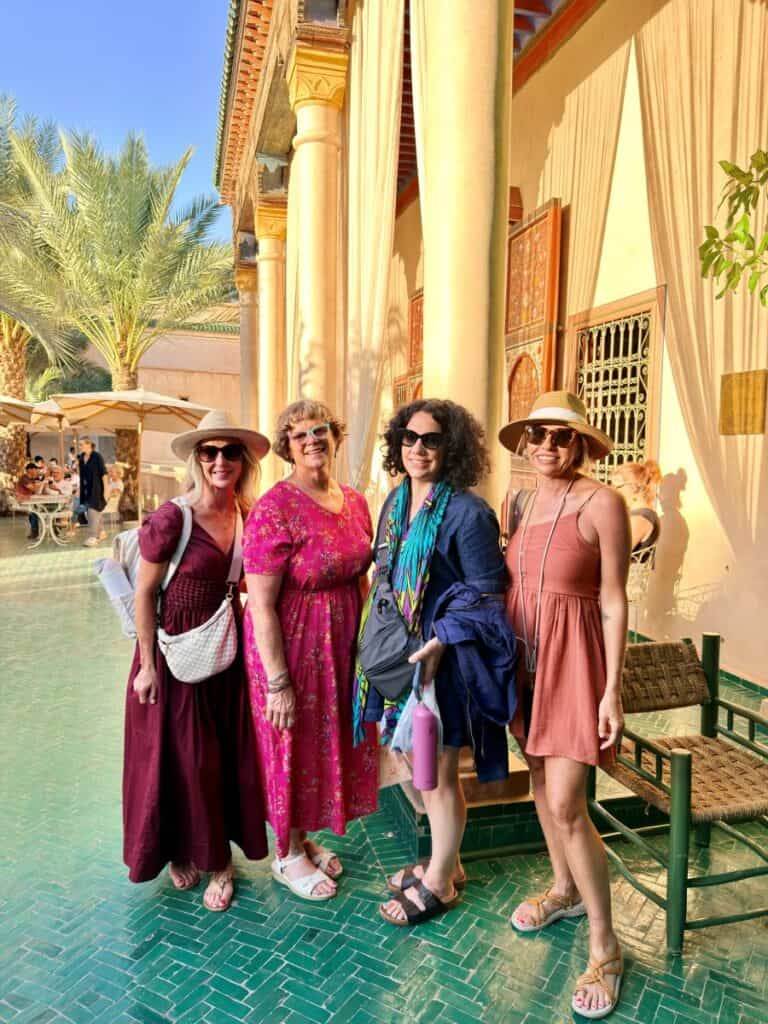
We’d hoped to visit Jardin Majorelle and the Yves Saint Laurent Museum too, but tickets are sold online only, and we couldn’t fit a timed visit into our day. Book ahead if it’s on your list. Mo did tell us he thought Secret Garden was better as it features Moroccan plants, whereas Jardin Majorelle has a lot of foreign species.
Float over the Atlas Mountains in a hot air balloon
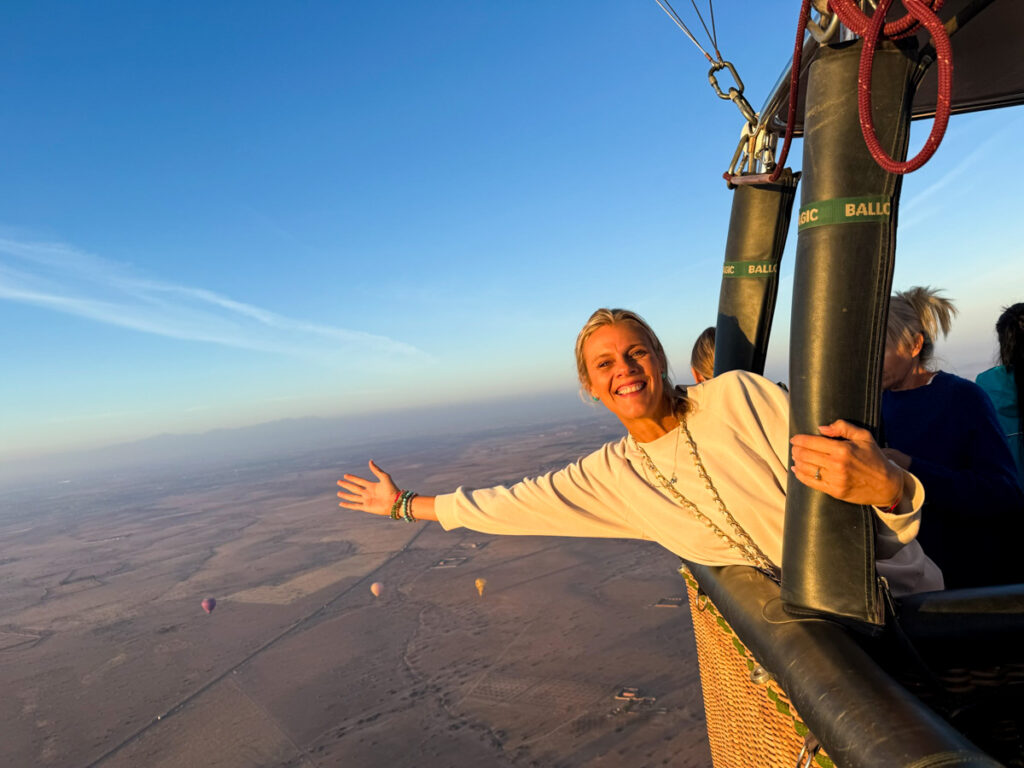
The balloon launch site is about an hour outside Marrakech, so expect a 4am pickup. I’d done a few balloon rides and get a little nervous in them, so I’d decided I was done, and I’m glad this one was on the itinerary. Our pilot called ballooning one of the most zen experiences you can have, and if you can stop chatting for a minute up there, the stillness is magic. We went quiet as the sun came up over the Atlas, and a few of the women cried.
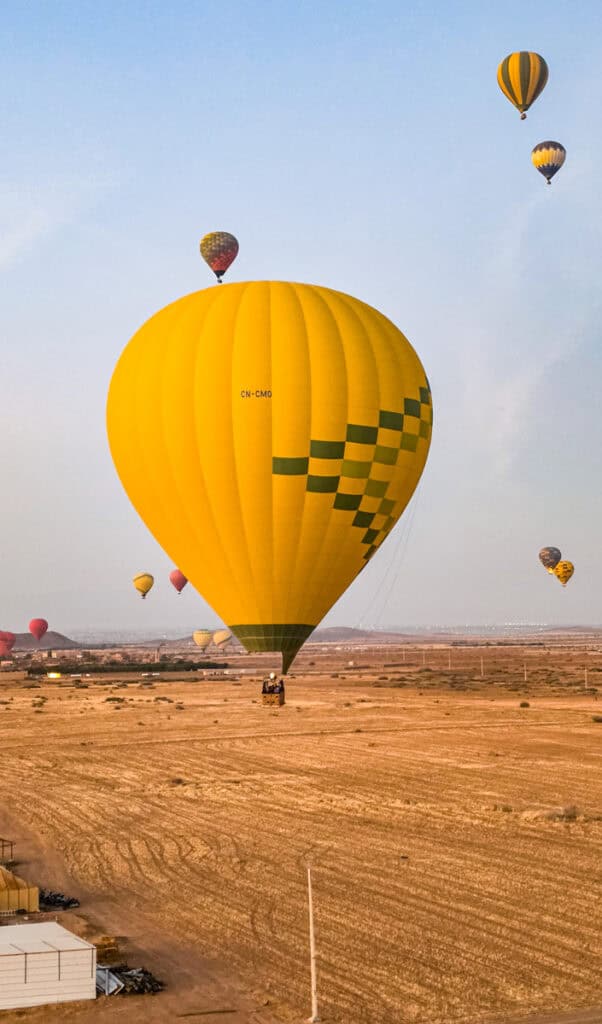
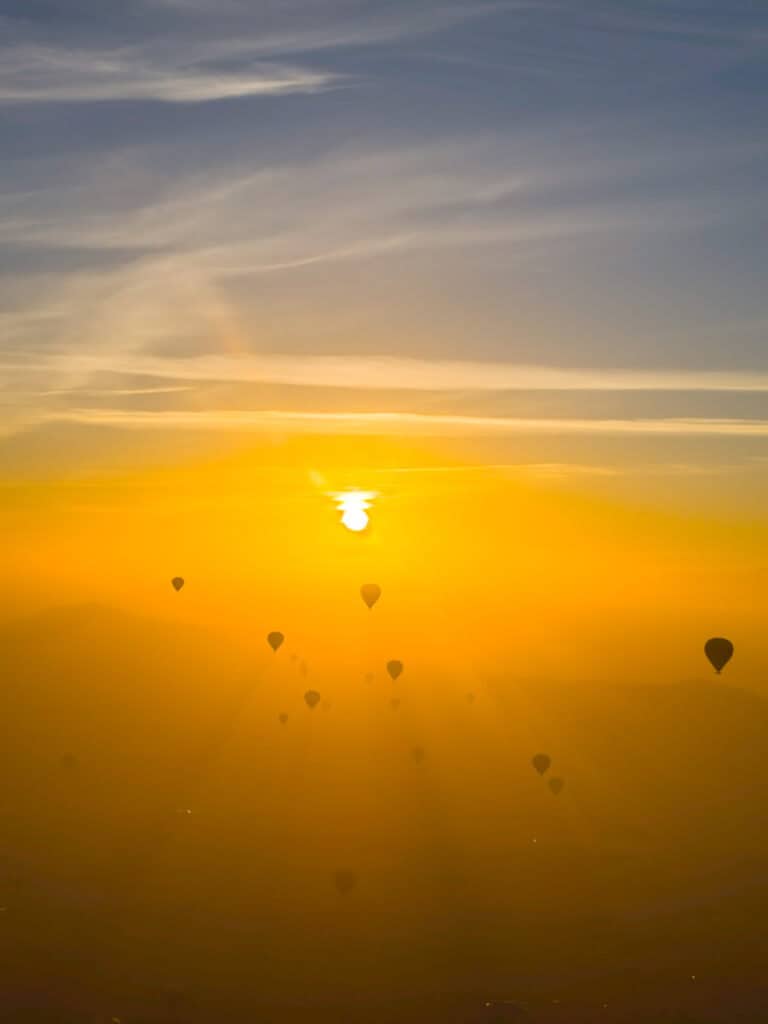
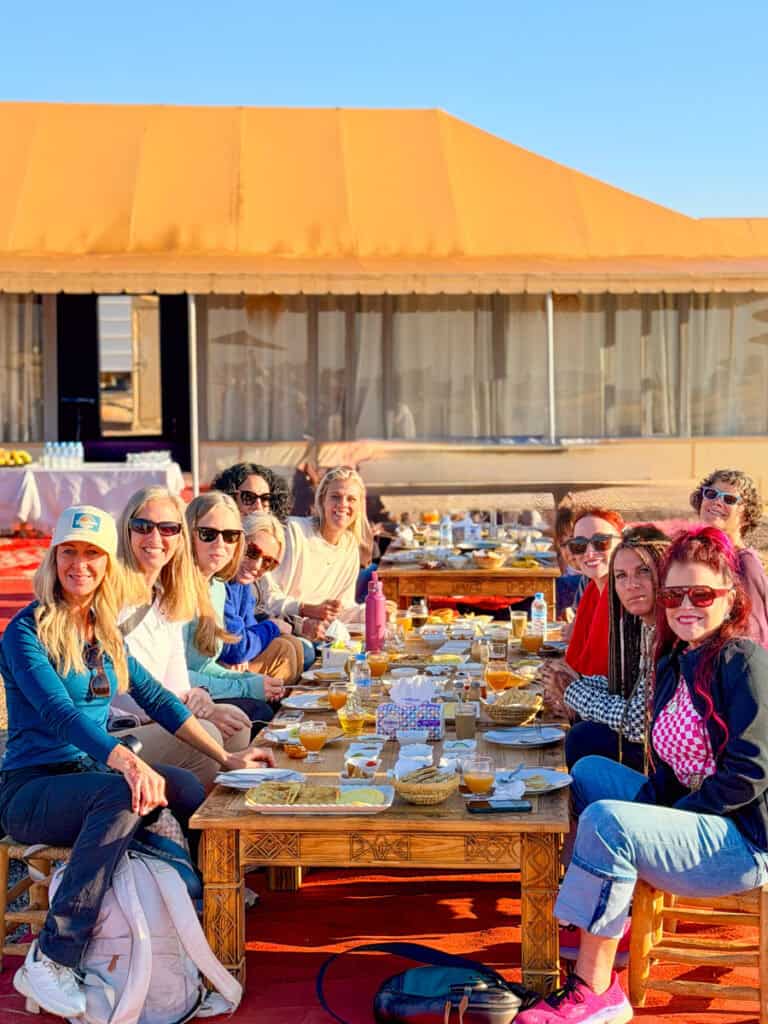
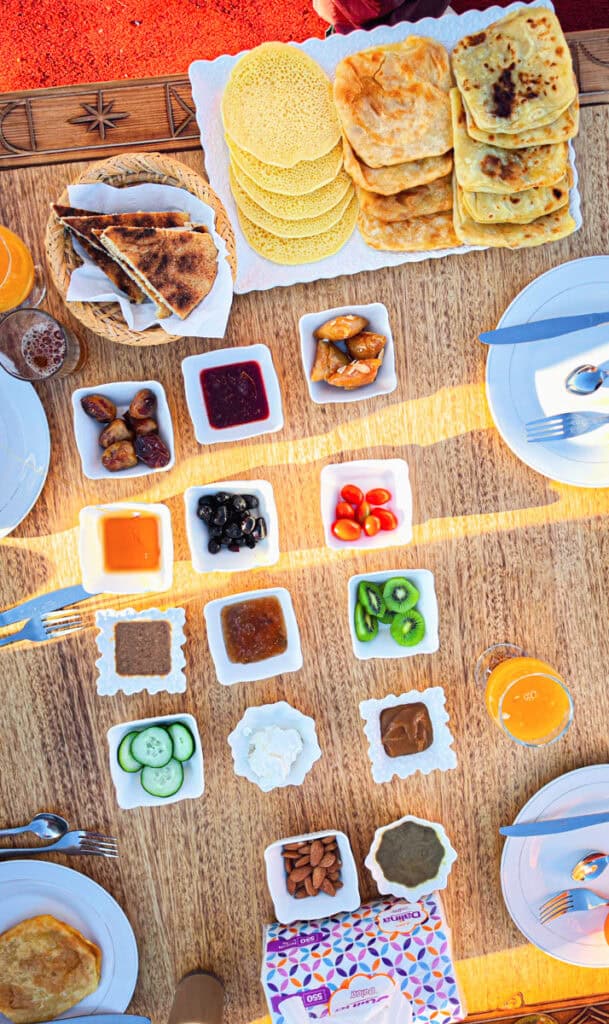
Breakfast afterwards was set up outside with desert and mountain views, and they’d organized a gluten-free spread for those of us who needed it. Book your hot air balloon and Berber breakfast here.
Tour Ben Youssef Madrasa
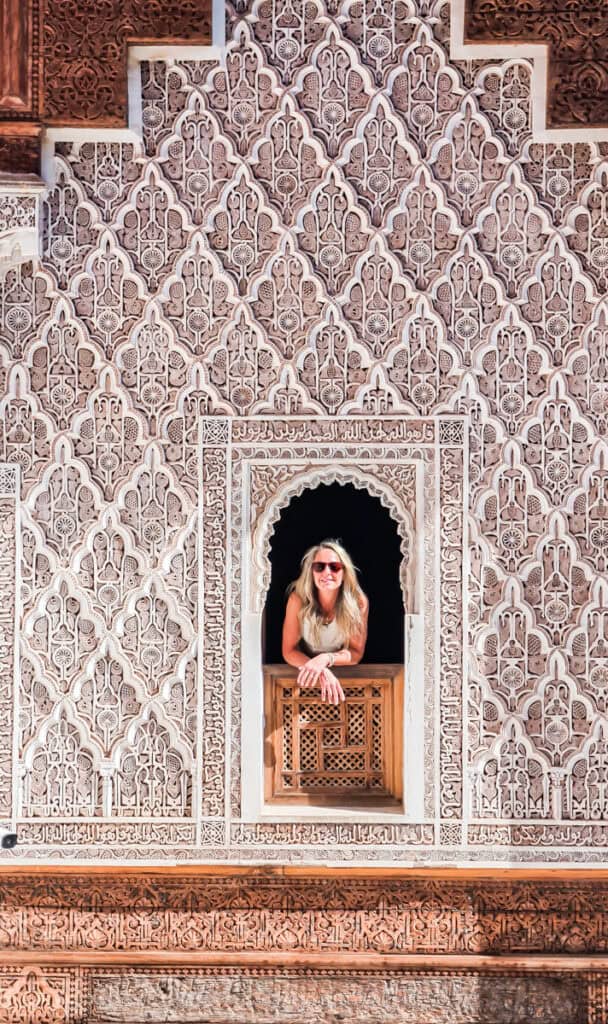
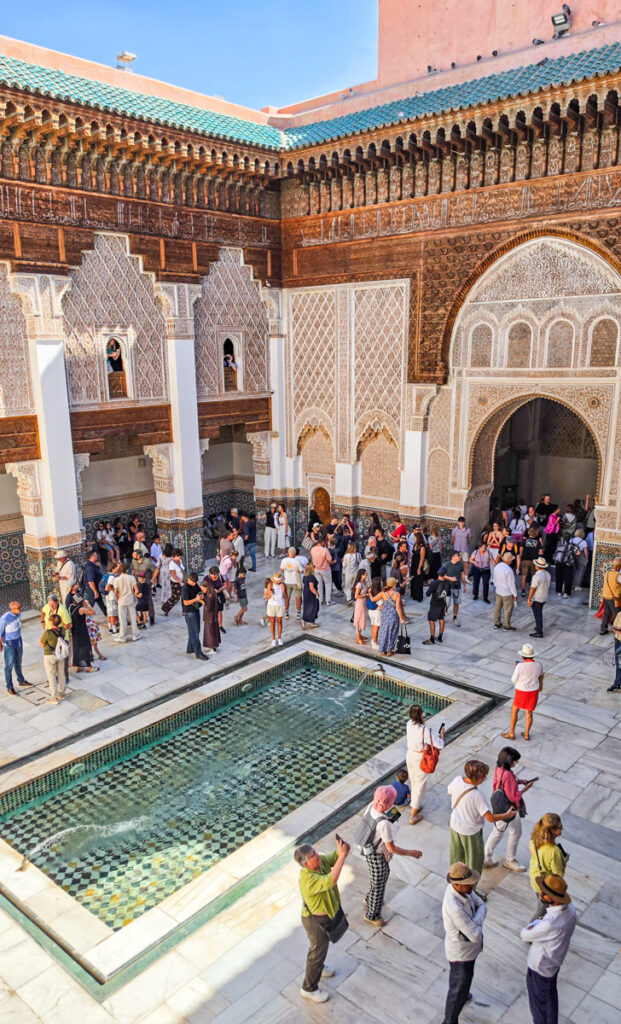
Ben Youssef Madrasa was a Quranic school, completed in 1564 and 1565 under the Saadian sultan Abdallah al-Ghalib, with 130 tiny student rooms around a carved and tiled courtyard. It closed as a school in 1960 and reopened in 2022 after a long restoration. As of November 2026, entry is 50 MAD for foreign adults and it’s open 9am to 7pm daily.
The lines were long, so get skip-the-line tickets or go first thing. Head upstairs to the student rooms. If you’re traveling with a friend, stand at opposite windows and photograph each other leaning out. Half an hour inside is enough.
Book a hammam and massage
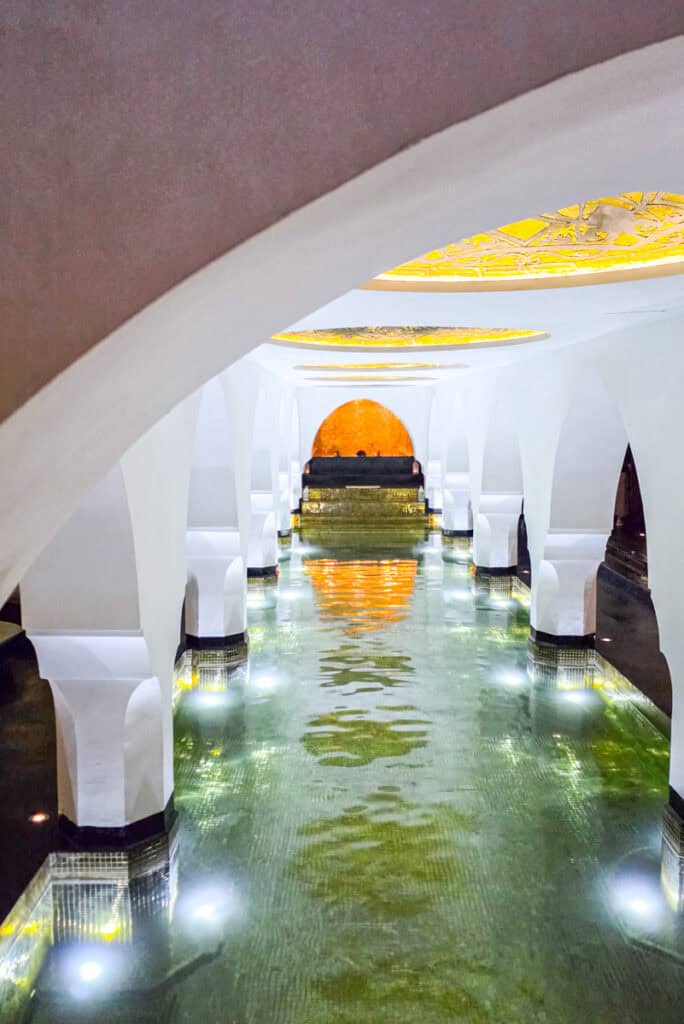
A hammam is a steam bath where an attendant scrubs you down with black soap and a rough mitt and rinses you off, and it’s a Moroccan ritual worth trying once. Ours was at Riad Elisa & Spa, with an hour-long massage on the side.
Do the hammam first and the massage second. I did it the other way around, which meant I didn’t need a shower afterwards, but the scrub is energetic and the massage is where you want to finish. I’ll save the full story of six women sliding around a wet marble slab together for another post.
Eat in Gueliz, the new town
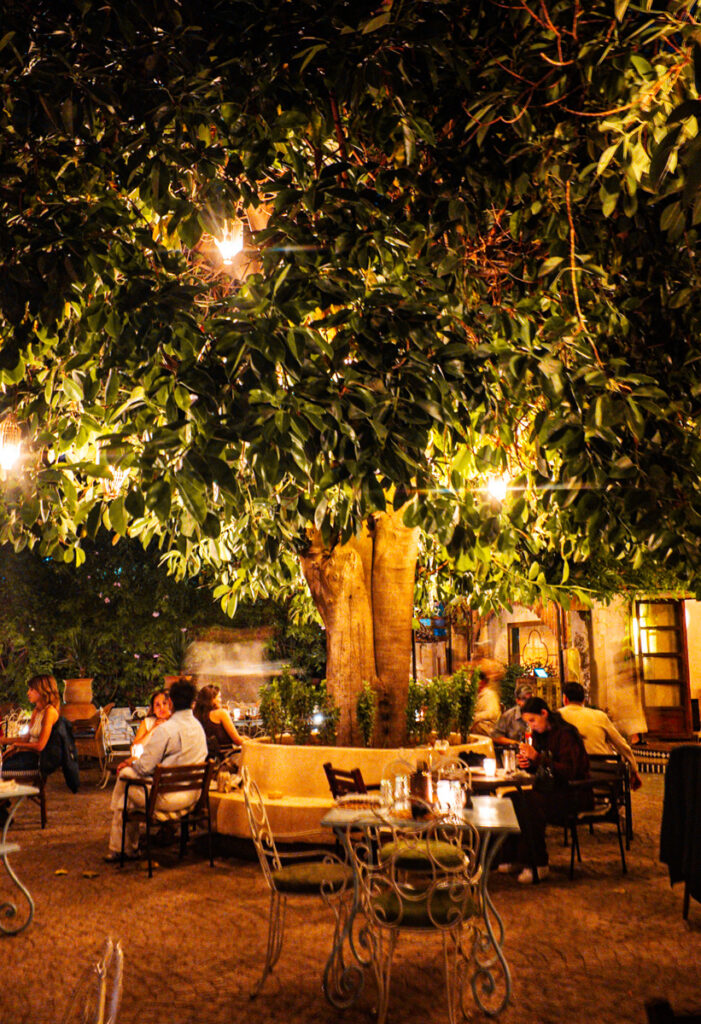
Gueliz is Marrakech’s modern district, outside the medina walls, with cafés, restaurants and a busy local evening scene. We only saw it on our last night, and it’s the part of the city I’d spend more time in on a return trip. Eating in the courtyard under fairy lights and the canopy of trees at the eating at PSC, or Pétanque Social Club, in Gueliz was a fantastic way to end our stay in Marrakech.
Where we ate in Marrakech
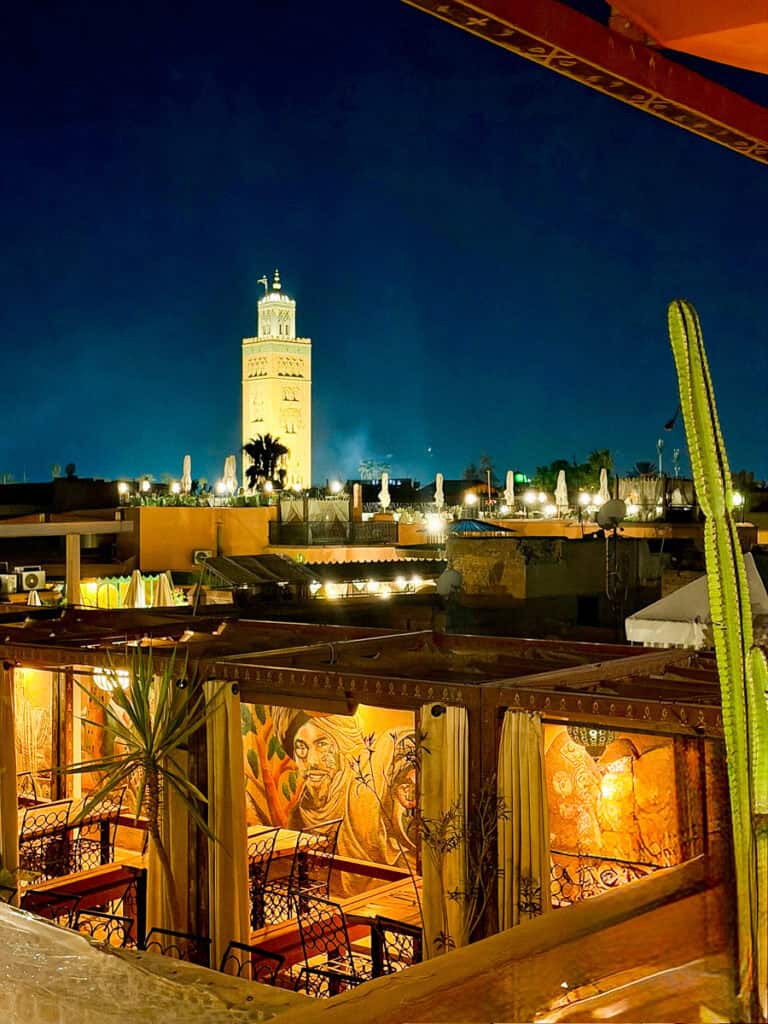
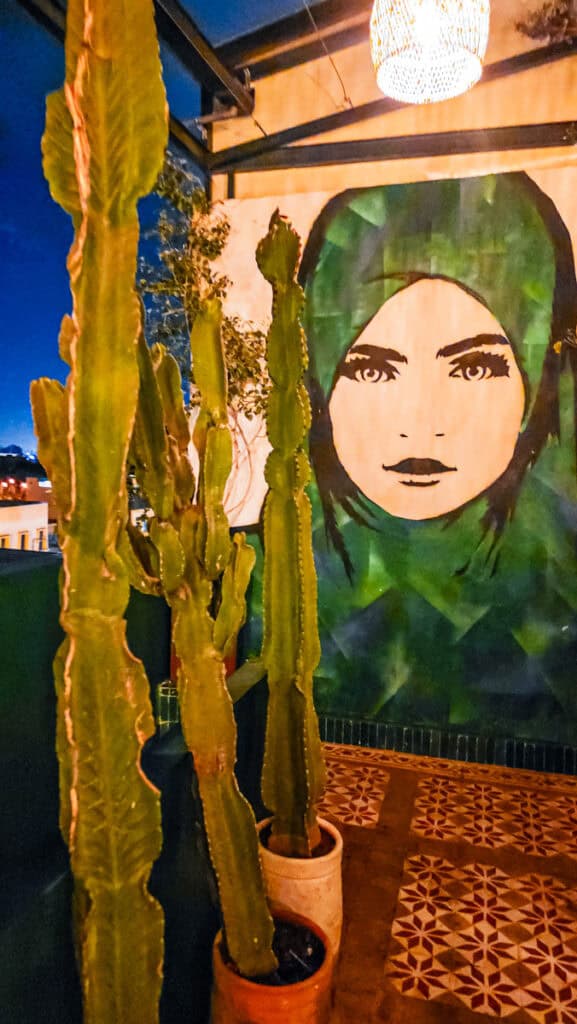
Café des Épices, on the spice square in the medina, was an easy lunch with a good cappuccino. For dinner, MK Rooftop had one of my favorite tagines of the trip (beef with prunes and egg) and great night views, though their card machine wasn’t working the night we went, and that’s a problem with a group bill.
La Pergola Rooftop was a different Marrakech vibe, with a jazz band playing in the courtyard with jungle vibes. The experience was better than the food (but it could have just been my order). Allie and I dined at Lumina rooftop before the trip started. This is a restaurant not to miss with its stunning featured mural and delicious food.
Apart from my food tour, Mythe Restaurant was the only place I saw and enjoyed a tangia! I liked the enclosed rooftop style of this restaurant.
If you’re arriving early, a night food tour is the best introduction to Marrakech I can think of. Here is my review of the Marrakech night street food with a local chef that I did!
Days 4 and 5: over the High Atlas to Aït Benhaddou and the Dades Valley
Drive the Tizi n’Tichka pass
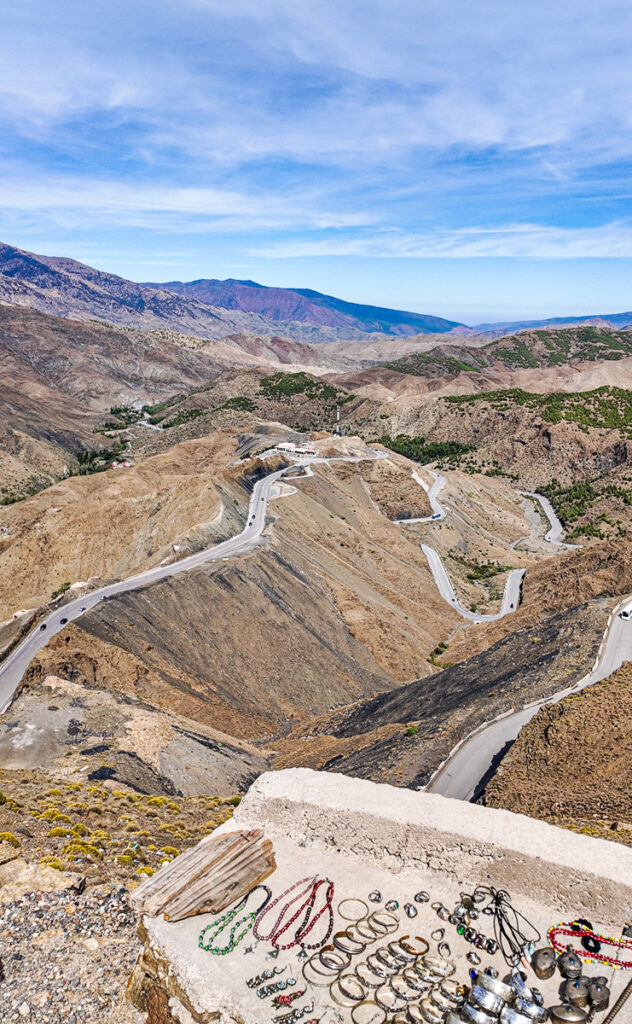
The road out of Marrakech climbs over the High Atlas through the Tizi n’Tichka pass, which tops out at 2,260 meters (7,415 feet) about two hours from the city. It’s a winding mountain road with big views, and if anyone in your group gets motion sick, plan stops. We pulled in at a couple of roadside cafés for photos and some surprisingly decent coffee.
The driving itself felt calm. Our driver’s van was tracked, so he couldn’t speed and had to stop for at least 15 minutes every 90 minutes, which gave us regular breaks for snacks and restrooms. Police checkpoints along the way checked that everyone was wearing a seat belt.
Climb Aït Benhaddou
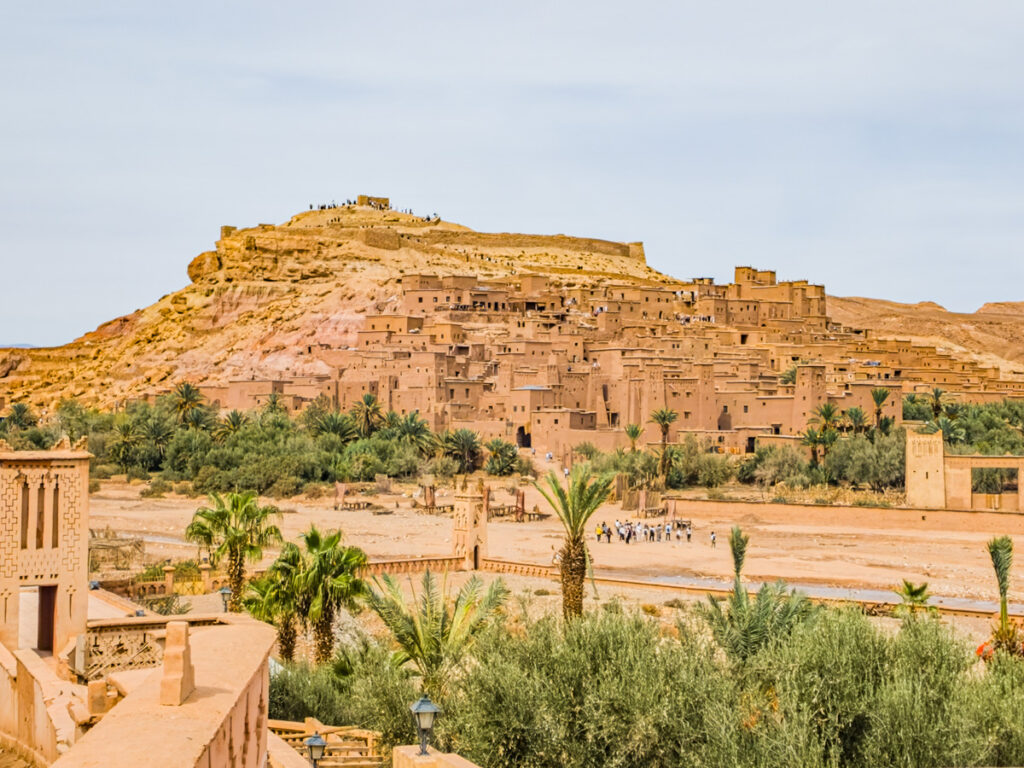
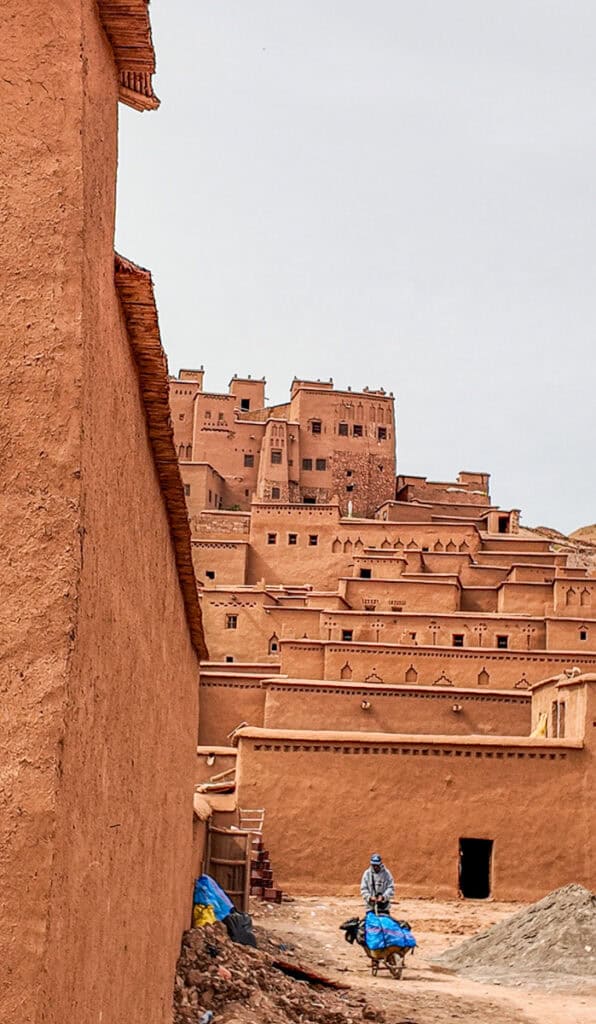
Aït Benhaddou is a ksar, a fortified village of earth-and-wood houses packed inside defensive walls, on a hill above the Ounila River in Ouarzazate Province. UNESCO listed it as a World Heritage Site in 1987. Every one of us knew the word kasbah from The Clash, and none of us knew what it meant, so Mo explained it on the drive (a kasbah is a fortress, and a ksar is the whole fortified village).
It’s nicknamed the Hollywood of Morocco because so many films have been shot here, including Lawrence of Arabia, Gladiator, scenes from Game of Thrones and, most recently, The Odyssey. Stop first at a viewpoint across the river for the classic photo, then walk up through the narrow lanes to the top. The lanes are steep, crowded and lined with stalls, so give yourself an hour and some patience, and turn around often for the views.
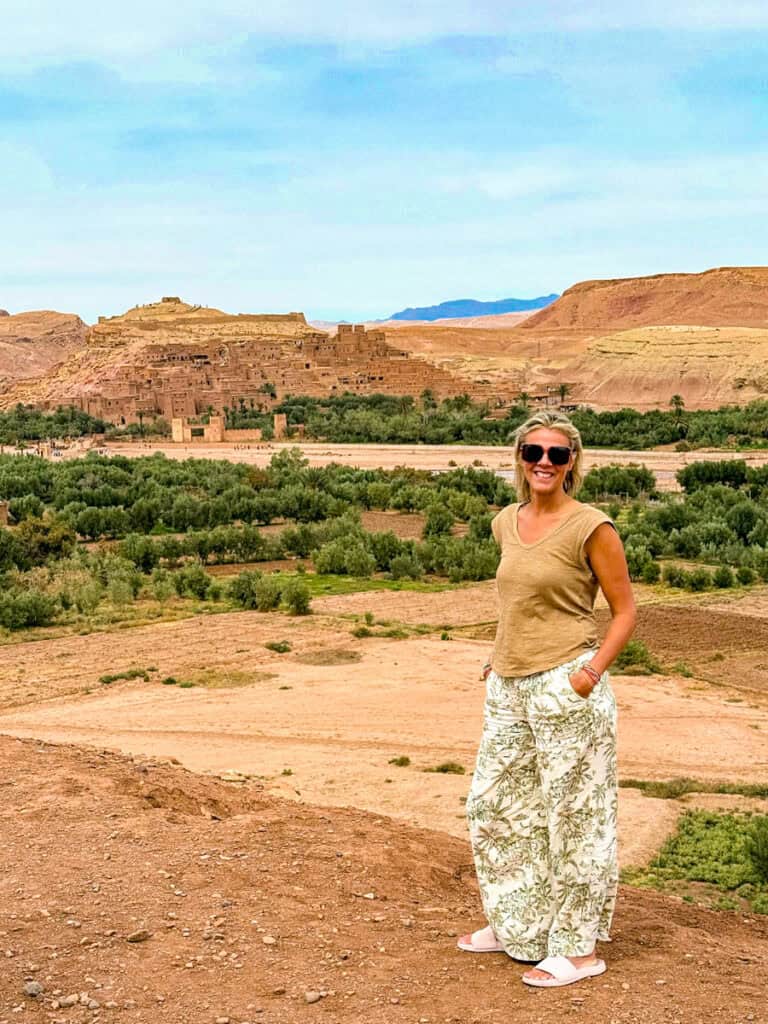
At the top, six of us started dancing to Rock the Kasbah for a reel, a group of young men joined in, and half the hill got their phones out to film us. We’re fairly sure us rocking the Kasbah is the best thing Aït Benhaddou has ever seen on camera.
You can take guided tours to Ait Benhaddou, including Ouarzazate, from Marrakech. Here is a top rated one!
Stay in the Dades Valley
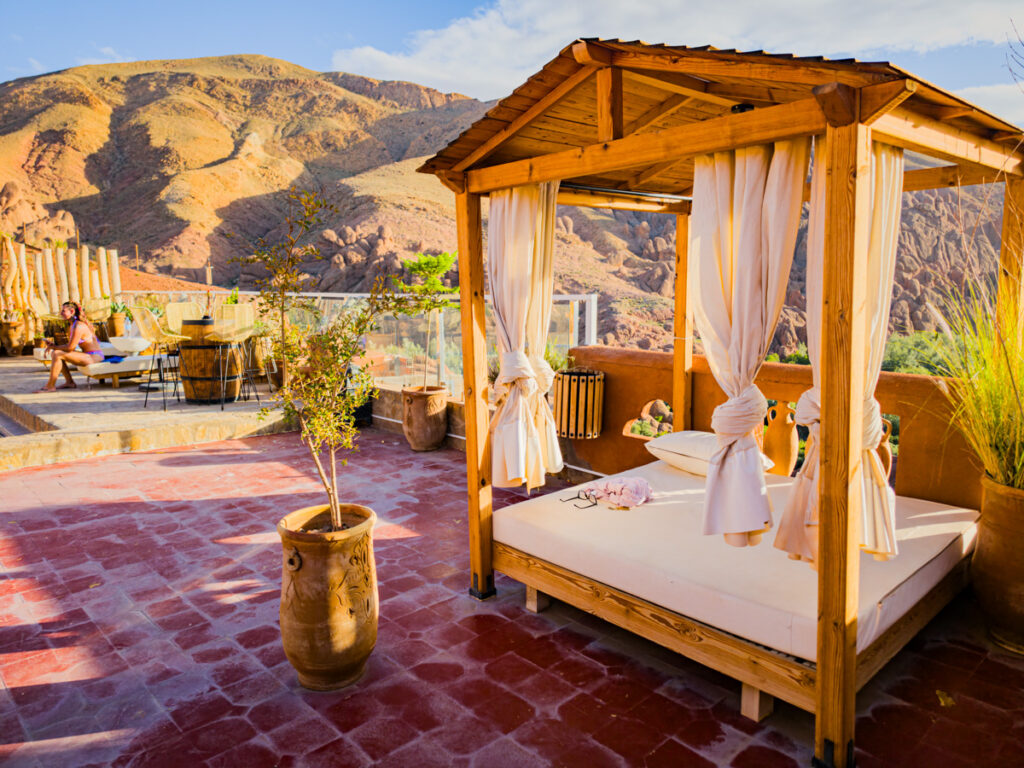
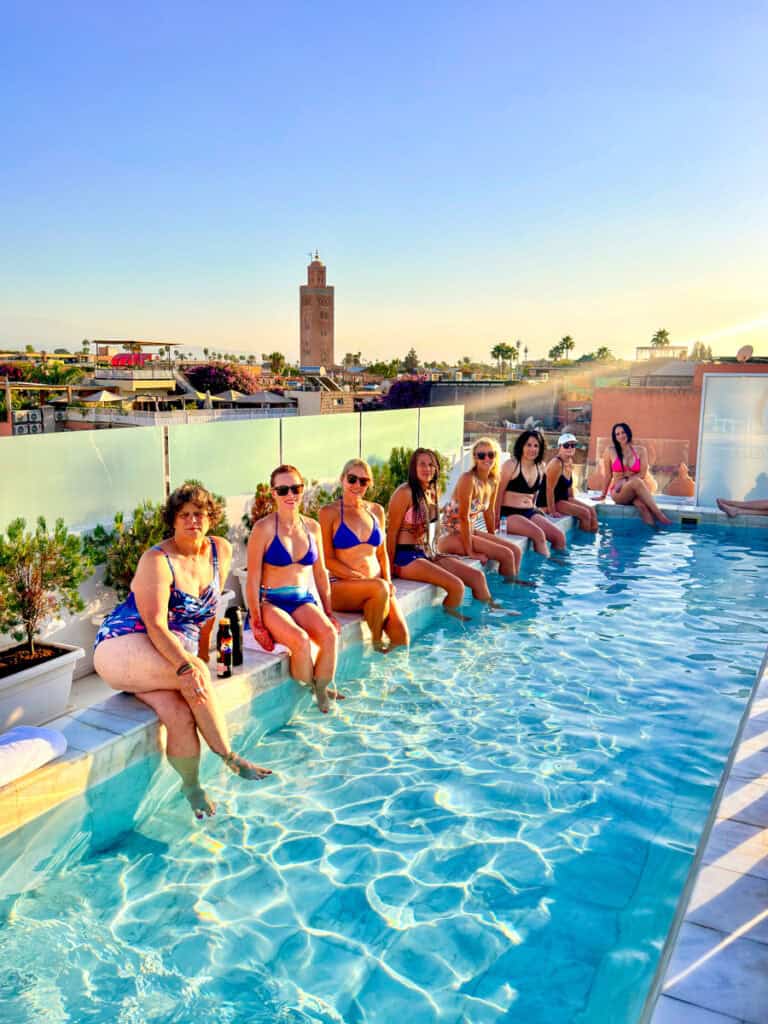
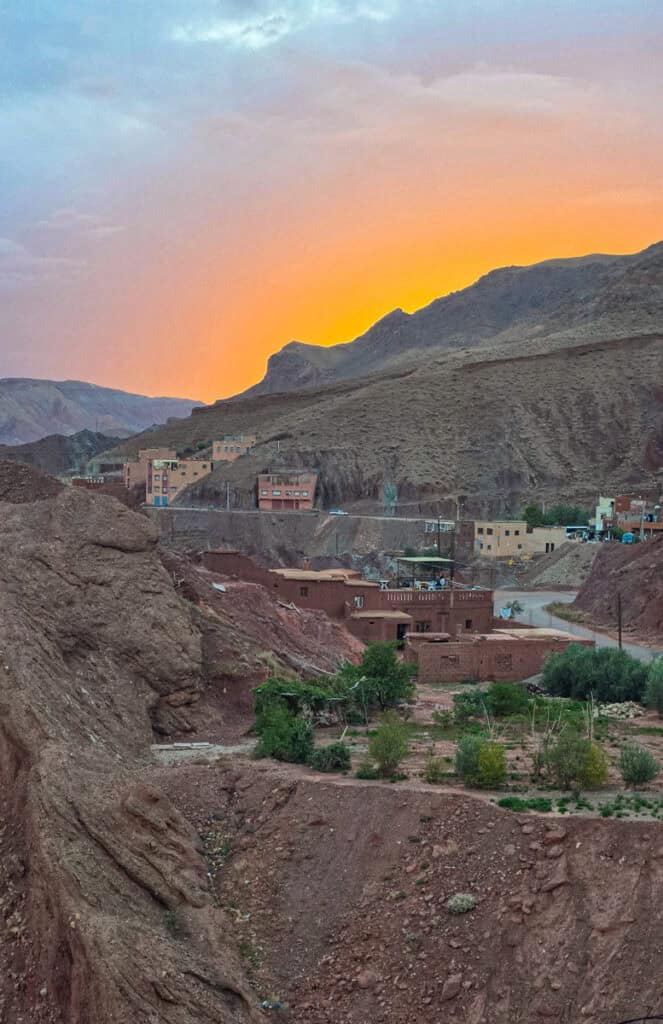
We arrived in the Dades Valley in the evening. Our hotel, Riad Rihana Dades, sits at the start of the Monkey Fingers trail, with a rooftop pool and cabanas looking over the valley and the village (the pool was a bit cold for me in late October). The sunset from here overlooking the rusty mountainouse landscape is quite spectacular.
The rooms at Riad Rihana Dades run along corridors rather than around a courtyard, so none of the riad noise. Dinner was a set menu both nights, and the beef moussaka with roasted eggplant was one of my favorite dishes of the trip. Service at this riad was overbrimming with kindness and joy!
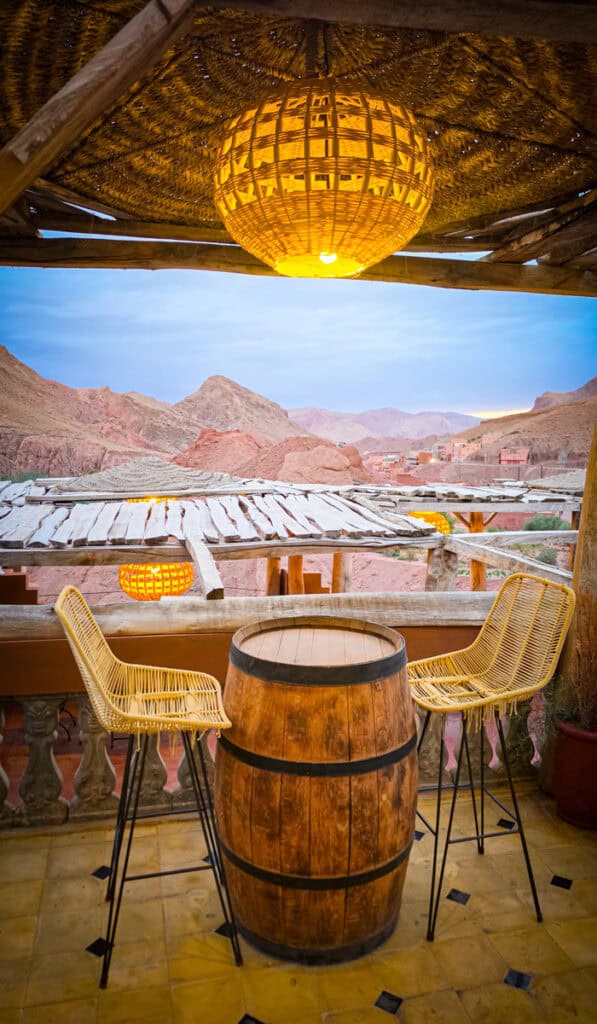
On the way, Mo stopped at a liquor store so we could buy Moroccan wine for the rest of the trip. Our Dades hotel, the desert camp and our Fes riad all let us bring it to dinner for a corkage fee. I paid about $12 a bottle and was impressed.
Hike Monkey Fingers in the Dades Gorge
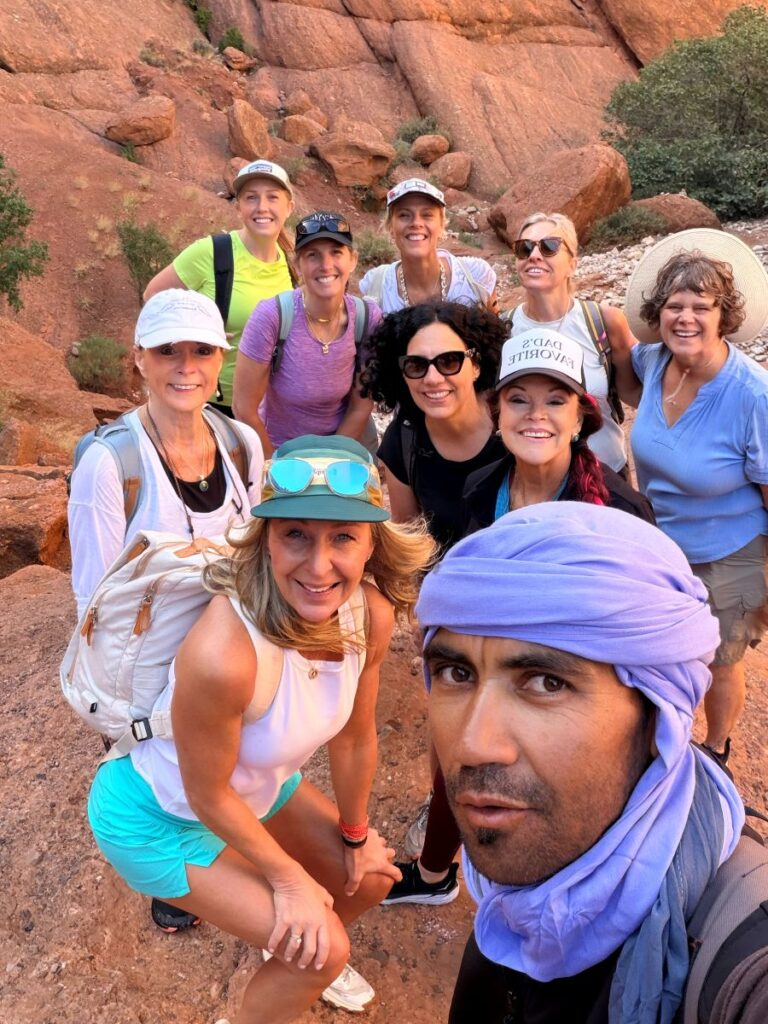
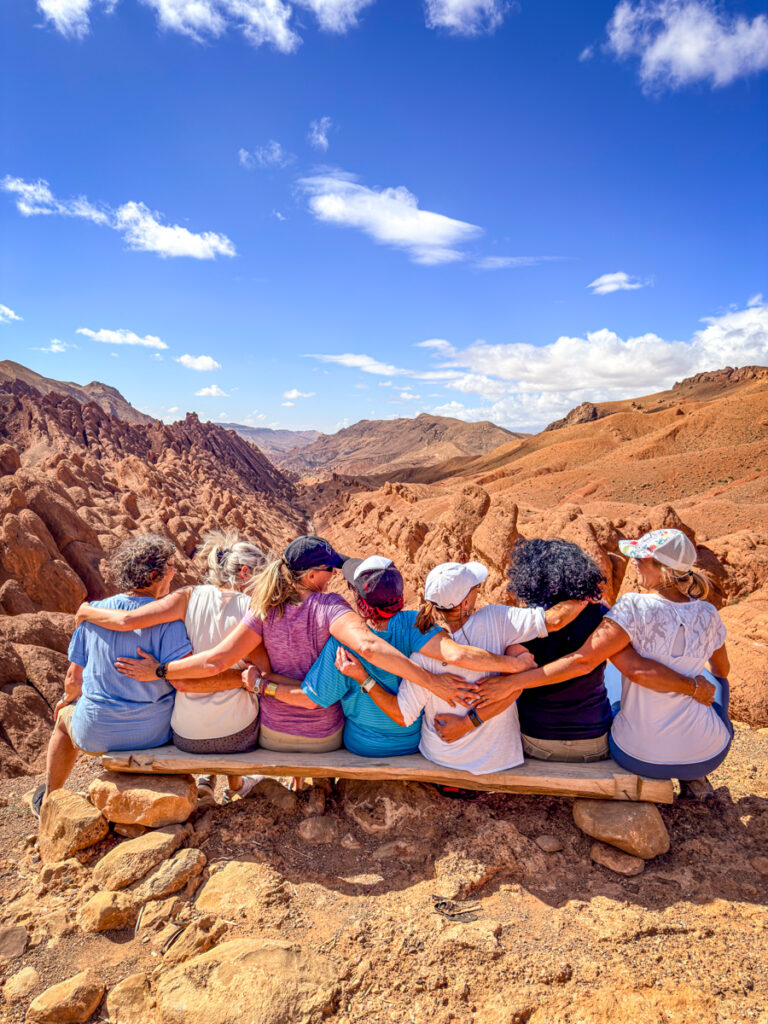
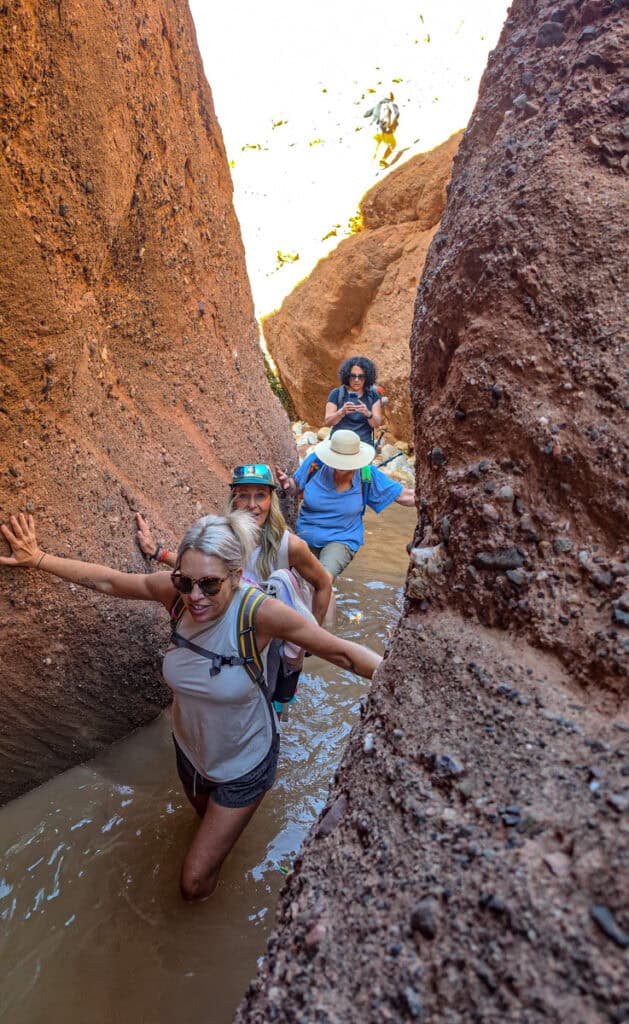
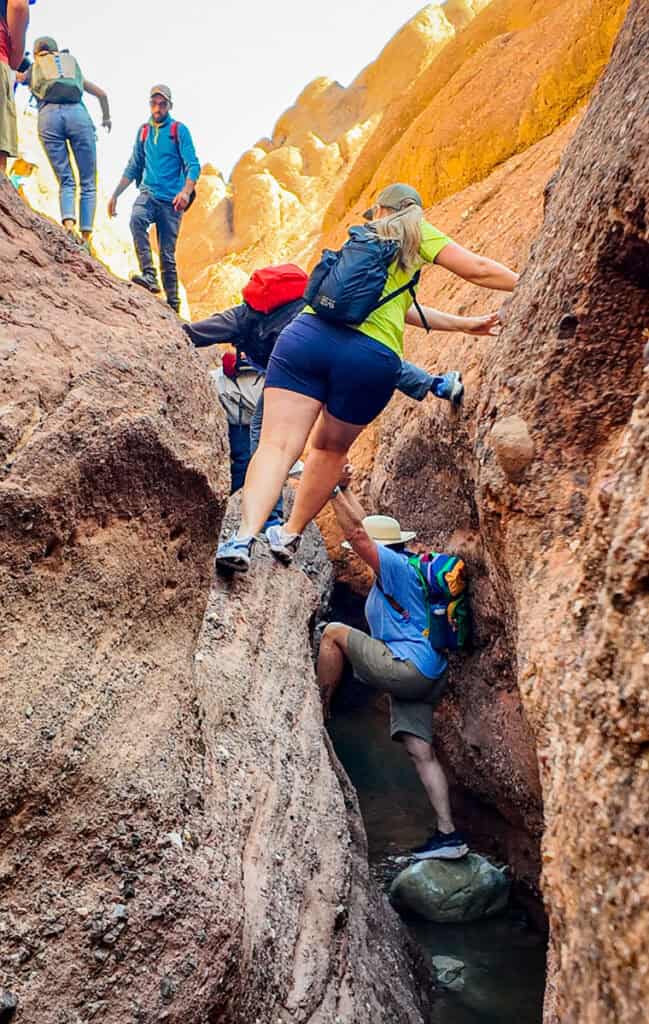
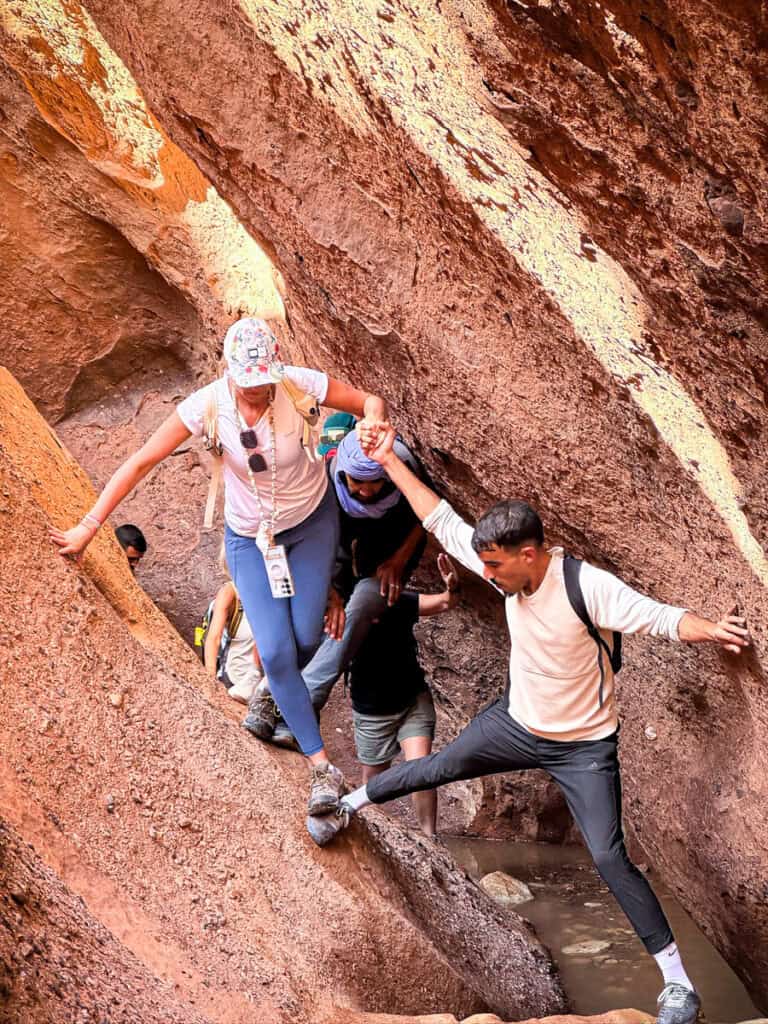
The Monkey Fingers are rounded rock towers above the Dades Gorge that look like the knuckles of a giant hand, and the hike loops through them and down into narrow slot canyons. Most route guides put the loop at about 8 km (5 miles) and 3 to 4 hours. With a local guide, scrambles, photo stops and a tea break, ours took 4 to 5 hours.
It felt like Utah, with red rock, scrambling over boulders and wading through water in a slot canyon. There’s an easier path over the top for anyone worried about their knees, and the two groups met again further up. I carried my Chacos in my backpack and switched into them for the wading, which I’d recommend. A guide isn’t required for the standard loop, but ours knew the route and arranged the best part of the day. You can book a guided Monkey Fingers hike here.
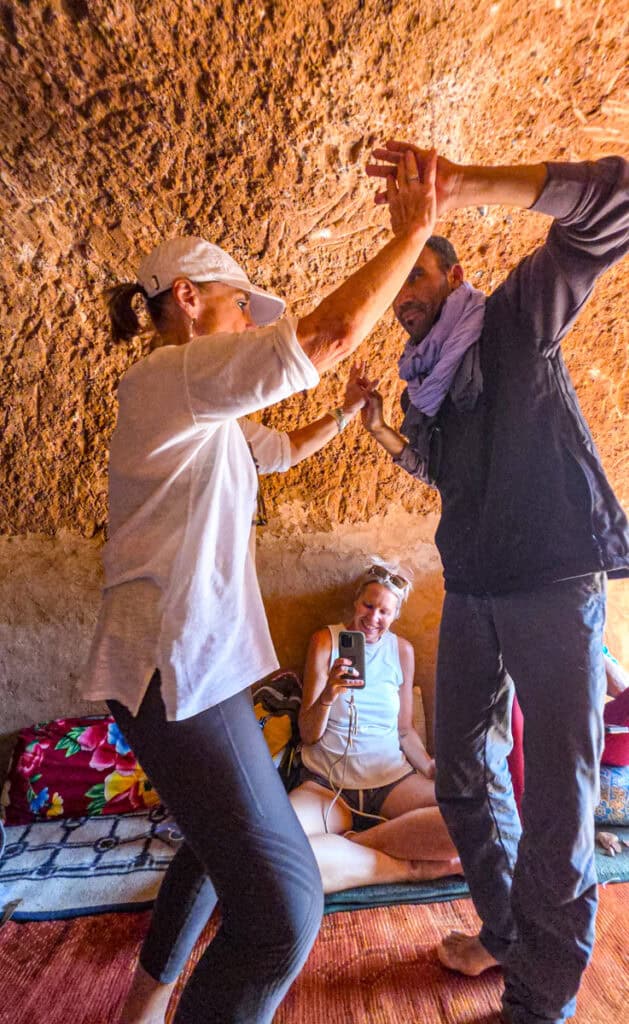
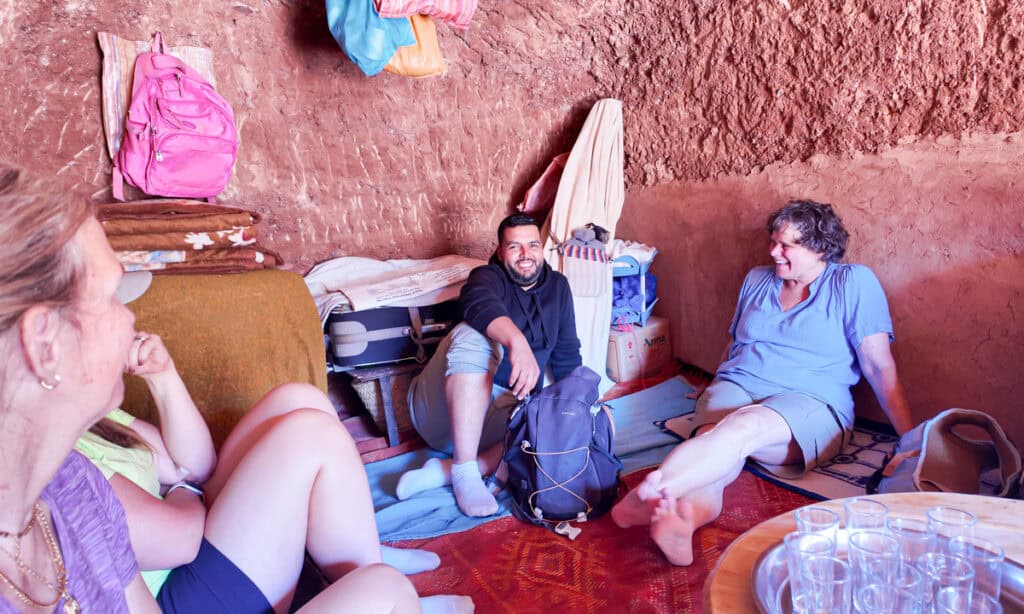
Near the top, we ducked into a cave where a nomad family served us mint tea and dates. Our guide, Mohammed, put on some music and started dancing, and one by one we all got up to dance with him, while the family’s small children kept poking their heads around the doorway, grinning at the strange women in their home. It took me straight back to being 21 in Sumatra, dancing in a cave nightclub with locals and other travelers, which is one of the moments that made me want to travel for the rest of my life.
Our van met us at the end of the trail and took us to lunch in a village hotel, where the cook made me gluten-free bread so good I asked for the recipe (she showed me the bag of flour). The rest of the afternoon was rooftop pool time.
Days 6 and 7: the Sahara desert at Erg Chebbi
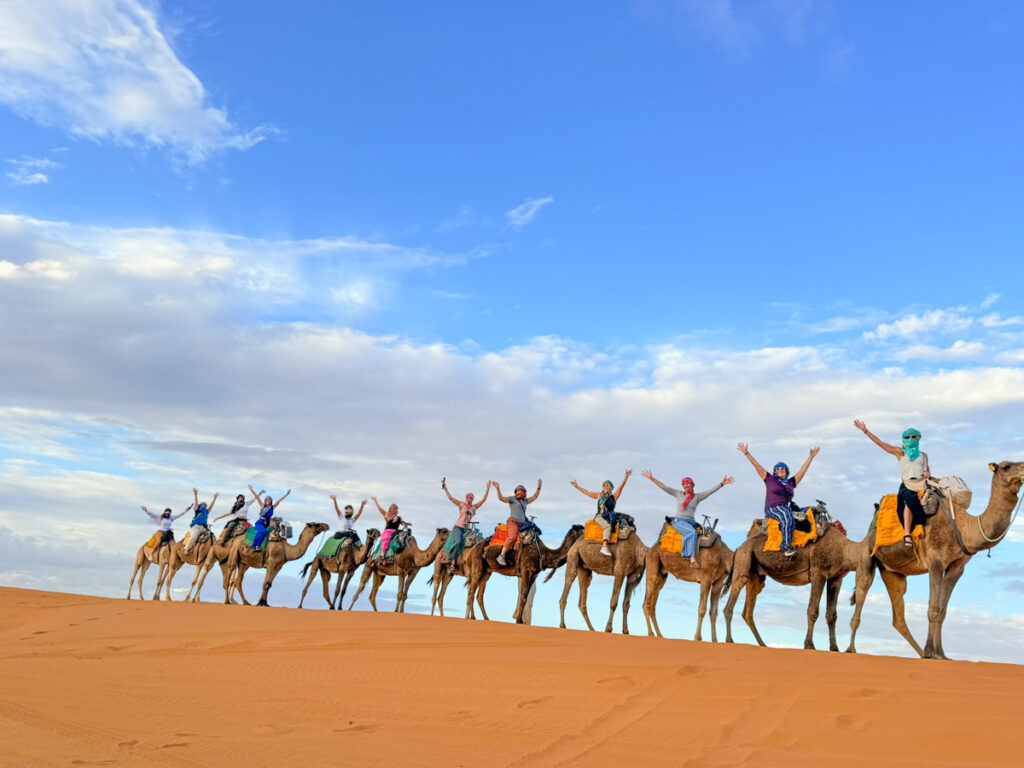
The two nights in the desert were the highlight of the trip for everyone, and if you can only change one thing about a shorter Morocco itinerary, keep two nights here. One night is mostly arriving and leaving.
Buy a carpet from a Berber women’s cooperative
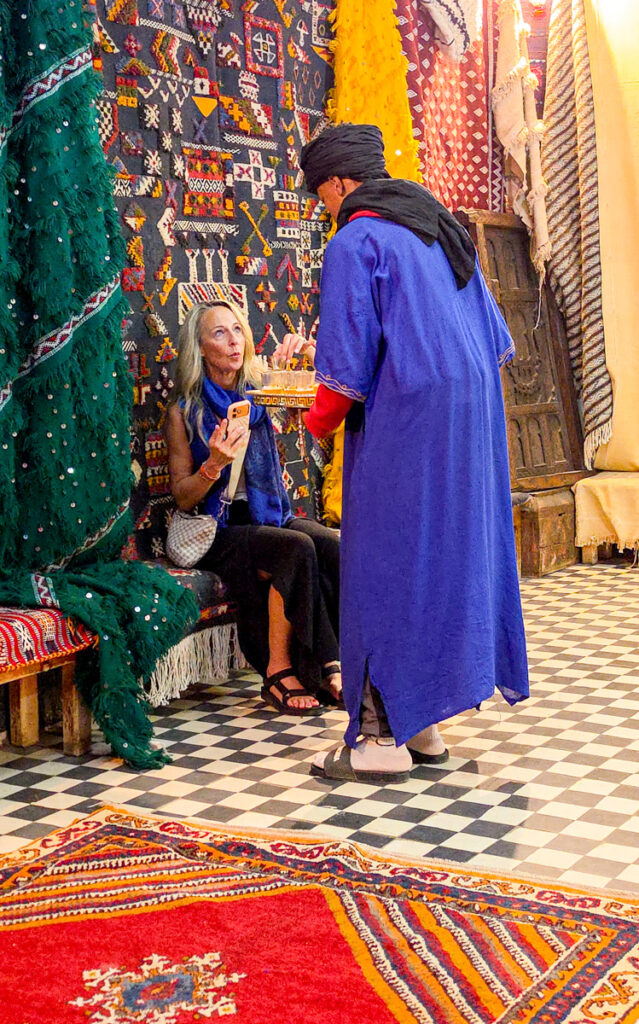
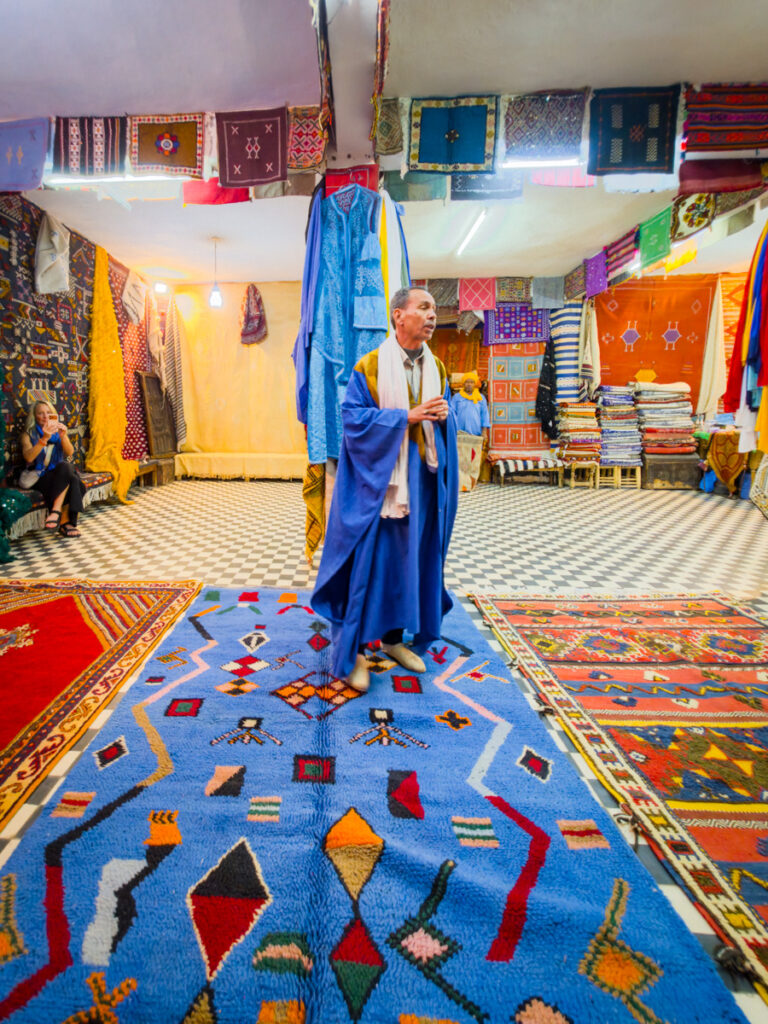
On the drive from the Dades Valley to the desert, we stopped at Maison de Cadeaux Berberes, a Berber women’s carpet cooperative in the town of Tinghir. Carpets bought here go back to the women who weave them, the selling was friendly rather than pushy, and Mo helped with the bargaining, which made everyone more comfortable. Of course there was mint tea, the Berber whiskey.
I last bought a Moroccan carpet in 1998, on a day trip from Gibraltar to Tangier, when our whole group swore we wouldn’t buy anything and half of us walked out with rugs (mine was a wedding present for my sister, for about $100). This time I fell for one at a price I couldn’t bargain down without insulting the seller, so I left it. Several of the women bought wall hangings and floor rugs and were thrilled with them.
If you’re planning to buy a carpet in Morocco, think about holding off on the Marrakech souks and buying here instead. Open at about a third of the asking price. Locals told me around half is a fair finish for both sides.
Get a scarf for the desert
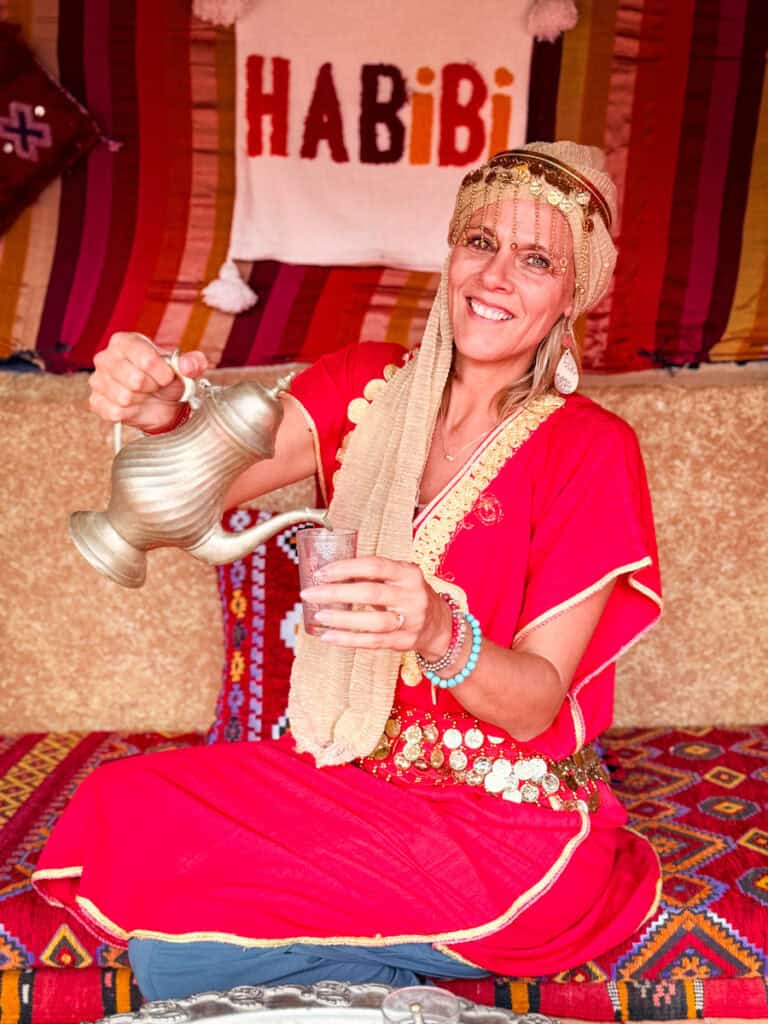
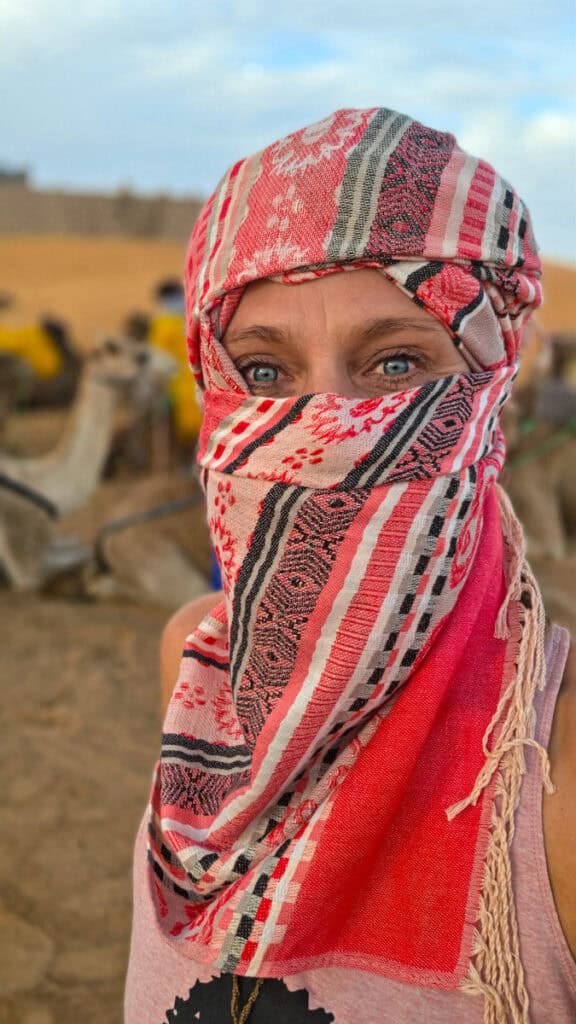
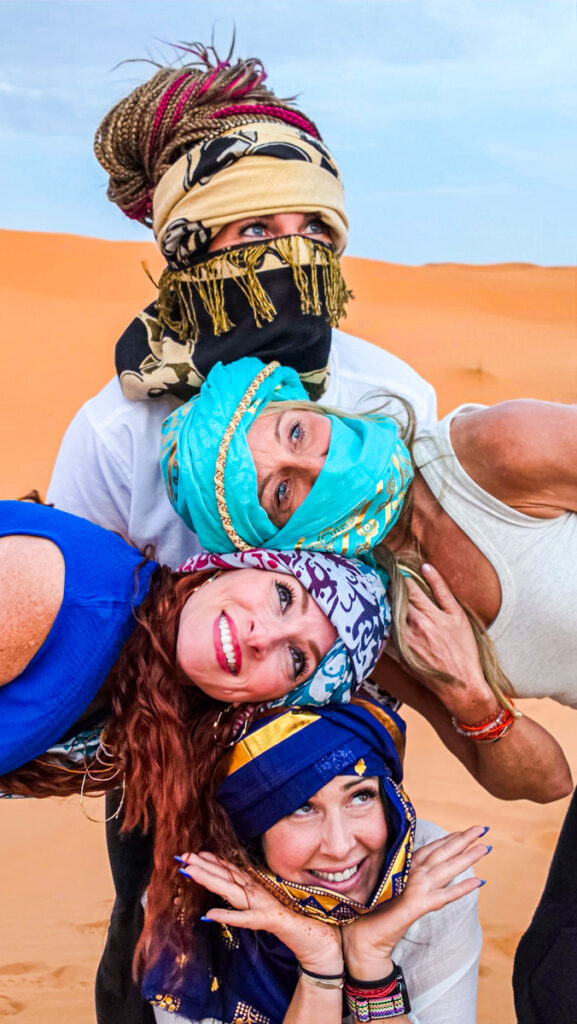
Our next stop was a scarf shop, Desert Bass Brothers Traditional Store in Ksar Mellab, where the women dressed us in Berber outfits, coin belts and headscarves for photos before we chose our own. A scarf is practical in the desert, because it keeps blowing sand off your face and the sun off your neck. I bought the first pink one I saw (I get overwhelmed by choice, so I lock on to one thing and go).
Ride a camel into the Erg Chebbi dunes at sunset
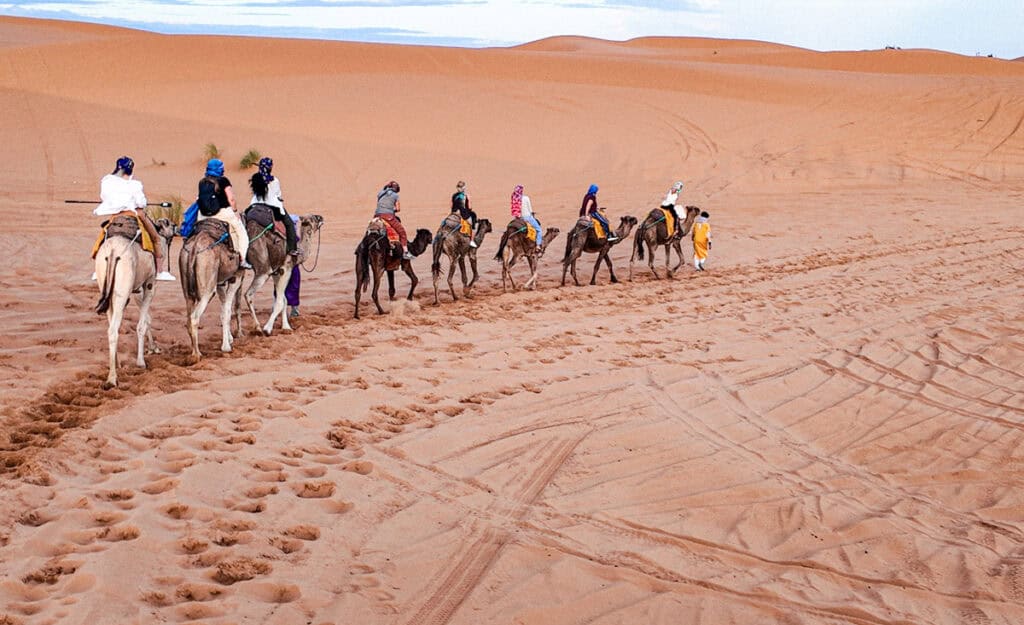
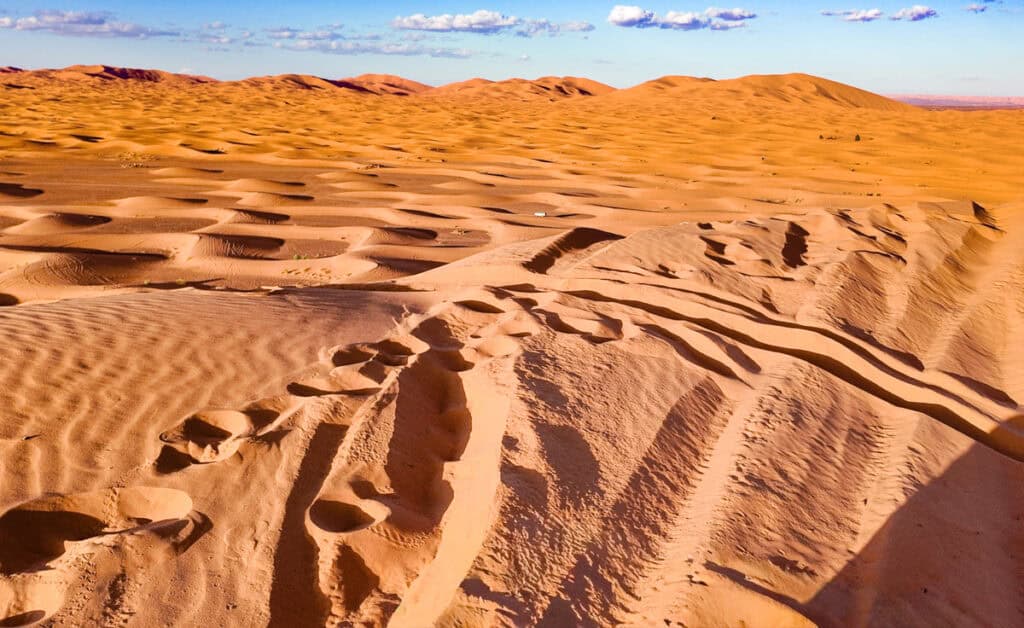
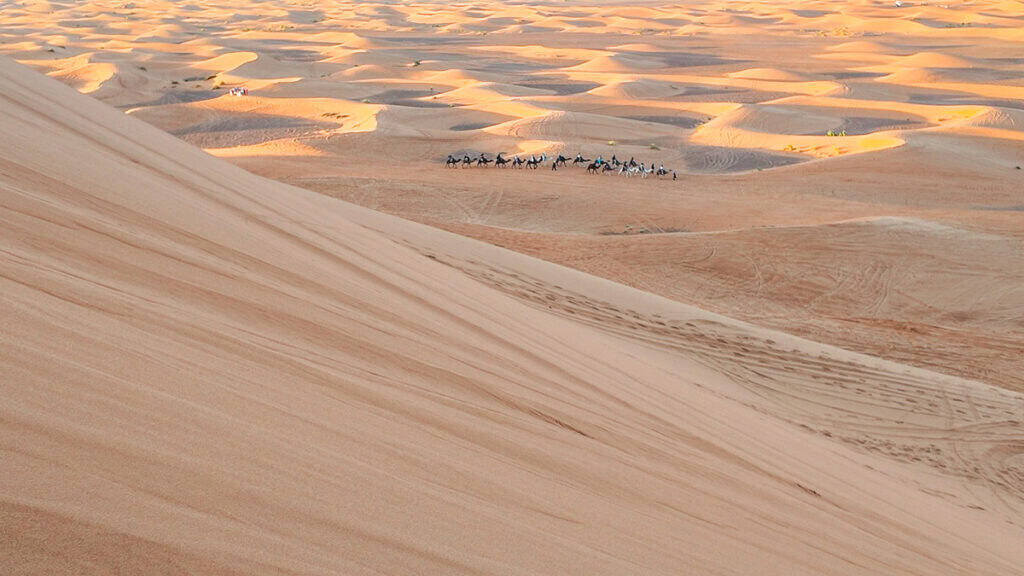
Erg Chebbi is the sea of orange dunes outside Merzouga, near the Algerian border. The dunes run about 28 km (17 miles) north to south and rise up to 150 meters (490 feet), and they’re the edge of the Sahara, the world’s largest hot desert. Buses can’t drive over the dunes, so our bags went ahead by 4×4 and we went by camel (technically dromedaries, the one-humped kind).
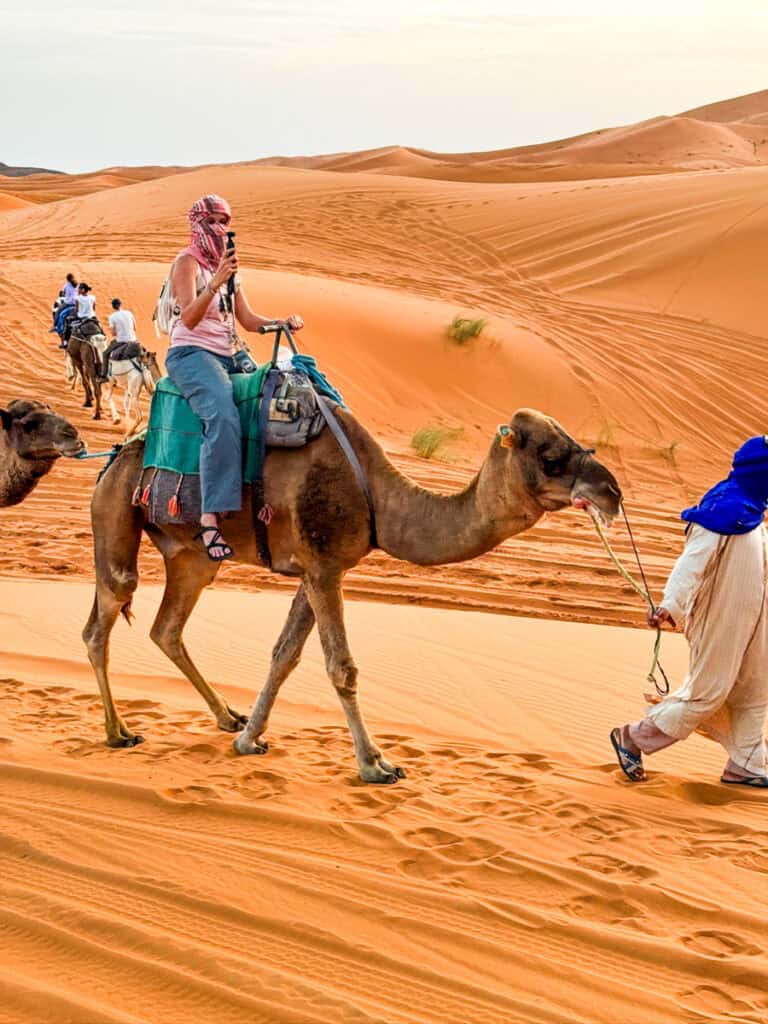
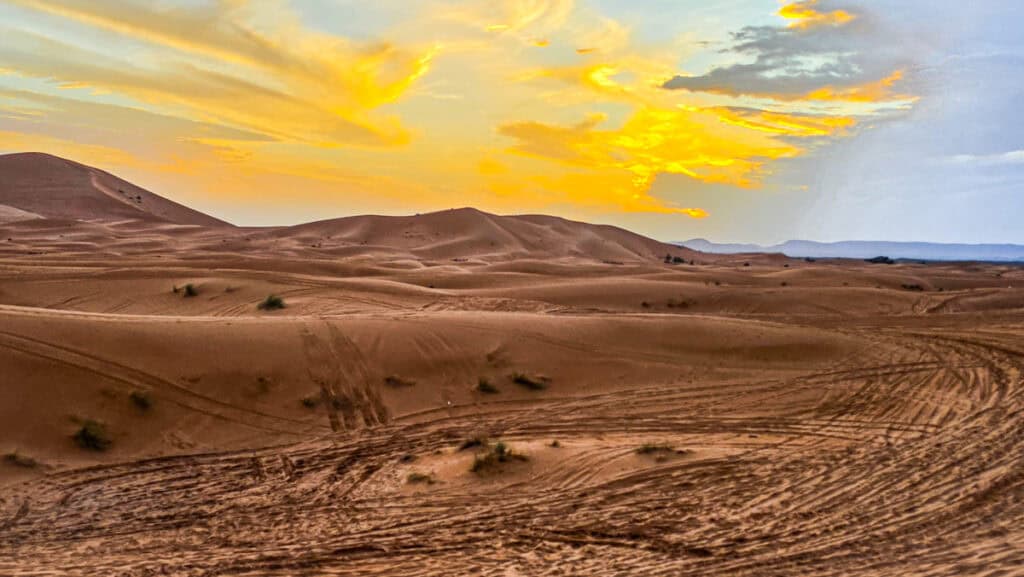
We set off just before sunset in a long camel train, with other trains moving across the dunes around us, and stopped on a ridge to watch the sun go down. The ride took about 90 minutes and the last stretch was in the dark under an almost full moon, which was beautiful, and my thighs had plenty to say about it by the end.
If not on a tour, you can book a camel ride here, or choose one that includes a night at a desert camp. There are several of them lining the edge f the dunes. Learn more about the one we stayed at 👇
Sleep at a luxury desert camp
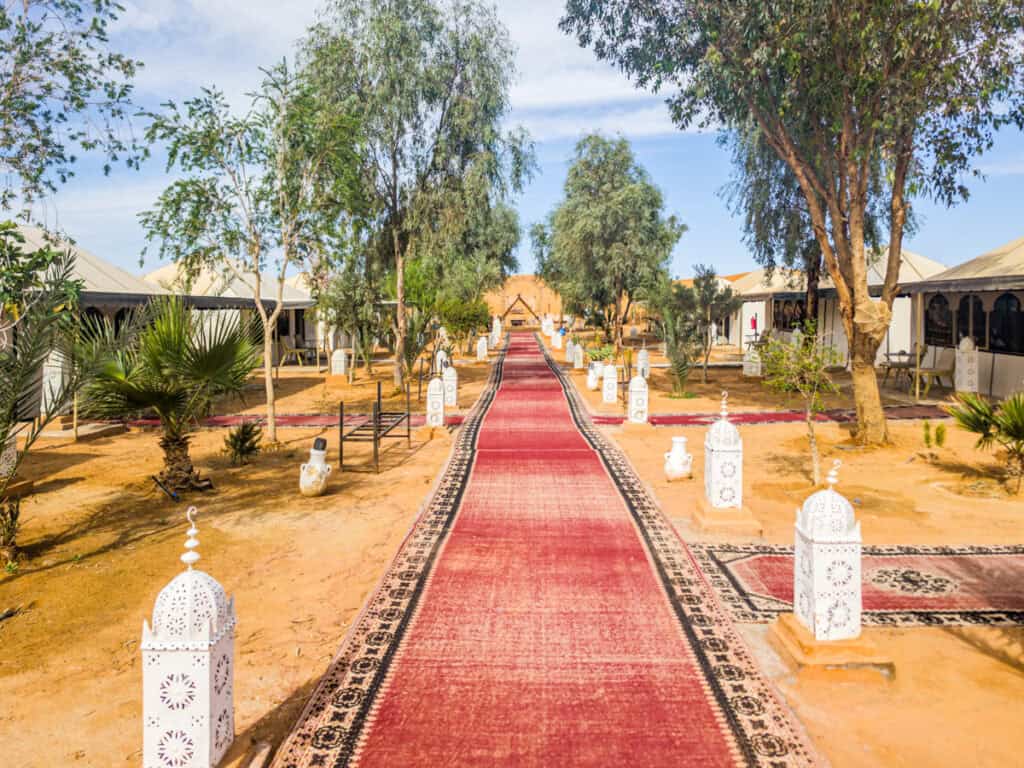
Our camp, Sahara Majestic Luxury Camp, sat right on the edge of the dunes. The traditional Bivouac tents are canvas, but inside they had proper double or twin beds, a shower and a bathroom, plus Berber outfits laid out on the bed for us to wear (beautiful in photos, hot and itchy at dinner).
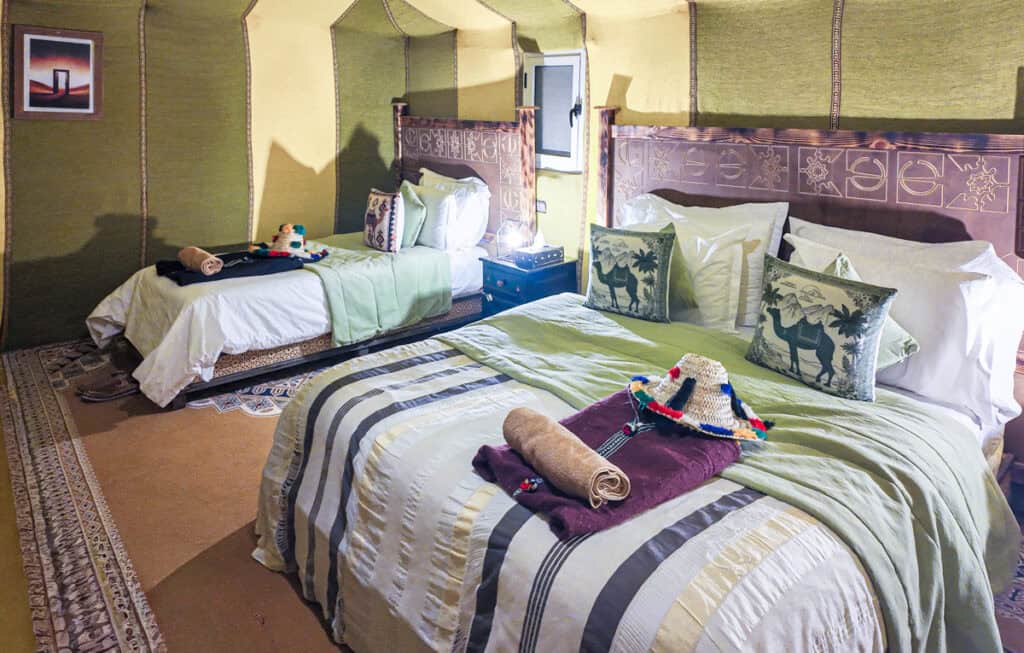
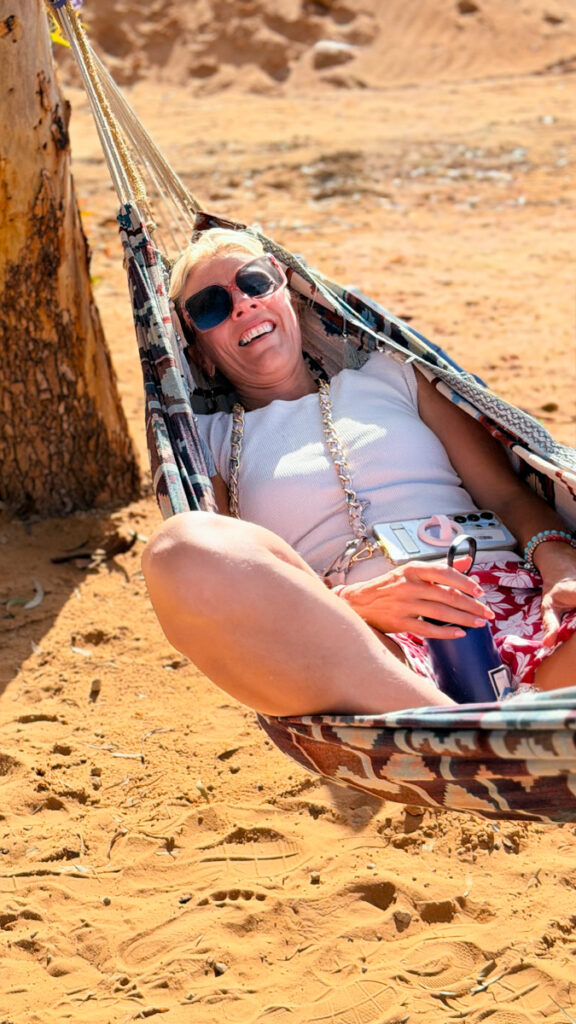
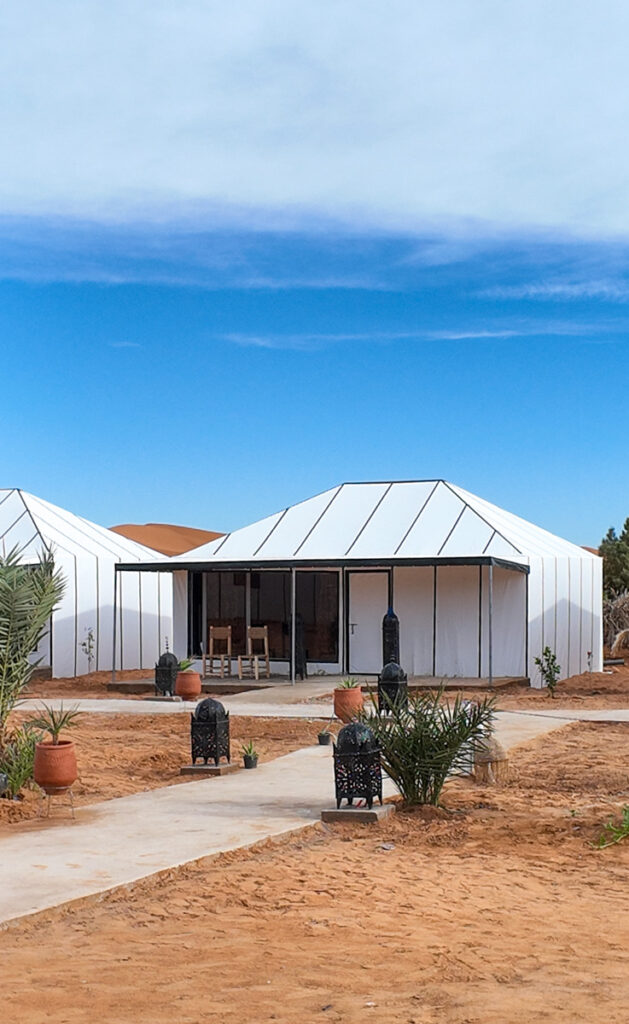
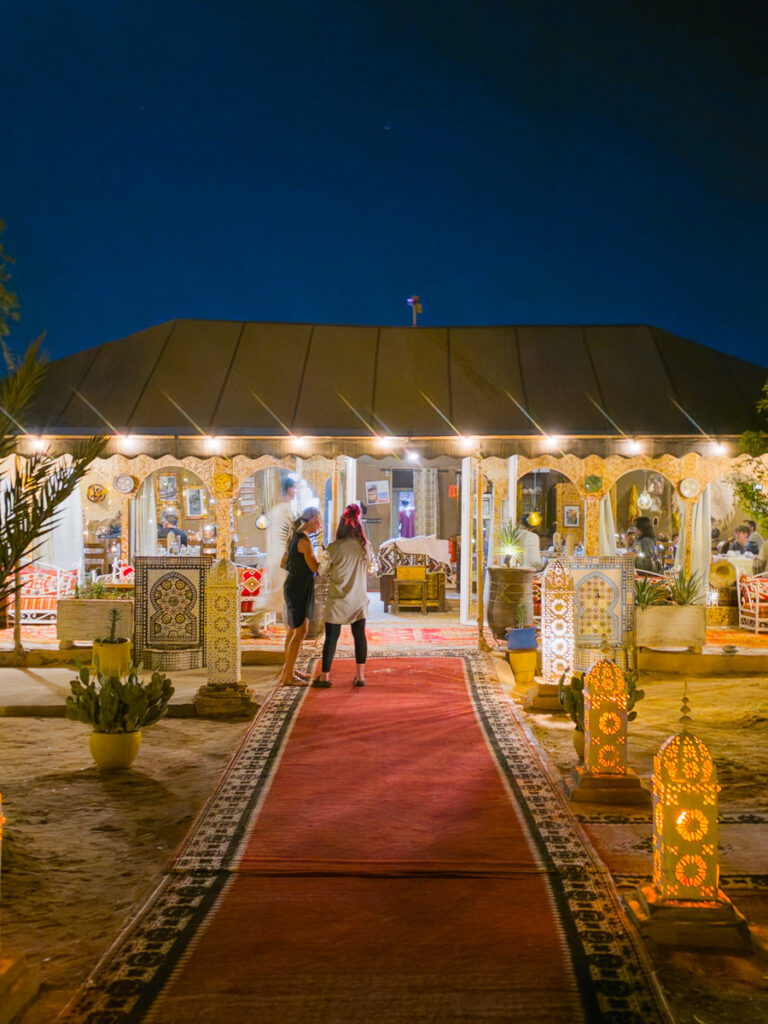
Dinner was three courses in the main tent, with gluten-free options for me, and every night the staff swap their serving trays for drums and play music around the campfire.
Watch sunrise over the dunes
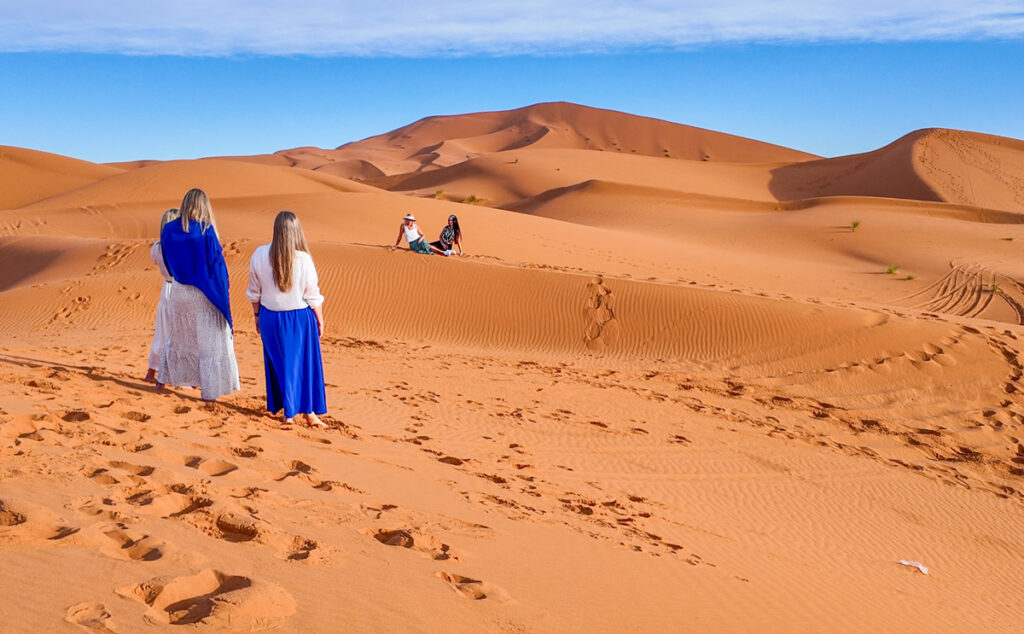
We were up early both mornings for sunrise. On the first, clouds softened the light, which meant a longer photo shoot as the dunes shifted from gold to deep orange. On the second the sky was clear, and three of the women joined me on a dune for a short meditation. It was a beautiful way to start the day and absorb the stillness, silence, and space of the desert.
Take a 4×4 tour of the desert communities
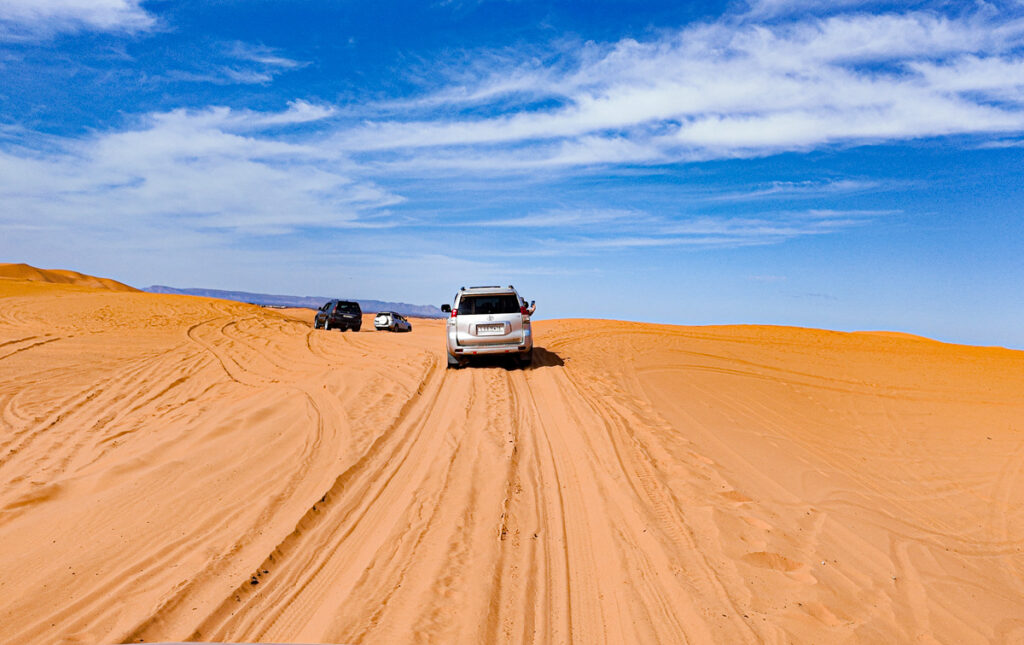
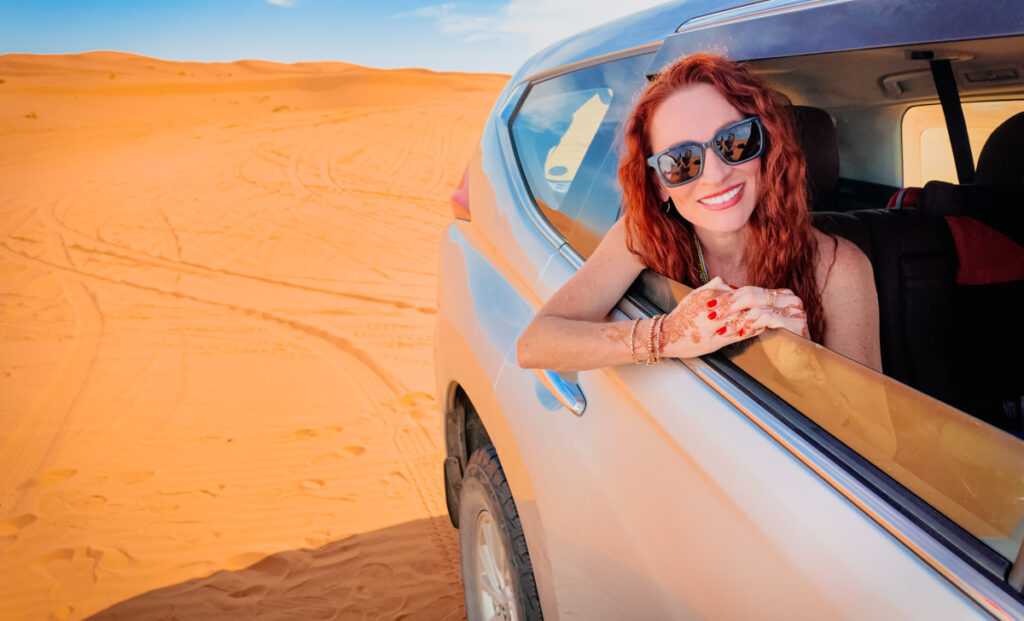
After breakfast we split into SUVs/ 4WDs, four to a car, for a half-day tour of the communities that live around the dunes. We stopped to say hello to camels eating breakfast, then walked through a communal garden where Mo showed us the irrigation channels that carry water through the desert to each family’s plot, all mint and peppers in a sea of red sand.
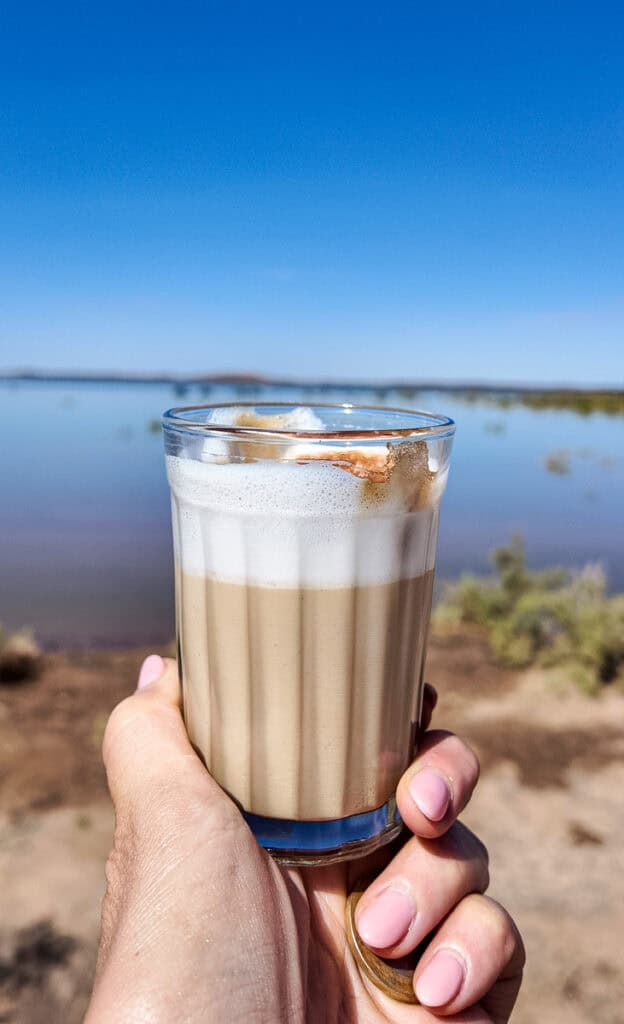
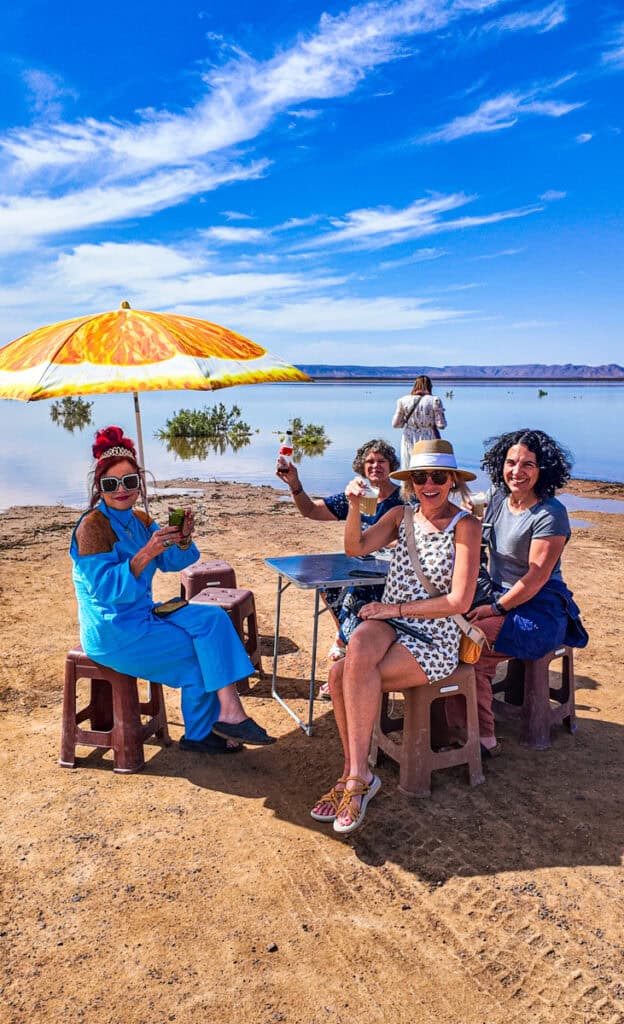
We also stopped at an oasis lake with a coffee cart beside it. The coffee was only okay, but drinking it in the Sahara by an oasis, surrounded by weekend dirt-bikers who’d stopped for coffee too, made up for it.
Learn Gnawa drumming in Khamlia
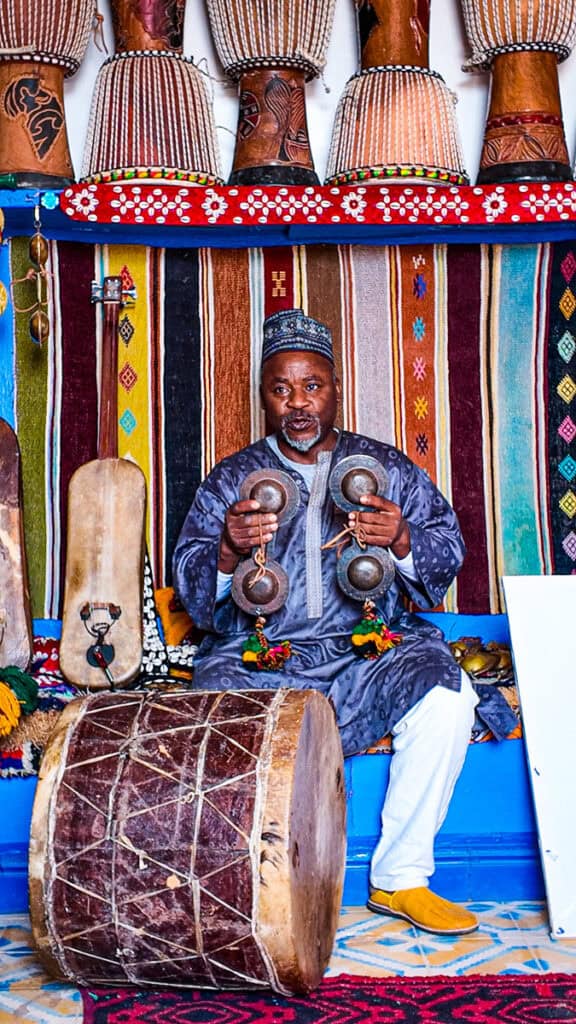
Khamlia is a village about 10 minutes from Merzouga, known for its Gnawa music. The families who play here are descendants of people who were enslaved and brought north across the Sahara, and the village holds an annual three-night Gnawa festival. A musician walked us through the instruments, taught us a few rhythms on the drums, and led us through a song together, and then we moved next door to listen to a group of men sing and dance.
Eat lunch with a nomad family
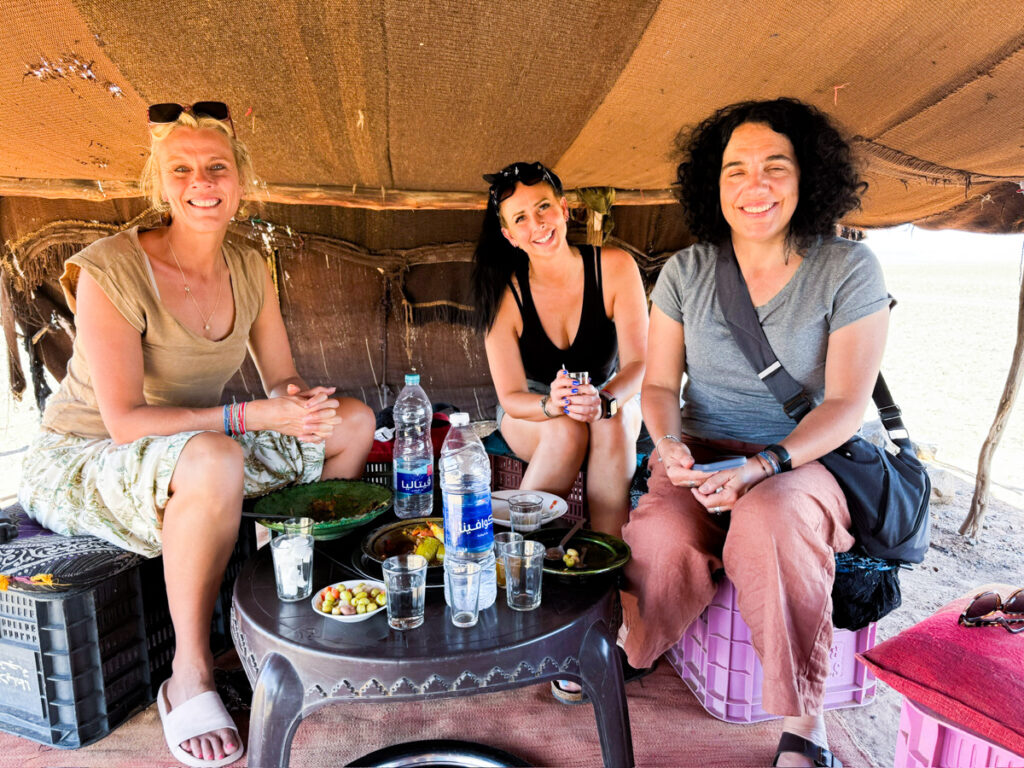
The stop I’m most grateful for was lunch at a nomad camp, something Mo arranges for his groups, so visitors spend time with the families who depend on the desert, and the families earn from tourism.
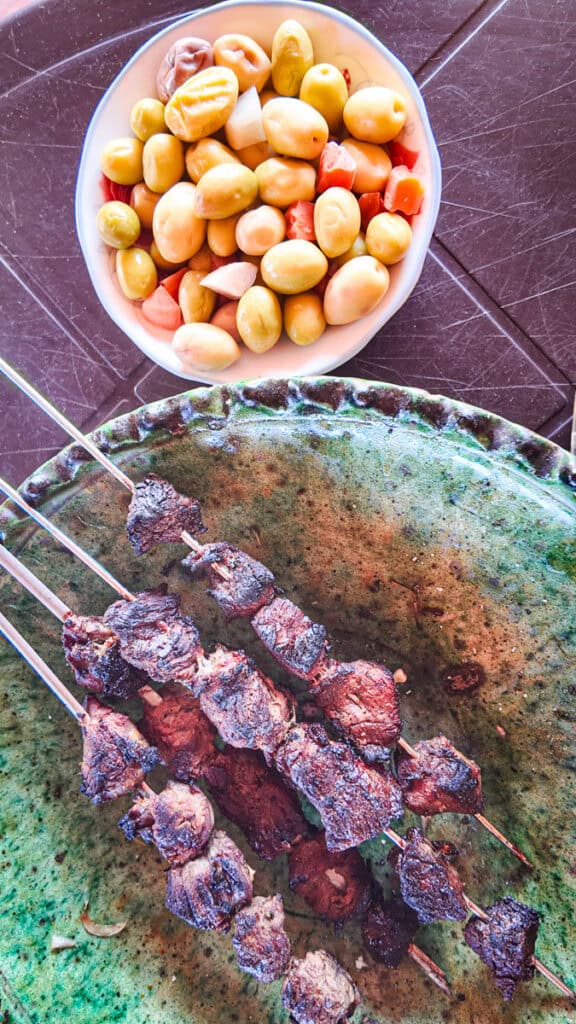
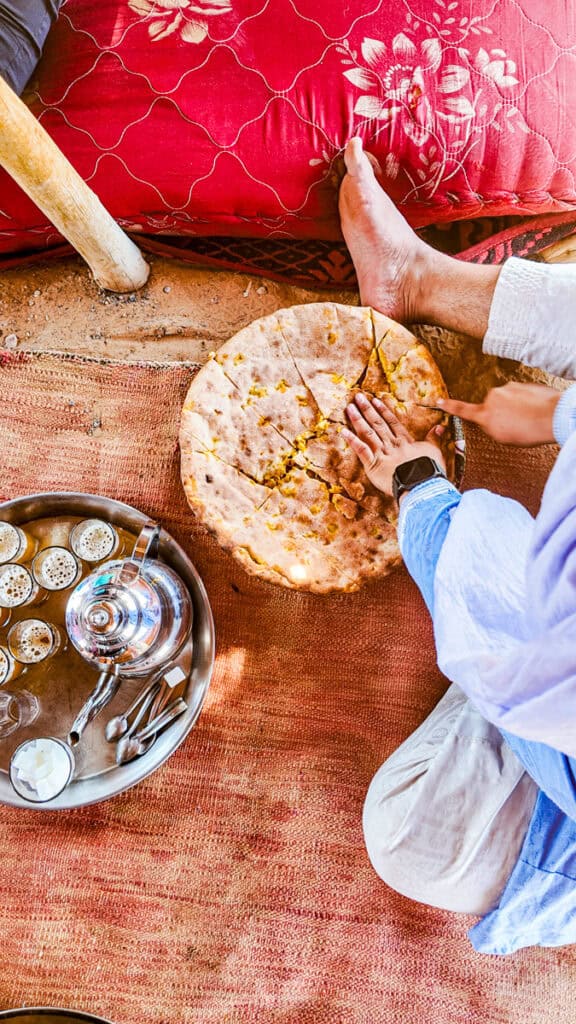
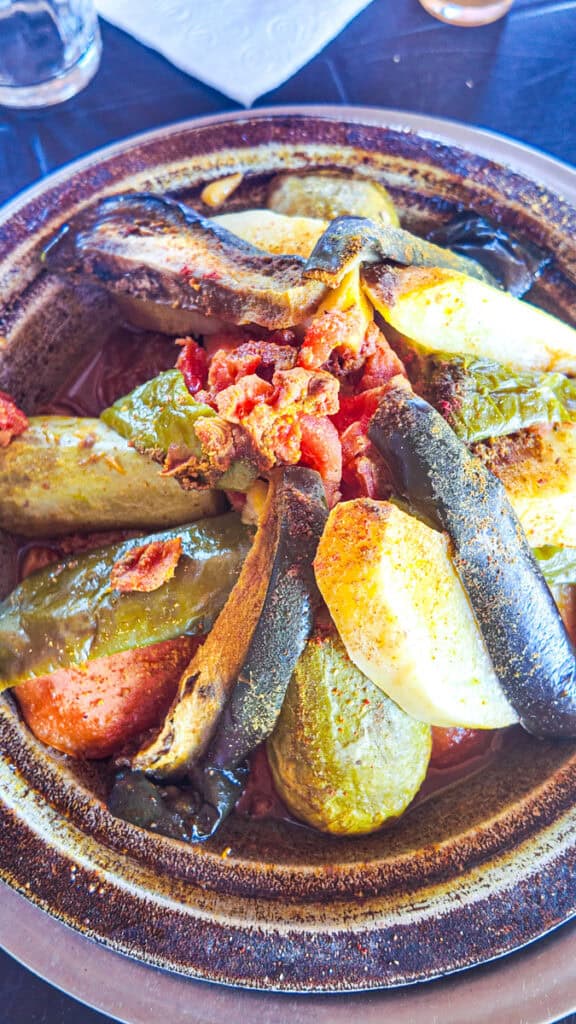
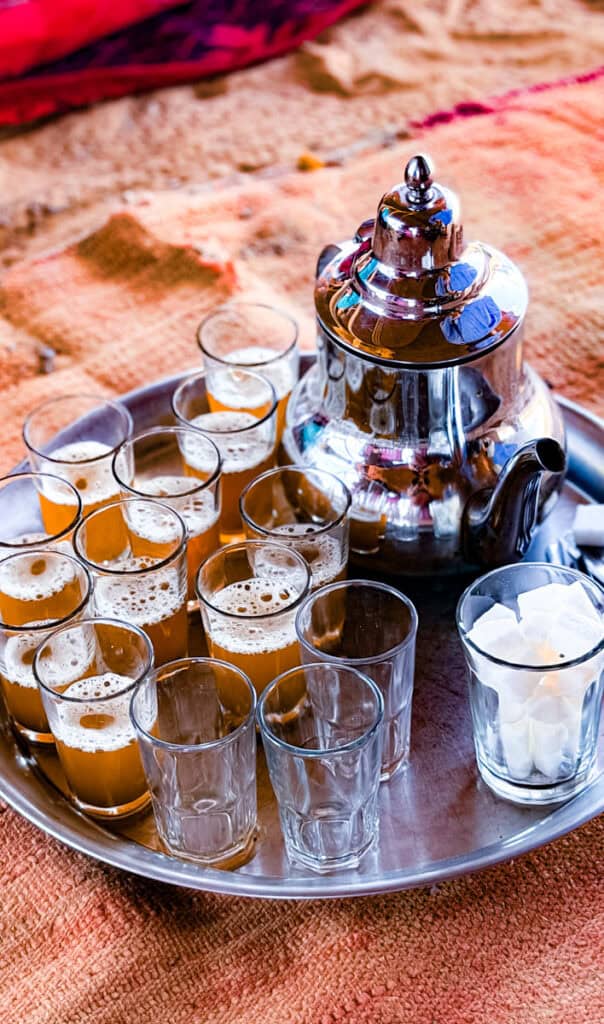
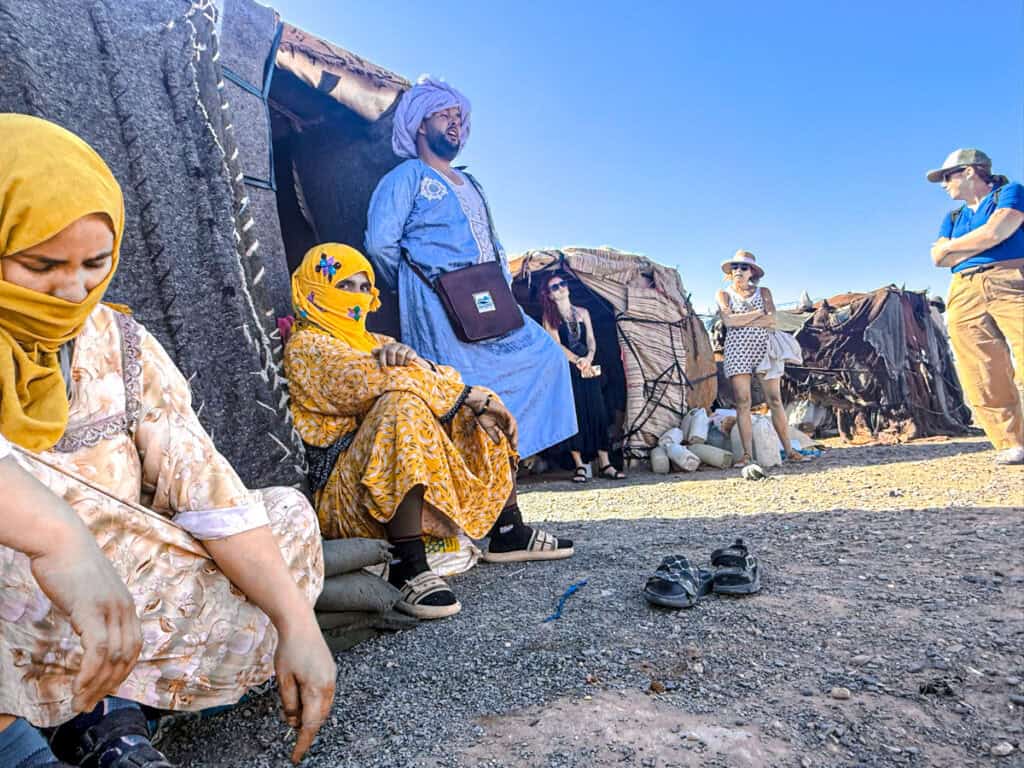
We ate olives, Berber pizza, skewers and tagine in a dining tent, then sat under the communal shelter while Mo explained how the families move to the mountains in summer and back to the desert in winter, and how the children take turns living in the village to go to school.
Ride quad bikes and sandboard the dunes
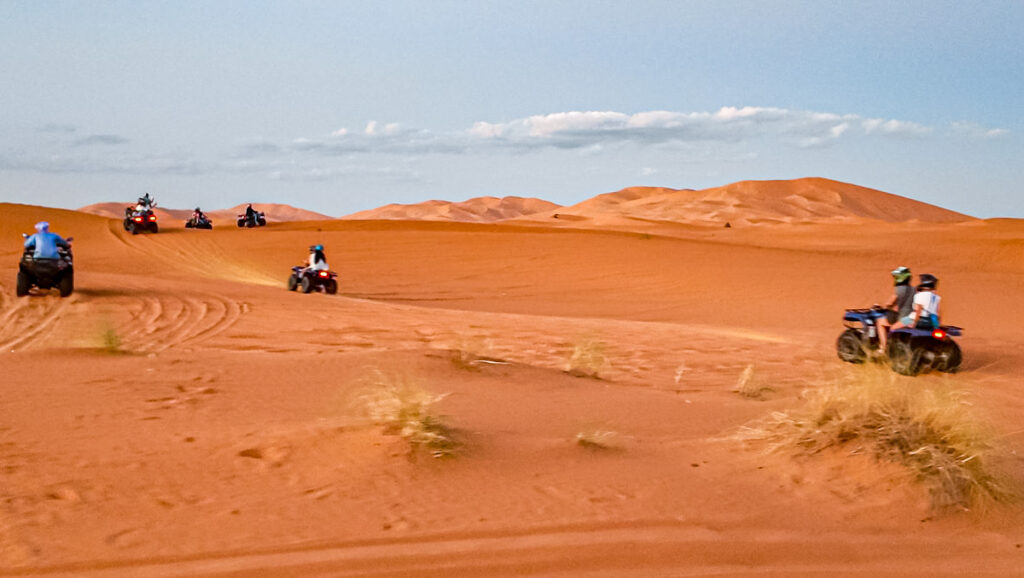
In the afternoon we rode quad bikes up and over the dunes. I got stuck halfway up one steep dune on full throttle (so did two others, thankfully). From the top of the highest dune, the camel trains below looked like toys, and I knew that had been us the night before.
Mo pushed each of us down a big dune sitting on a snowboard (sitting is the safe way to do it), and our quad guide drove us back up to save the climb. We finished with the last of a pink Sahara sunset and rode back to camp at dusk with the full moon ahead of us. You can book an ATV ride with sandboarding here.
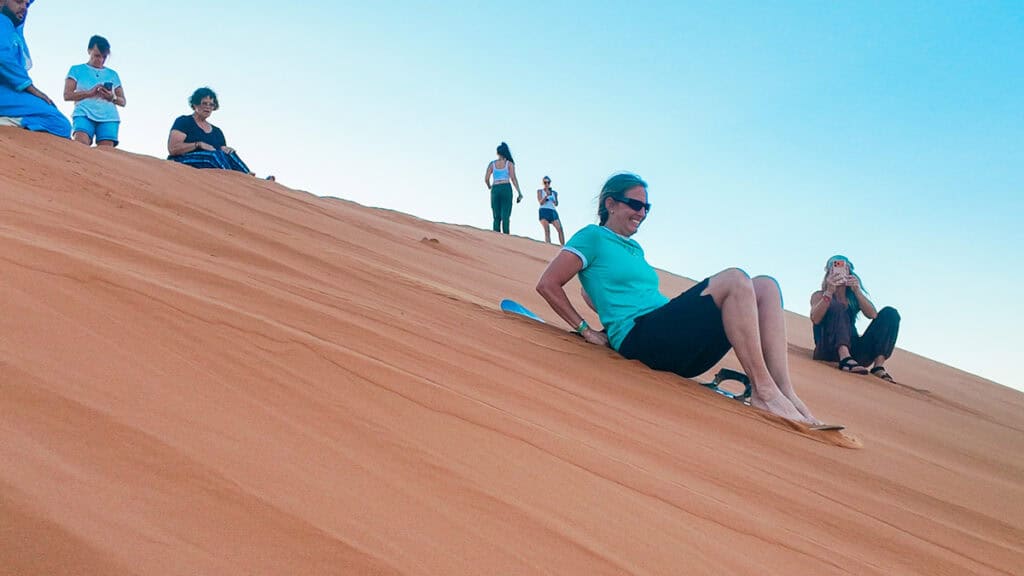
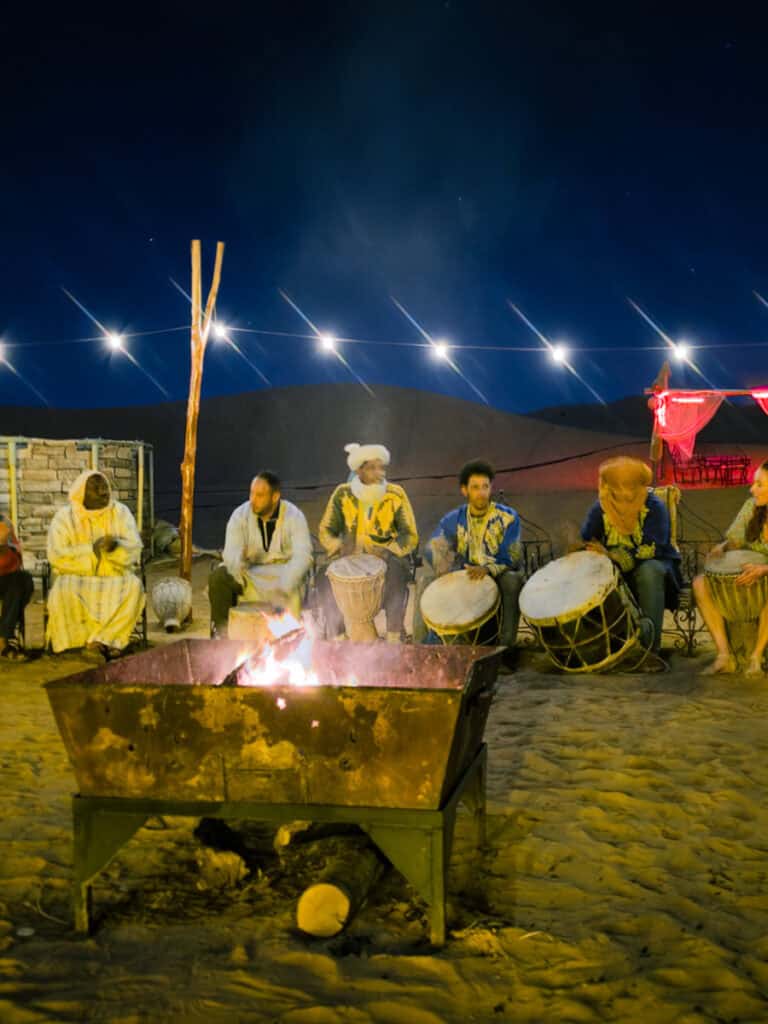
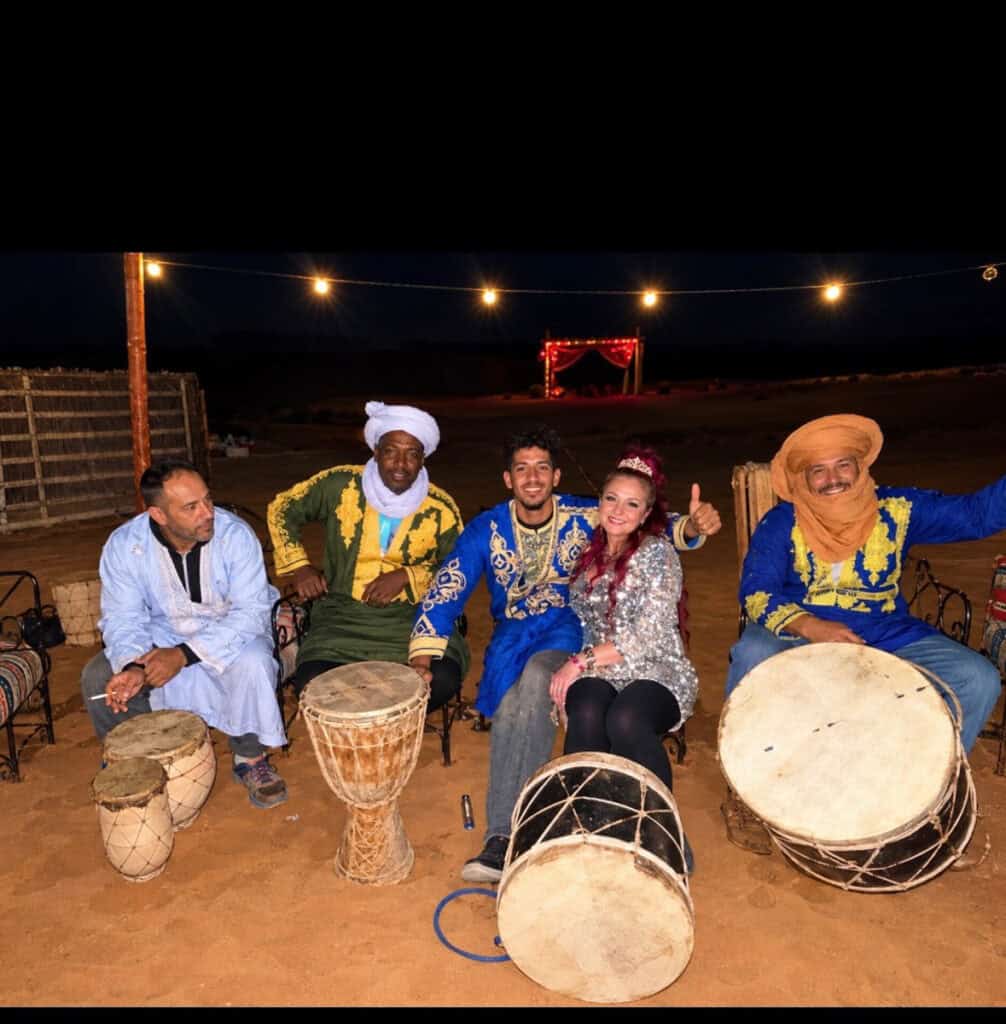
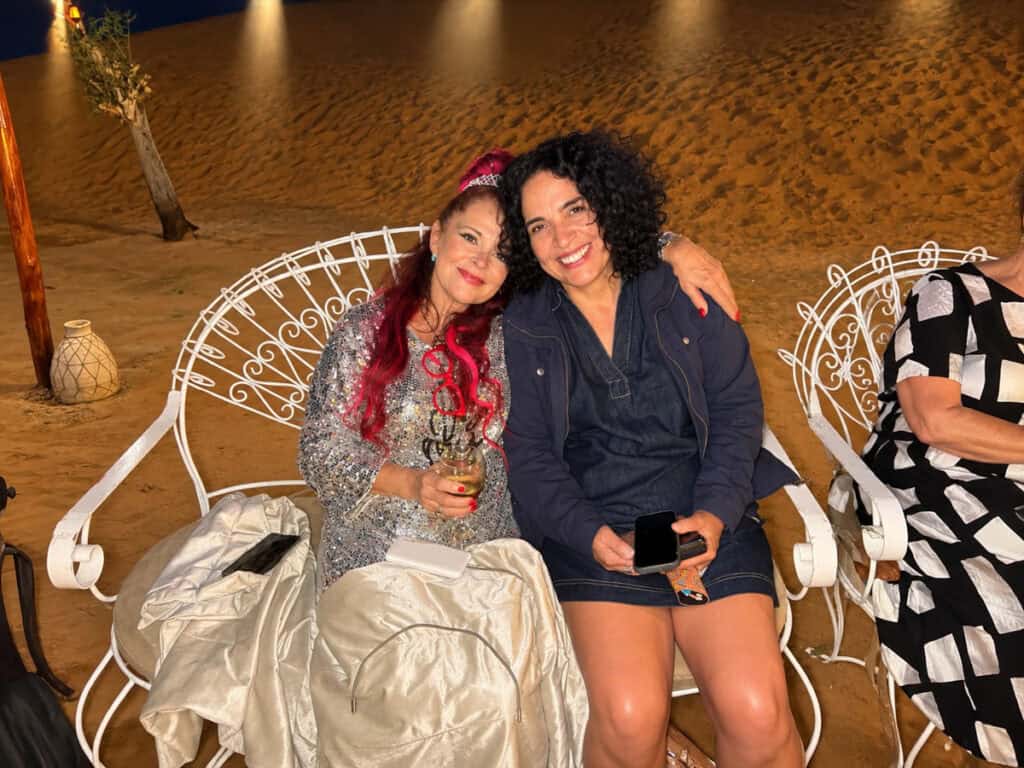
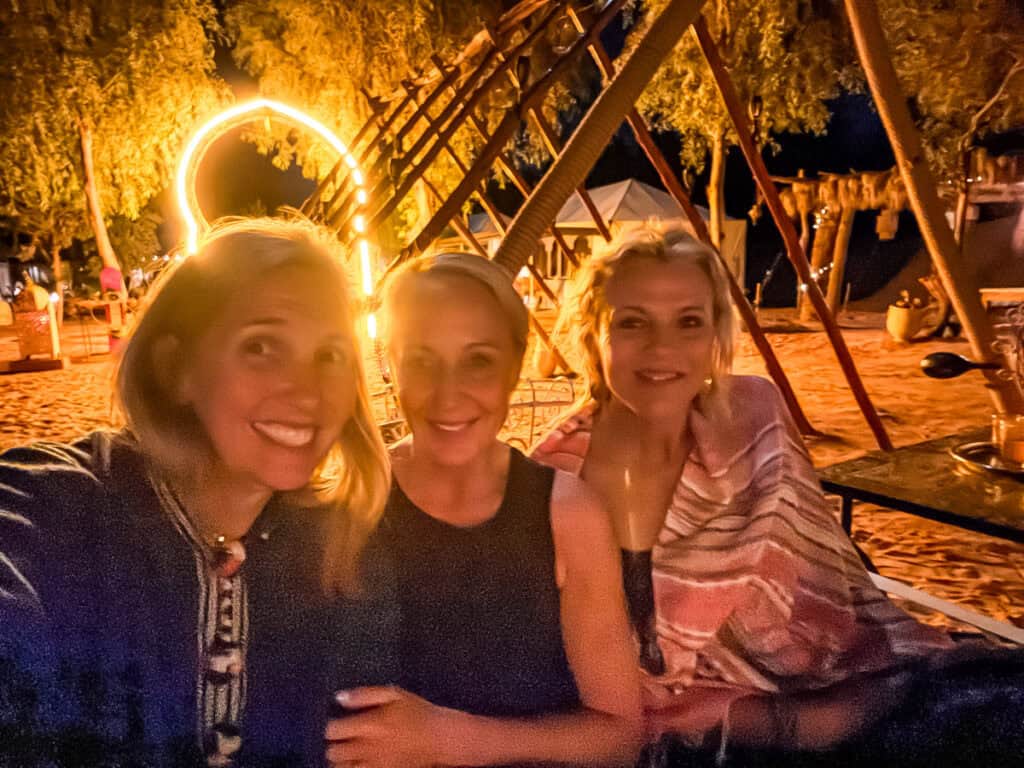
That night, we celebrated Charlotte’s 60th birthday with a special cake and after dinner, the staff played around the fire. We danced the camel dance (we still don’t know what it’s supposed to be) until we collapsed into bed at 9:30.
Day 8: from the Sahara to Fes via Erfoud
This is the longest day of the trip, about 587 km from the desert to Fes, and ours ran longer than planned because we hit the end of a Moroccan holiday and half the country was driving home.
See the fossils of Erfoud
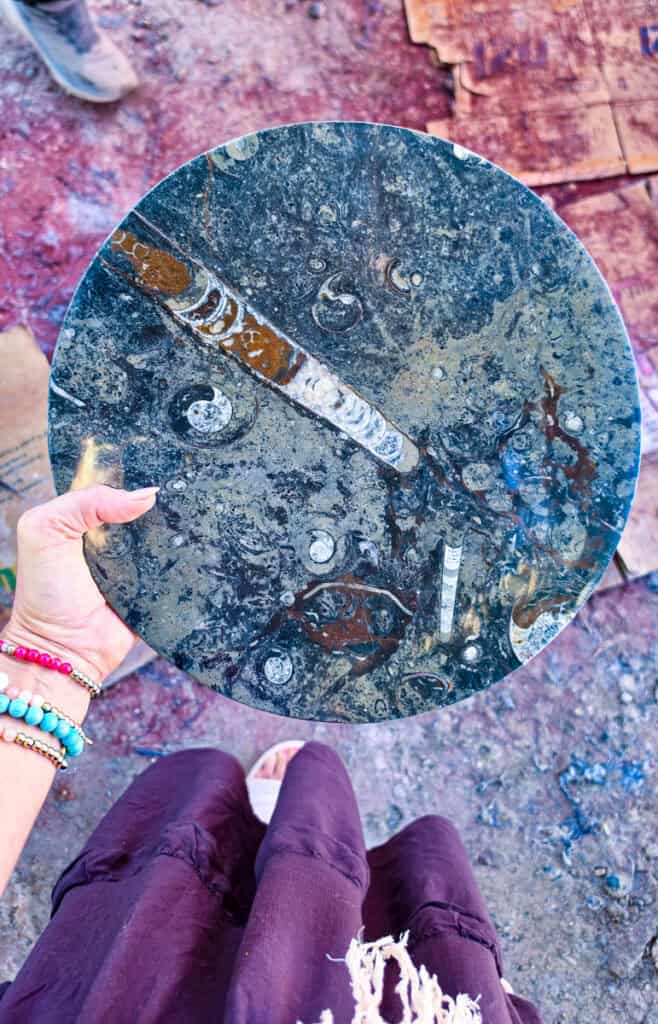
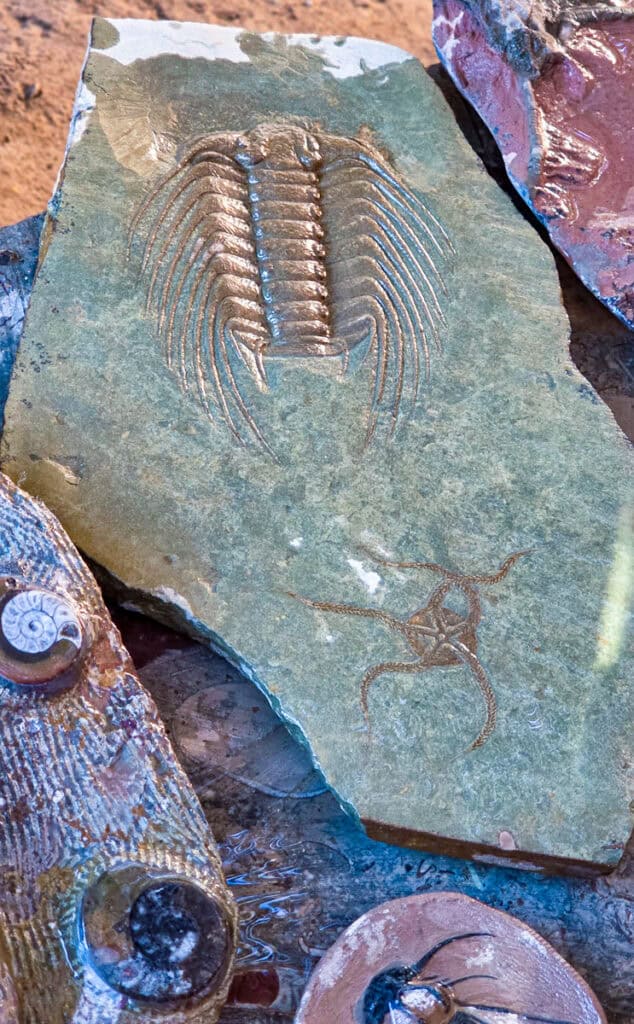
Erfoud, about 60 km north of the dunes, sits on what was a seabed in the Devonian period, around 380 million years ago, and the black and brown marble quarried nearby is packed with fossilized orthoceras and ammonites. We stopped at Pierre d’Erfoud, a workshop that cuts the stone into tables, basins and plates, and the fossils were the clearest I’ve ever seen. I also lost a happy half hour in their crystal section, buying jewelry and gifts for my girls. (Two days later, the bar at our Fes cooking class was made of the same stone.)
We reached Fes after dark and ate on a rooftop with night views over the city. A note on Moroccan salad: it’s a spread of small plates of cooked vegetables, such as carrots, potatoes and eggplant dip, shared at the table, and it was often my favorite part of the meal.
Days 9 and 10: things to do in Fes
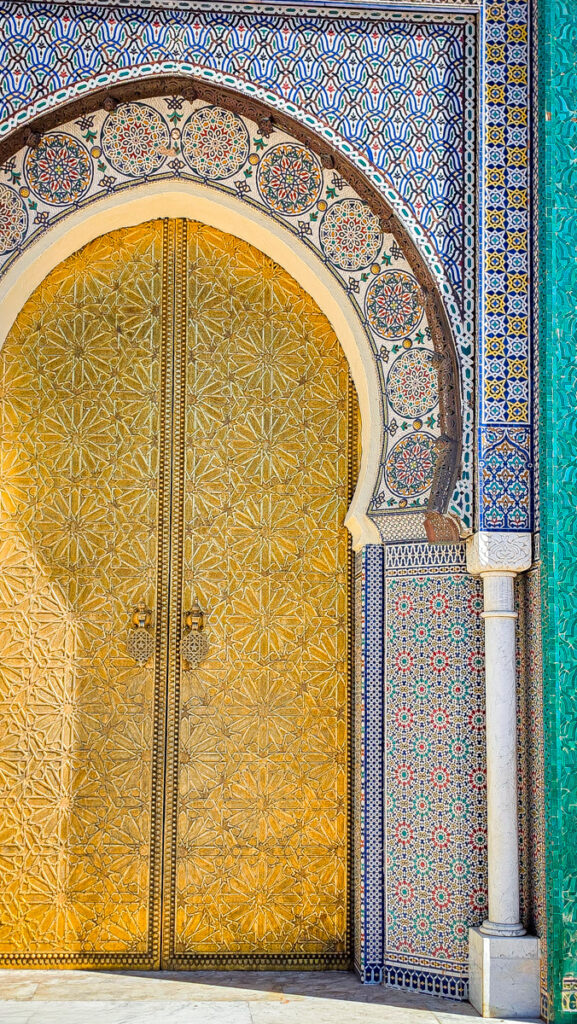
Fes el-Bali, the old medina, was founded as the Idrisid capital in 789 and listed by UNESCO in 1981. It’s one of the largest car-free urban areas in the world, at about 300 hectares, and its lanes are narrower, steeper and harder to read than Marrakech’s souks. Even Mo got turned around on our first night, and Google Maps isn’t much help. Getting lost is part of it, so give yourself time.
Take in the view over Fes
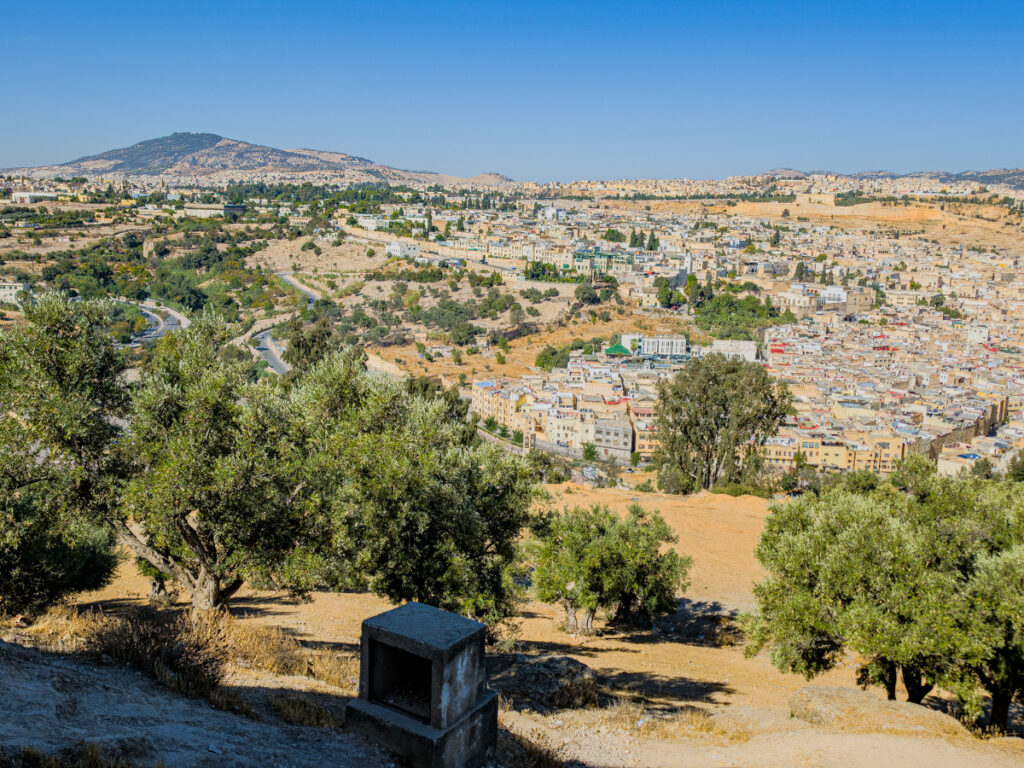
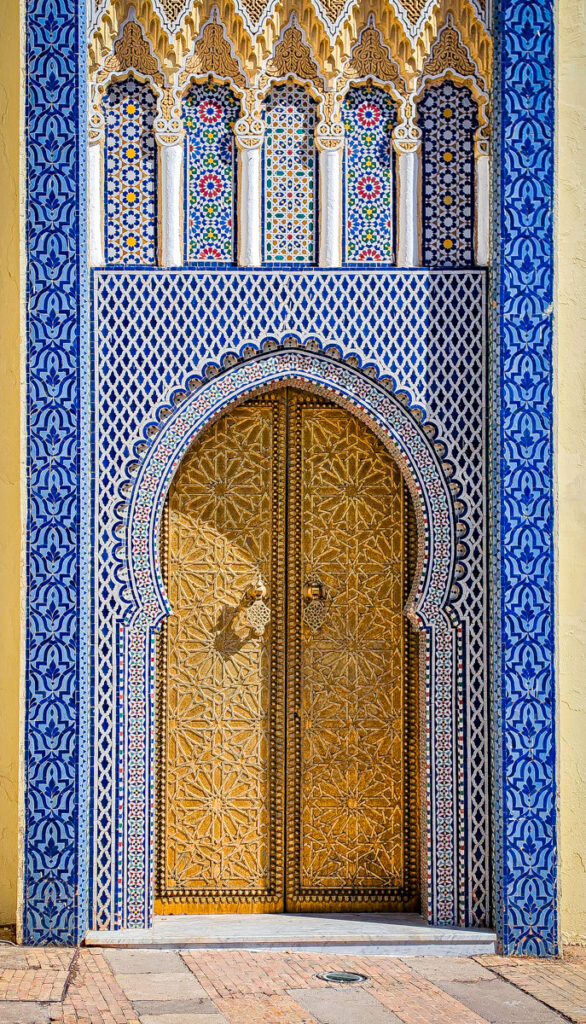
Mo started our first morning outside the gates of the Royal Palace, where you can photograph the doors but can’t go in, then drove us up to a viewpoint over the valley. From there you can see the medina walls and the gate you’ll walk through later.
Watch the potters at a Fes ceramics workshop
Fes is known for its blue-and-white ceramics and zellige tilework, and at a ceramics workshop at Mosaique Et Poterie De Fes we watched potters at the wheel, tile cutters and painters at work. Some of the women bought pieces for home, and I bought a dip bowl and egg cups for Craig (he’s a boiled egg man). The same style is cheaper in the medina, but quality varies, and buying at the workshop was the safer bet.
Walk through Bab Bou Jeloud, the blue gate
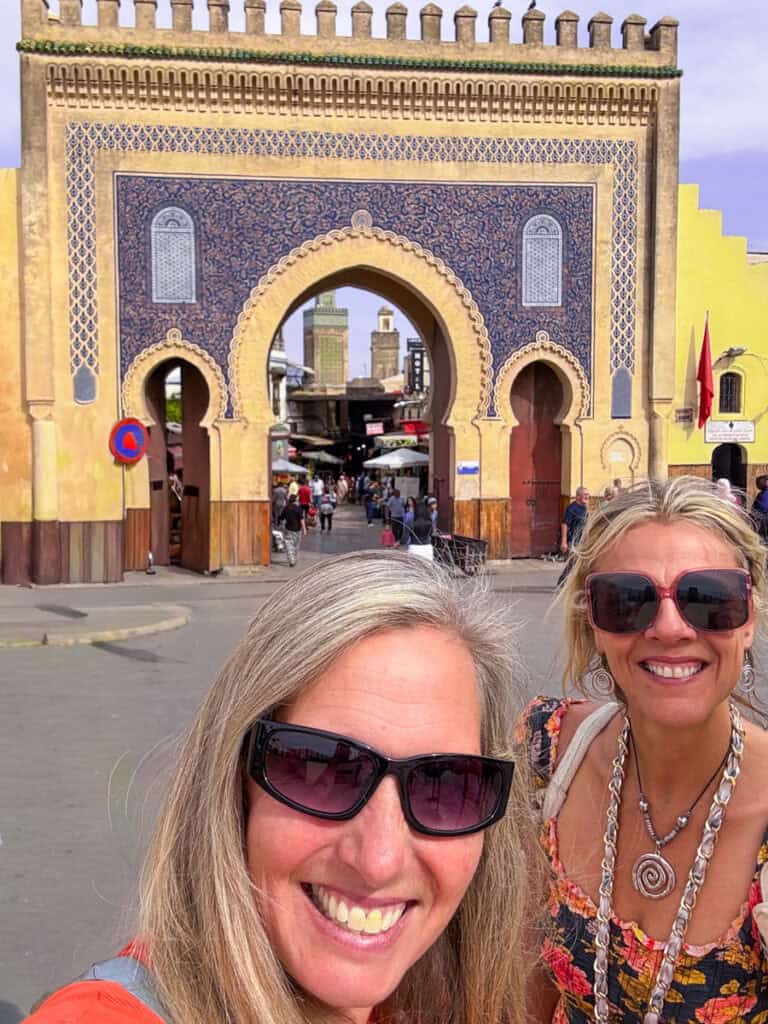
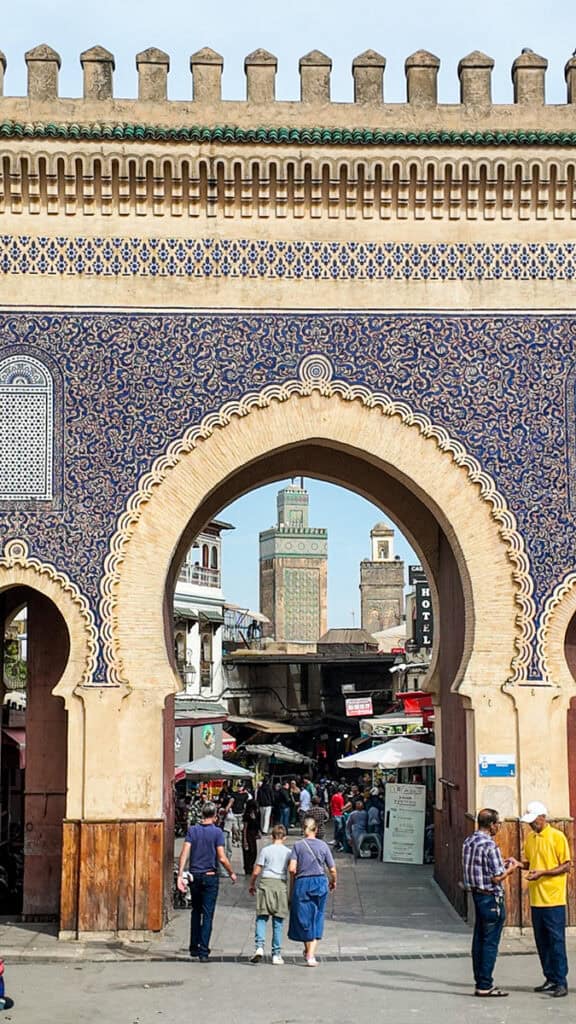
Bab Bou Jeloud is the main gate into Fes el-Bali, tiled blue on the outside and green on the inside. The current gate dates from 1913. It’s the easiest landmark for meeting up again after free time.
Peek into Al-Qarawiyyin
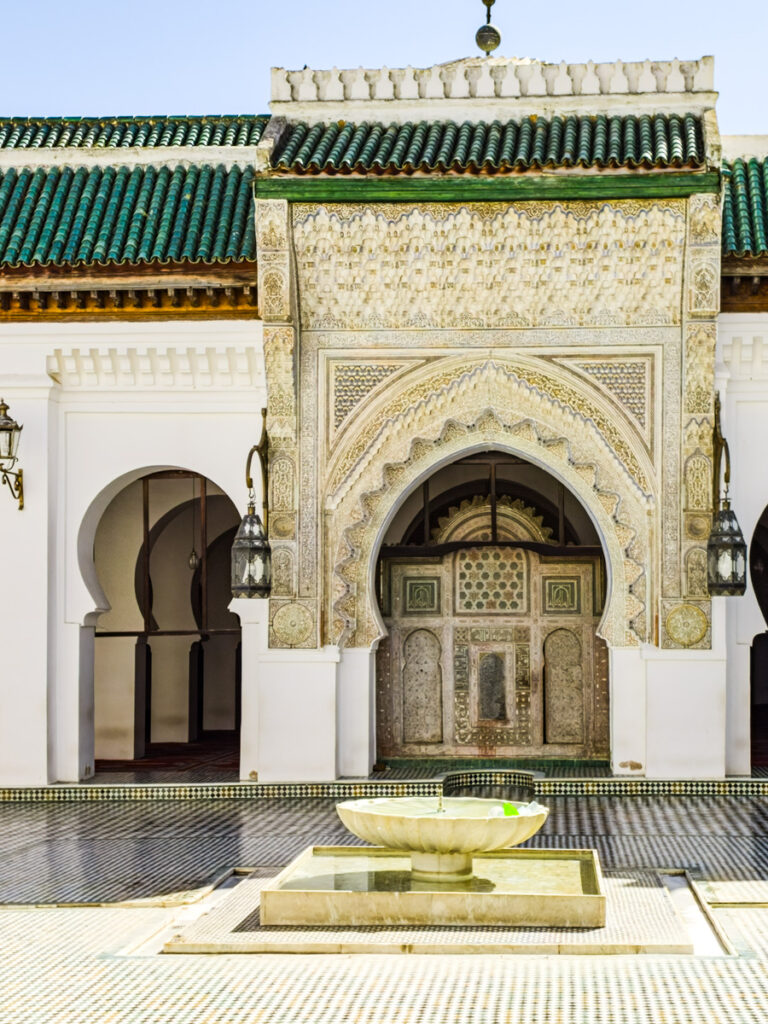
Al-Qarawiyyin was founded as a mosque around 857 to 859, by tradition by Fatima al-Fihri, the daughter of a wealthy merchant. Guinness World Records lists it as the oldest existing, continually operating educational institution in the world. Non-Muslims can’t go inside, but you can look through the gates into the courtyard.
Stand above the Chouara tannery
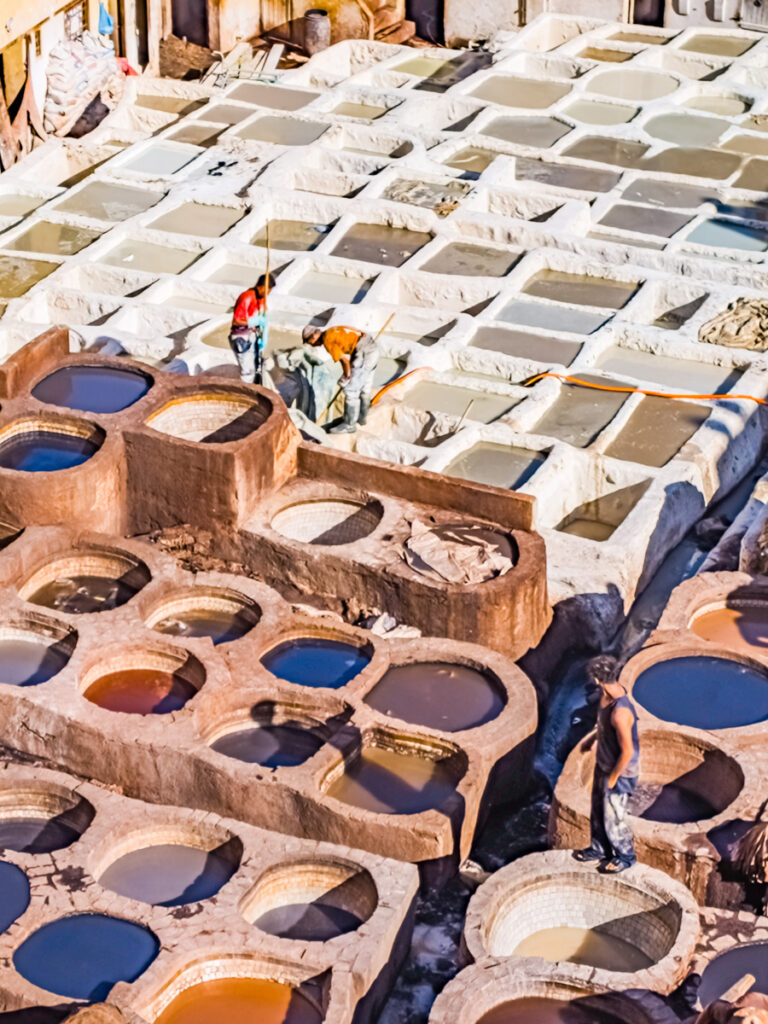
The Chouara tannery is the vast honeycomb of stone vats where hides are cleaned and dyed, and you view it from the balconies of the leather shops around it. It smells strongly, and they hand you a bunch of mint to hold under your nose on the way in. The leather here is beautifully soft, and you can order a jacket made to measure, as one of our group did. I didn’t buy, and I regret it.
Eat behind an unmarked door in the Fes medina
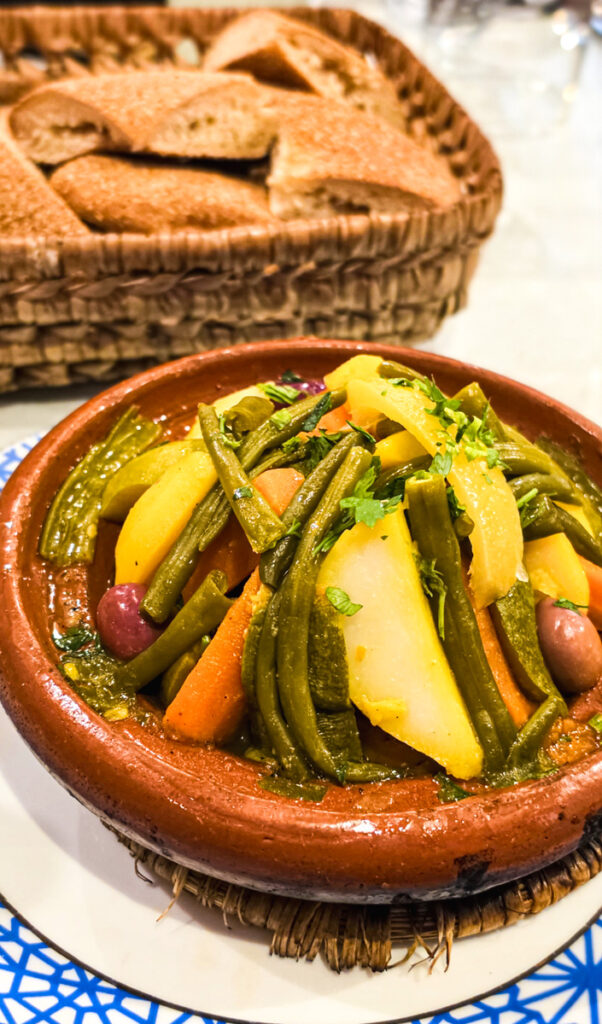
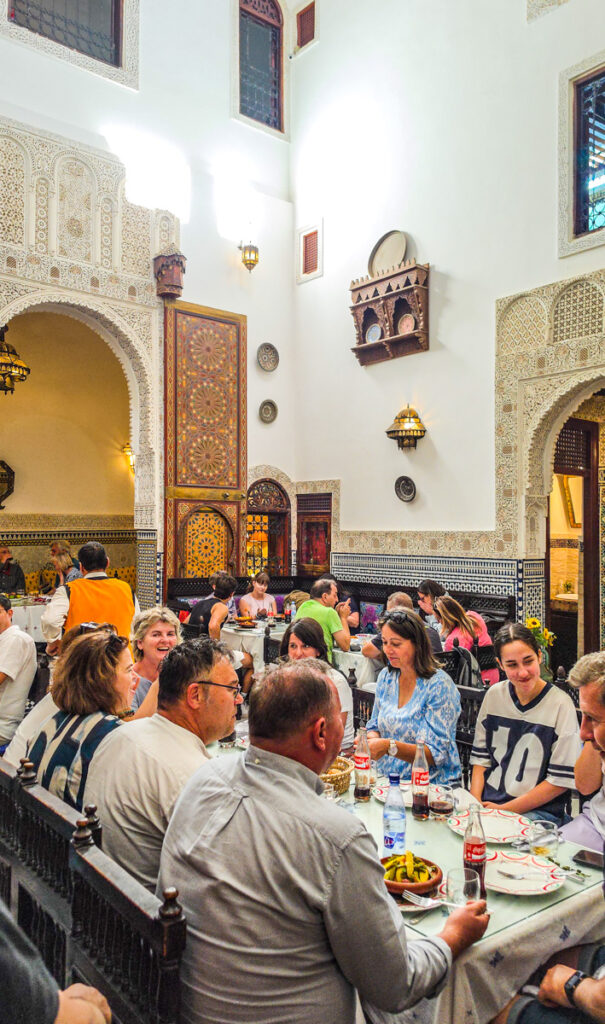
The best thing about eating in Fes is walking through a plain door in a dark alley into a room with soaring ceilings and carved plaster. Our lunch at Restaurant Nejjarine was like that, and its Moroccan vegetable spread was the best of the trip. Lunch was a set menu (most of our meals outside Marrakech were), and their card machine wasn’t working, so carry cash.
Spend free time getting lost in the medina
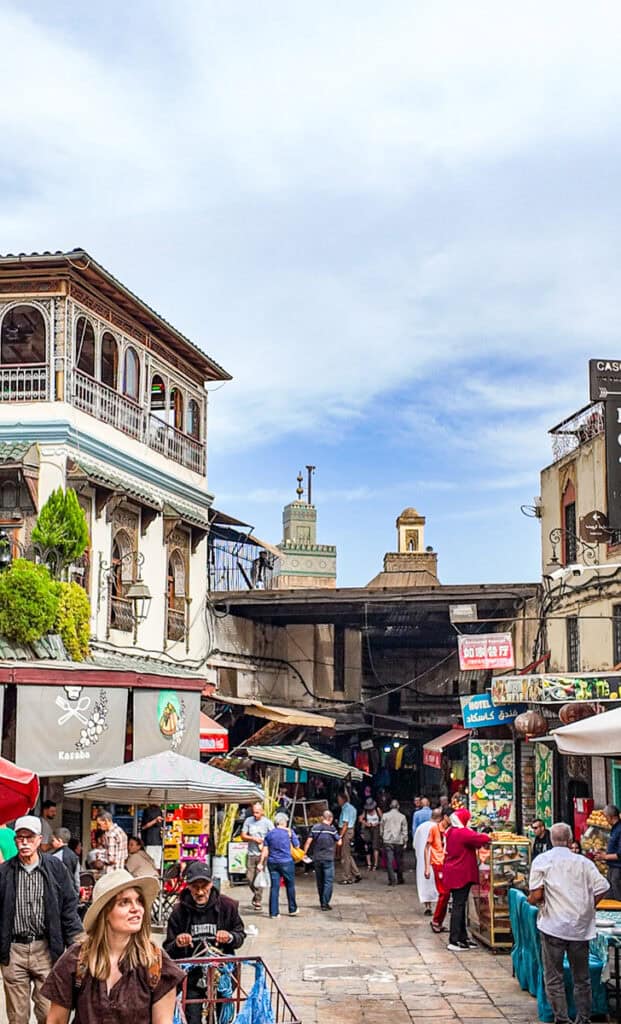
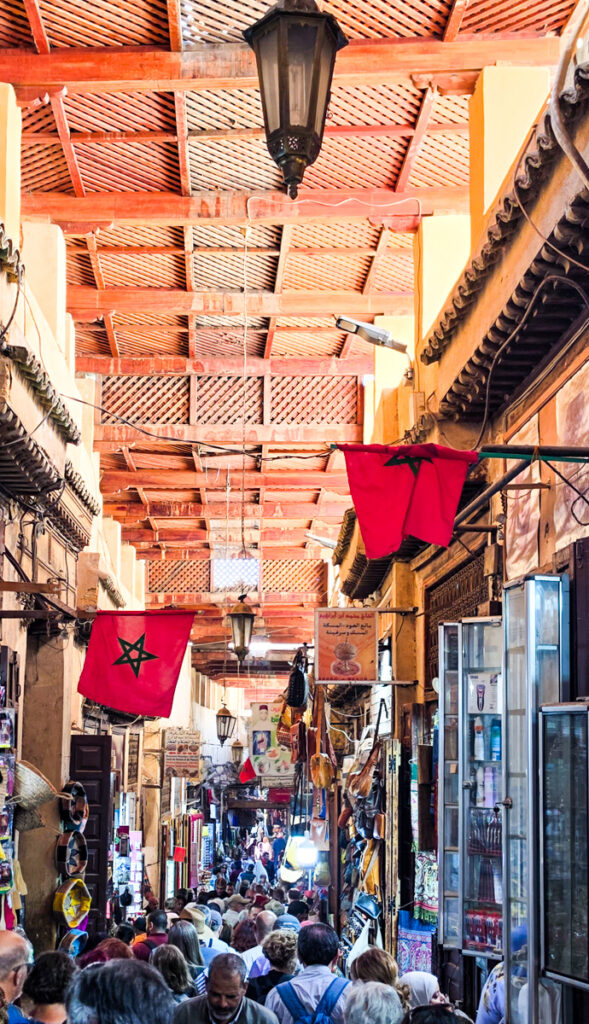
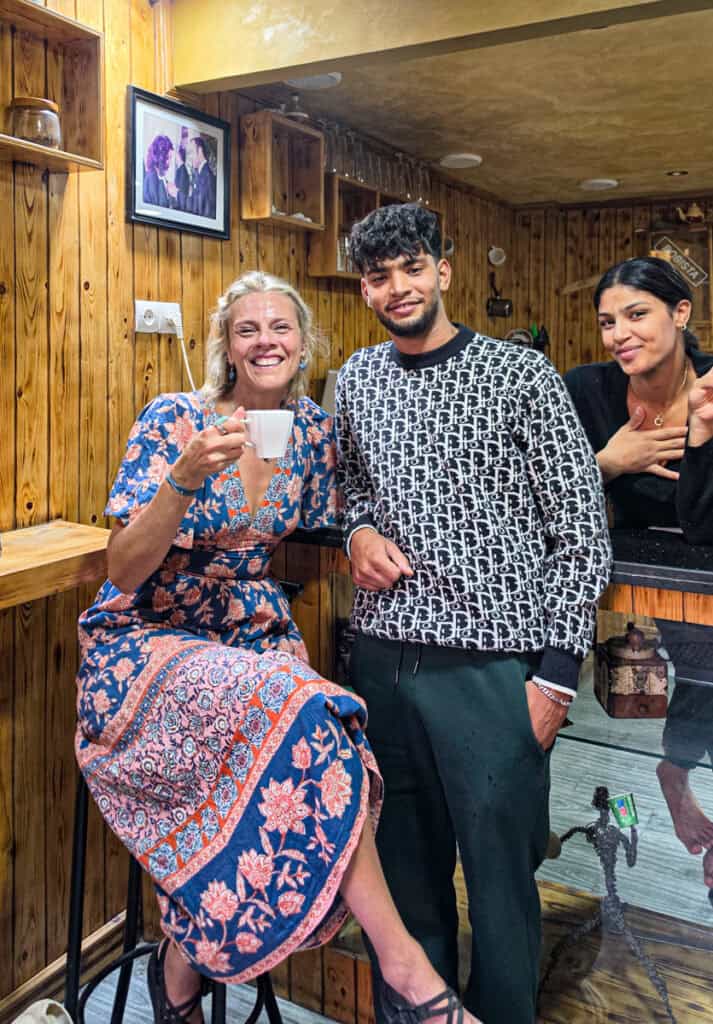
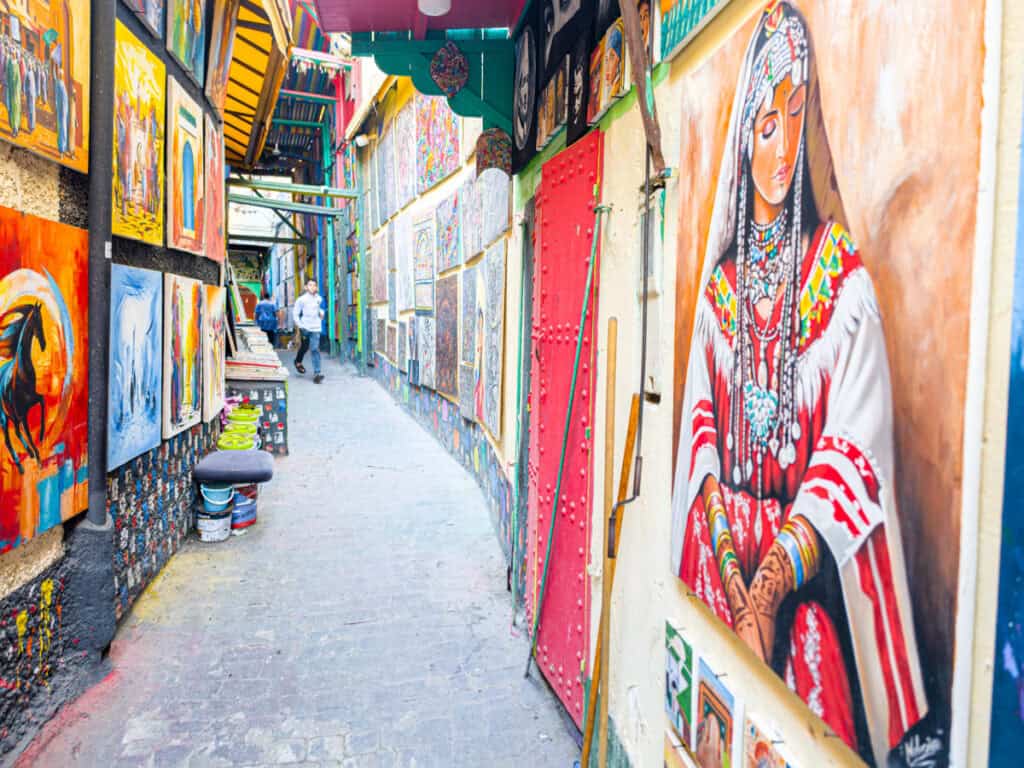
I lost the group running an errand and ended up hot, sweaty and cranky in a tiny coffee shop in a quiet lane off the main souk. The owner handed me a free bottle of water before I’d ordered, told me it was a locals’ café, and then turned out to be a spiritual coach who chatted with me about kindness until I walked out feeling like a new woman. Not long after, I found a lane painted bright with murals, my favorite part of the Fes medina.
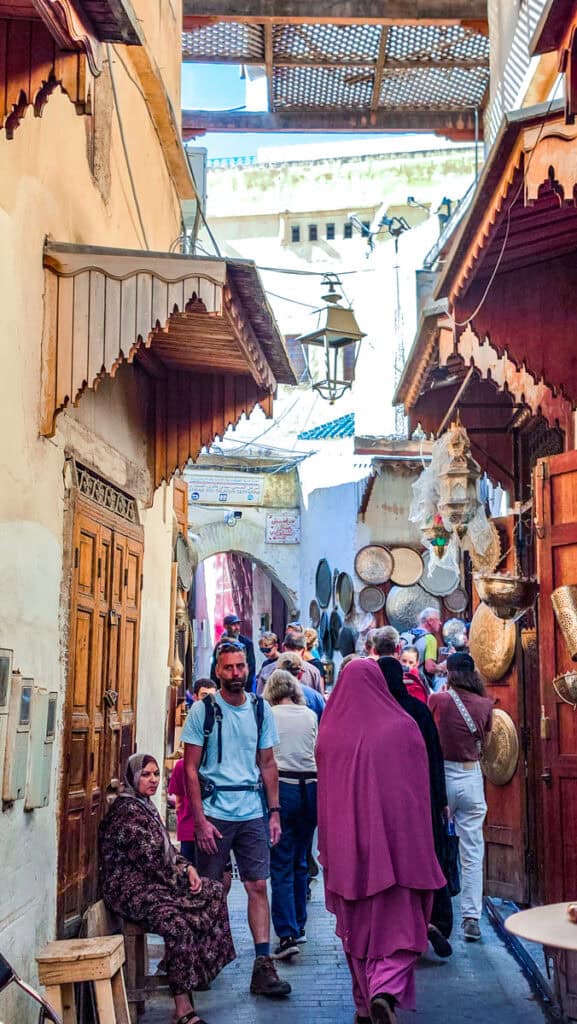
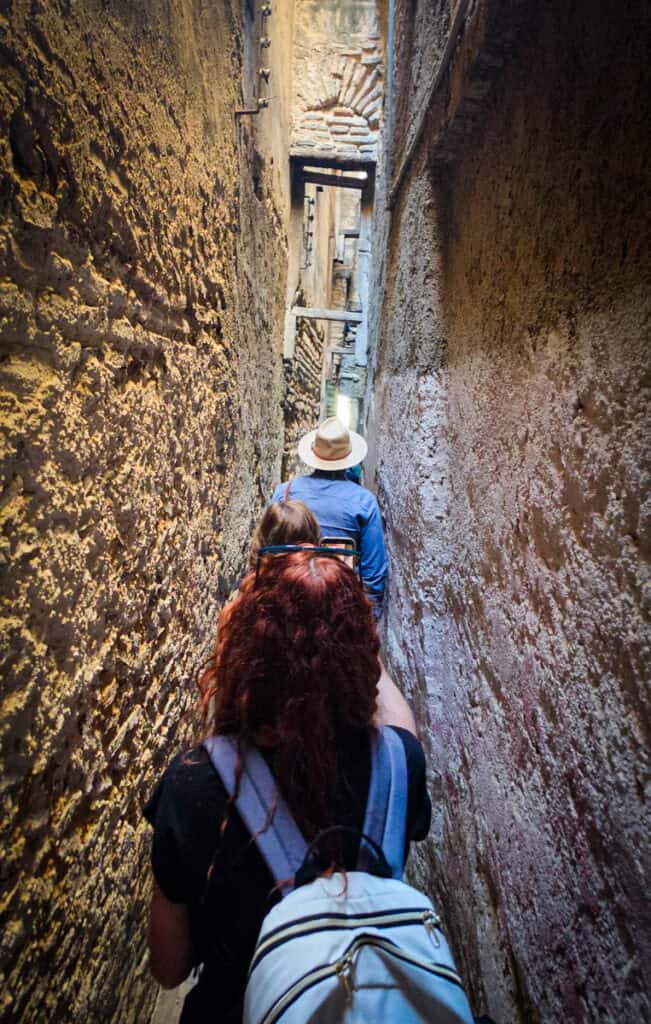
Some of the women weren’t as lucky. A man offered to guide them to a coffee shop, took their money, and the coffee shop didn’t exist. It happens in every country, and they laughed it off, but say no thanks to unofficial guides.
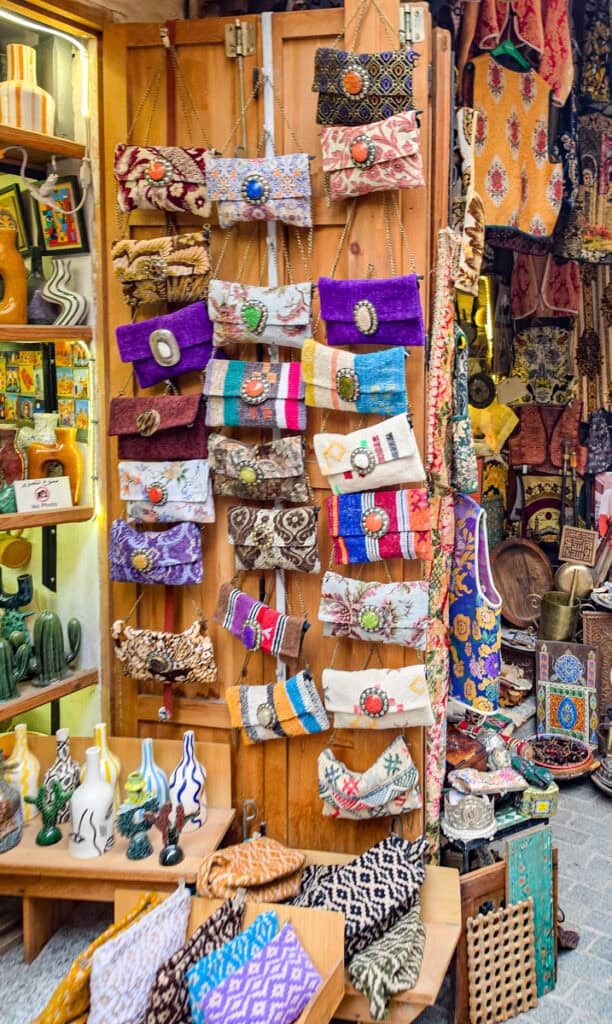
Fes is a fantastic place for shopping, and apart from matching bags a few of us ladies bought, I did no shopping in Fes. I deeply regret that, especially after seeing some of the adorable leather handbags and ceramics some of the ladies bought! Don’t miss Color St while shopping through the souks. it’s a small alley way adored with vibrant artwork.
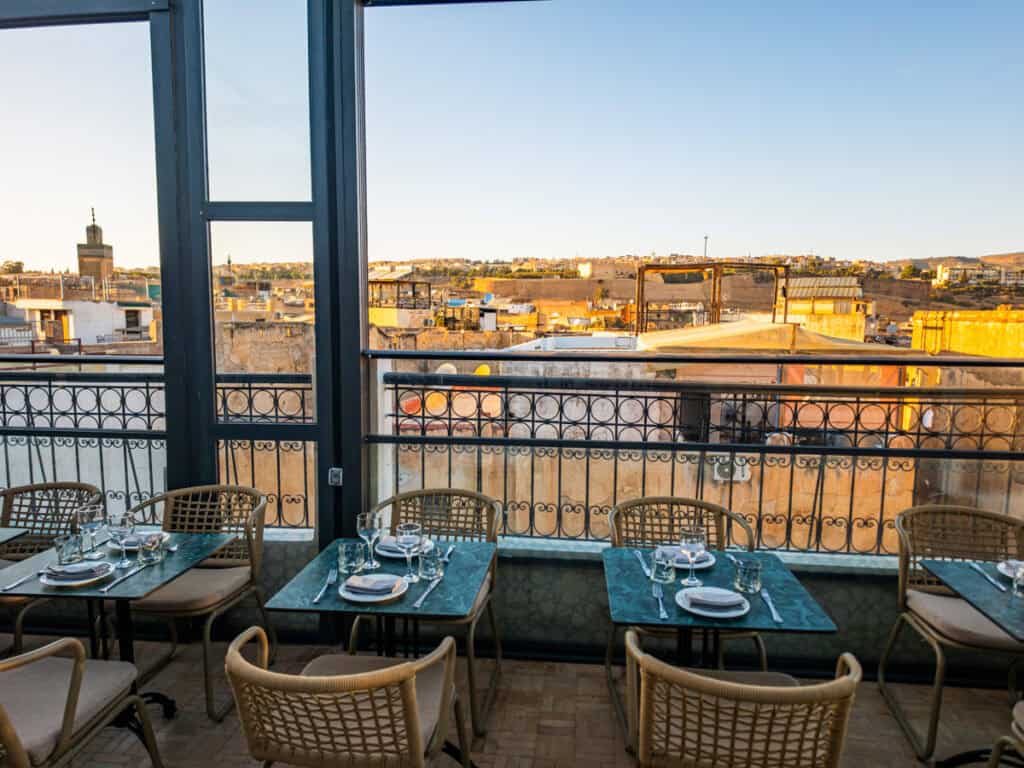
We finished with a drink on a rooftop with views over the city at Mouda Palace. Fes has few places that serve alcohol, so look them up ahead if you want a glass of wine. I had a Limoncello Spritz which is a poor substitute for an Aperol Spritz! The Moroccan wine some of the other ladies ordered was so good!
Make a mosaic tile at a ceramics class
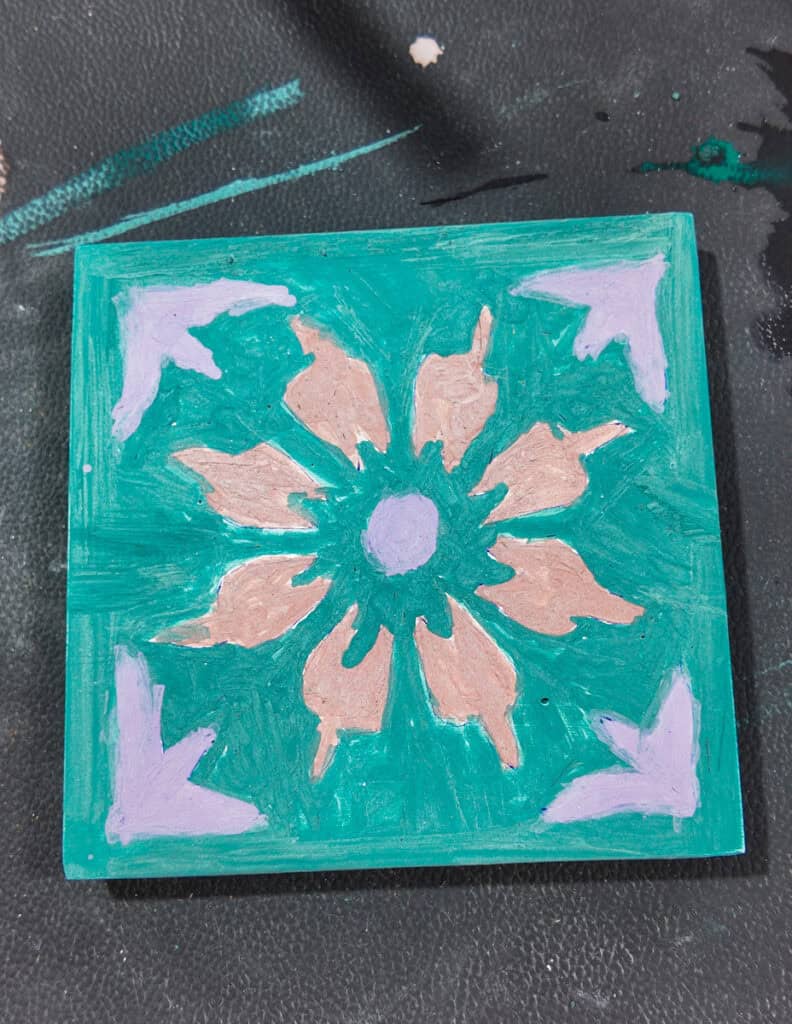
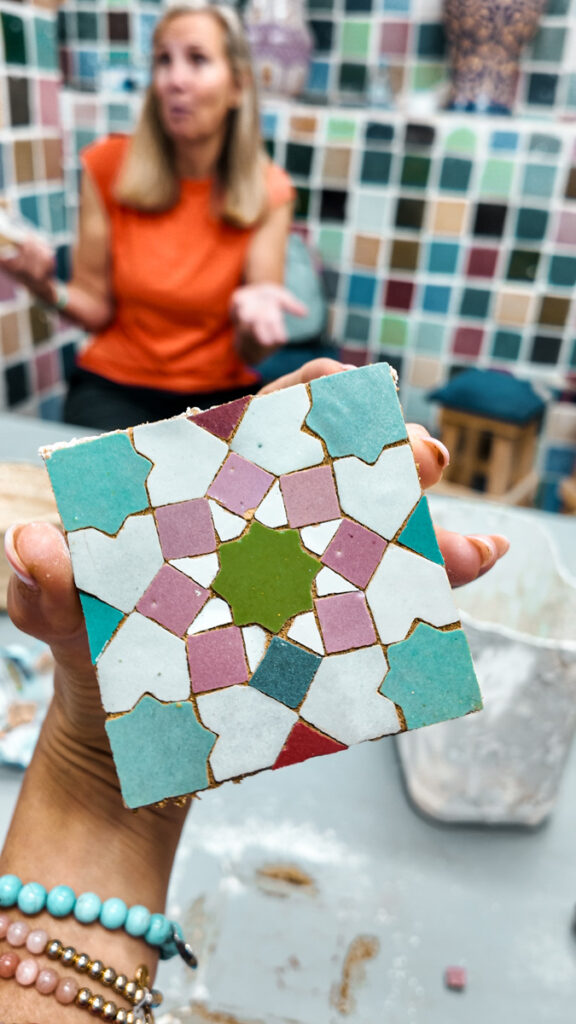
On our last morning, we went back to Mosaique Et Poterie De Fes, the ceramics workshop, for a class. We each made a small mosaic from cut tiles, then painted a stenciled tile. (Mine came out a little mismatched, which feels about right.) Some of the women also tried the potter’s wheel. The painted tiles can’t be fired in time, so the paint won’t last forever, but it’s a souvenir you made yourself. Book a ceramics class here.
Eat lunch at Café Clock
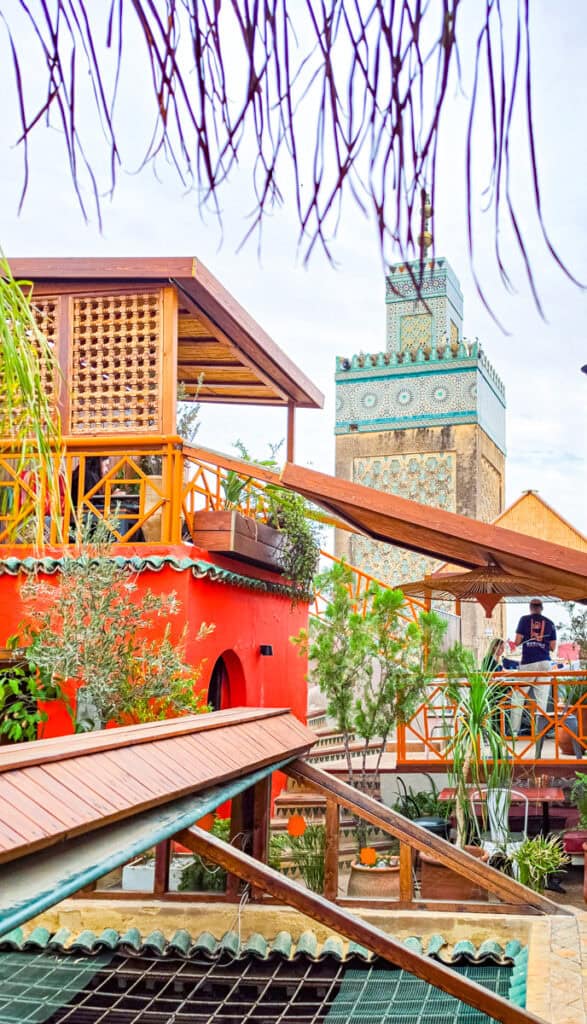
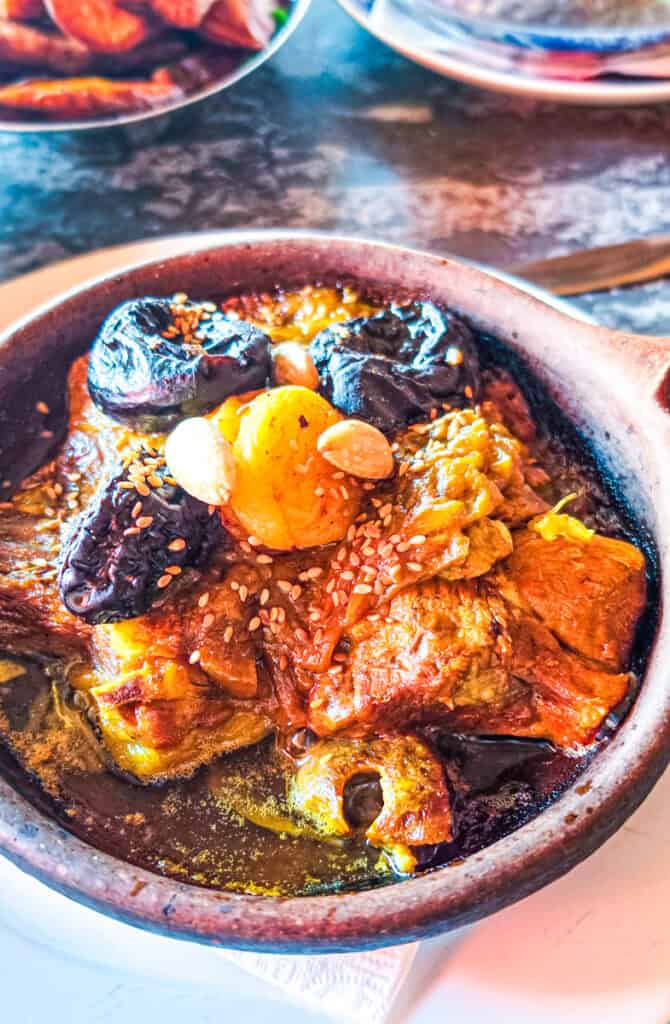
Café Clock, in the Fes medina on Talaa Kbira, was one of our best meals in Morocco, with traditional dishes given a modern twist and a rooftop with a view of a minaret. I had a lamb tagine, and we shared sweet potato fries and a ginger and lemon juice I still want the recipe for. The coffee was good enough that we stayed for a second cup. It’s open 9am to 11pm daily.
Take a Moroccan cooking class
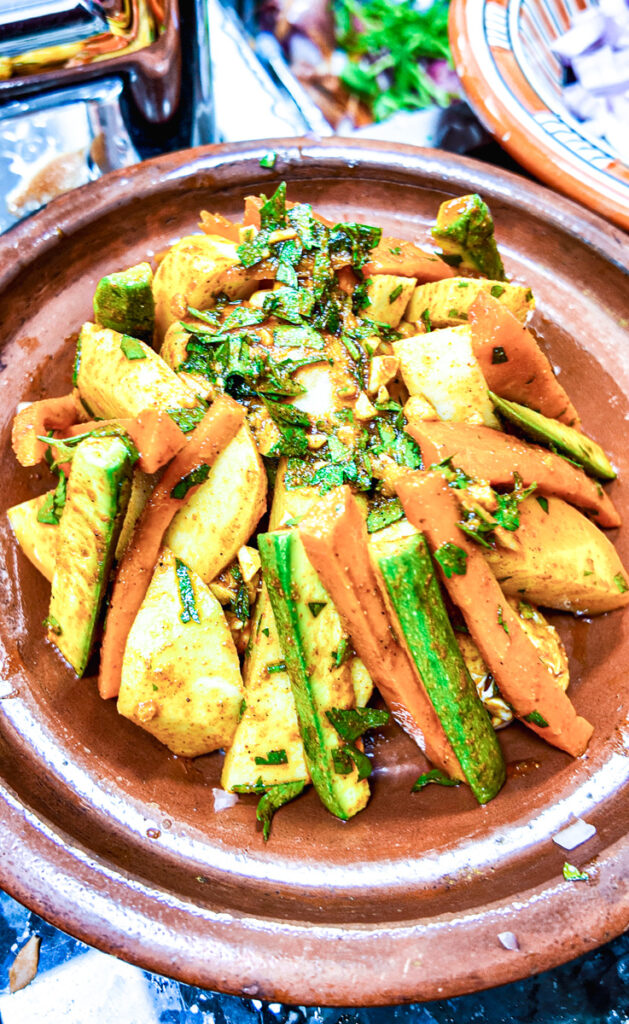
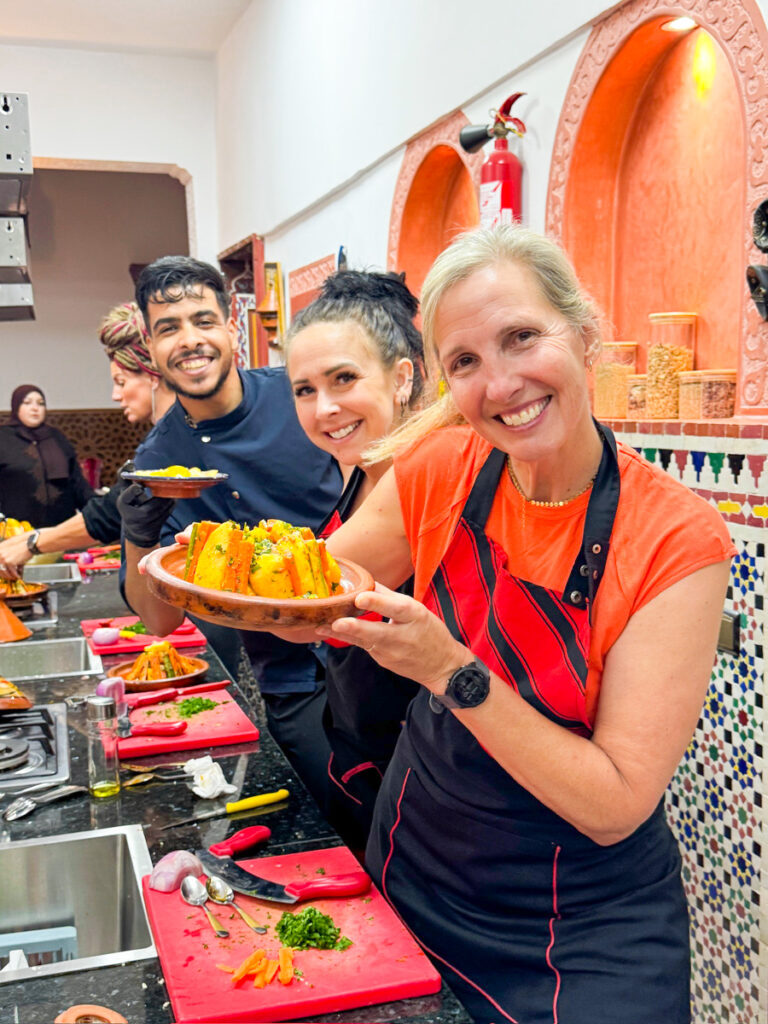
Our last evening together was a cooking class at Palais Bab Sahra, another grand restaurant with palatial vibes hidden down an unmarked alley. A chef and her team walked us through a chicken tagine step by step. It’s simpler than you’d think (the trick is the spice balance), and then we sat down to eat it, after a spread of Moroccan vegetables and fruit for dessert, which is how most Moroccan meals end. While we waited for our tagine to cook, we enjoyed mint tea and cookies on their rooftop terrace with beautiful Fes views!
Here is another Fes cooking class option and here are some on Airbnb experiences, some of which you can do in a local’s home.
Day 11: Fes to Casablanca
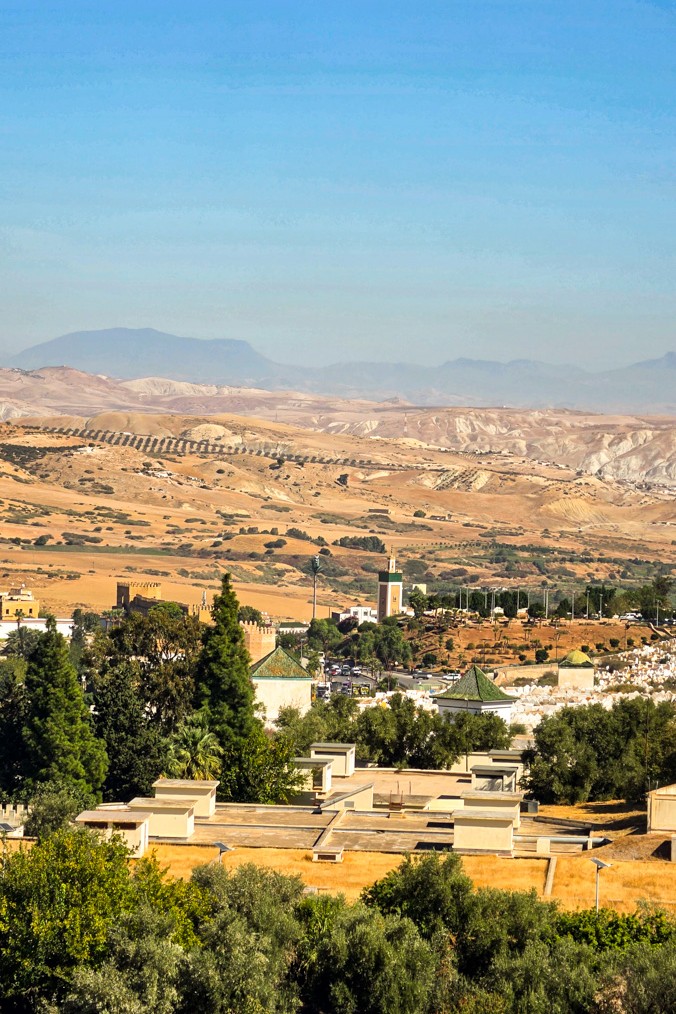
The drive from Fes to Casablanca airport is about three hours, so if you have an early afternoon flight, leave first thing. Most of our group stayed a night in Casablanca, and a few went horse riding on the beach.
How to turn this into a 2-week Morocco itinerary
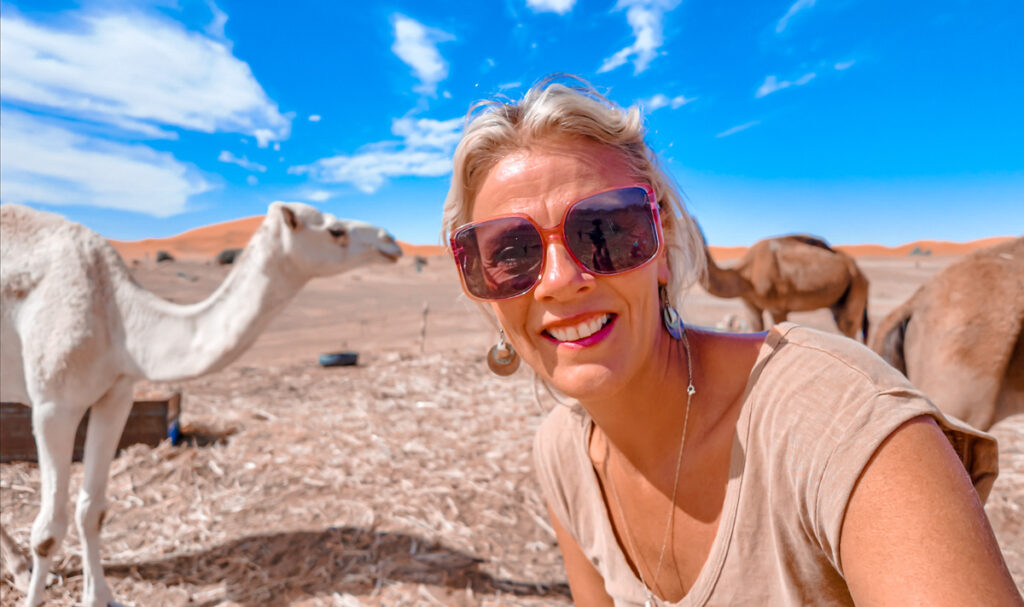
I flew in two days before the group, which turned my trip into nearly two weeks, and if you have the time, these are the places I’d add the extra days.
- Two more days in Marrakech at the start. It gives you a buffer for flight delays and jet lag before the long drives. Use them for a night food tour on your first evening, Jardin Majorelle (book online), a morning in the souks at opening time and dinner in Gueliz.
- A third night in the desert. I only caught the last of the Sahara sunset because I was busy filming the women, and I’d have loved another morning and evening out there with nothing to do.
- A night in Casablanca at the end. Most of our group stayed on before flying out, and a few spent the afternoon horse riding on the beach.
With four or five extra days, give Fes another day too. It was the city I most wanted more time in, to sit in the little cafés and watch the medina go by.
Where we stayed on our Morocco itinerary
| Stop | Where we stayed | Good to know |
|---|---|---|
| Marrakech | Riad Sierra | Green-themed riad around a courtyard pool, about a 20-minute walk to Jemaa el-Fnaa, breakfast on the rooftop. Sound carries, so pack earplugs. |
| Dades Valley | Riad Rihana Dades | At the start of the Monkey Fingers trail, with a rooftop pool and valley views. Hotel-style corridors, so it’s quiet. |
| Erg Chebbi | Sahara Majestic Luxury Camp | Canvas tents with real beds, a shower and a bathroom, right on the edge of the dunes. |
| Fes | Dar Victoria | A converted family home just outside the medina walls, easy to walk in or grab a taxi. Rooms vary in layout, which works well for groups, and we all agreed it had the best breakfast of the trip. |
Getting around Morocco
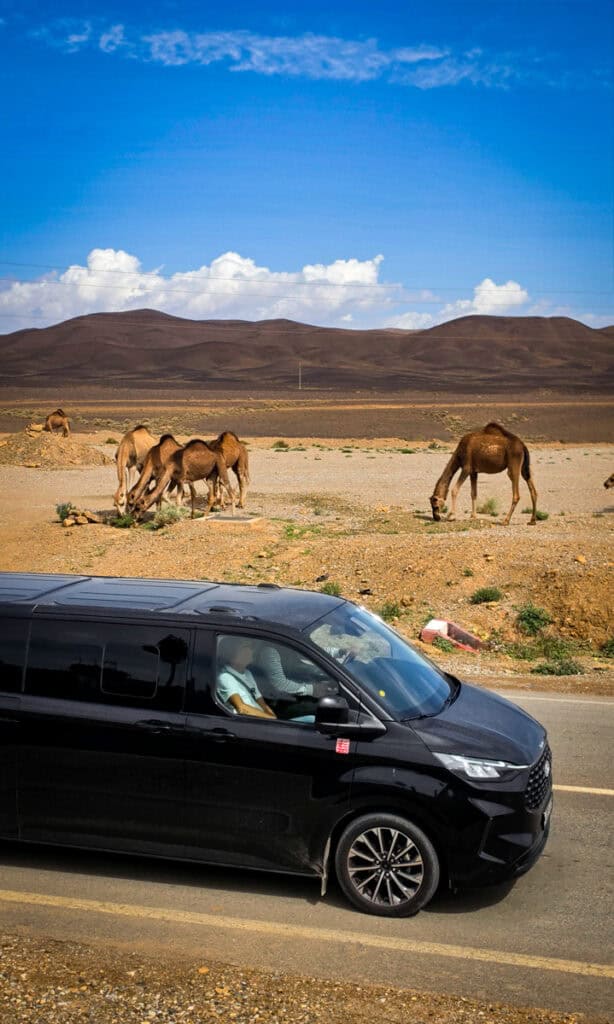
The distances between Marrakech, the desert and Fes are big, and most of the route is mountain road, so a private driver or a small-group tour is the easiest way to do this itinerary. Inside the medinas you’ll walk everywhere (cars can’t fit), and in Fes we used taxis to get between our riad and the medina gates.
Here are some options for tours:
- If Christina has another YLA Morocco tour, then I highly recommend it. See all her tours here.
- Our guide, Mo, can arrange private and small-group tours for you. He was an excellent guide and showed us a great time in Morocco and taught us a lot about his culture and the history of Morocco. You can reach out to him via Instagram, email ([email protected]) or read his Tripadvisor reviews here.
- Viator has a few multi day tour options of Morocco!
- You may want to skip the tours and private drivers and hire your own car to get around! While I did not drive in Morocco, from what I saw looking out the window, it looked safer than a lot of countries I have been to! Check out rental car prices here.
Morocco travel tips
- Entry. As of November 2026, US or Australian citizens don’t need a visa for stays under 90 days. Your passport needs at least six months’ validity and a blank page, according to the US State Department.
- Carry cash. Card machines failed on us at two restaurants, one with a group bill of about US$400. You can’t take dirhams out of Morocco, so keep your exchange receipts if you want to change leftovers back. You still can use your card, but cash is preferred in many places.
- Alcohol. Moroccan law bars selling alcohol to Muslims (I heard conflicting information about this though), and alcohol is mostly found in licensed hotels, restaurants and liquor stores for visitors. Moroccan wine is good, and several of our hotels let us bring our own bottle for a corkage fee.
- Gluten-free travel. I was surprised how easy it was. Every server I met understood gluten-free, and riads and hotels found gluten-free bread when we gave them notice. Harira, the tomato soup eaten to break the fast during Ramadan, has flour in it, and tagine comes with rice on request.
- What to wear. See our guide to dressing modestly in conservative countries. Morocco was pretty accommodating with dress Mo kept telling us to where whatever we like. You can’t enter the mosques as a non-Muslim so covering up wasn’t required.
- Safety. I walked home alone through the Marrakech souks at 9:45pm on my first night and felt safe the whole trip, but I asked my hotel and my guide about the exact route first. The State Department advises women to travel with a companion or in a group where possible. Ignore unofficial guides offering to show you the way. More in our solo female travel safety tips.
- When to go. We traveled in late October and had dry, warm days the whole time, never too hot or too cold, which was ideal for hiking and the desert.
- Haggling. Open at about a third of the asking price, aim for around half, and shop early in the day.
- Book ahead. Skip-the-line tickets for Bahia Palace and Ben Youssef Madrasa save a long wait, and Jardin Majorelle is online-only.
- Leave room in your suitcase. Between argan oil, ceramics, carpets and Fes leather, you’ll want it, or buy a cheap bag in the souks on the way home.
Doing this Morocco itinerary with a group
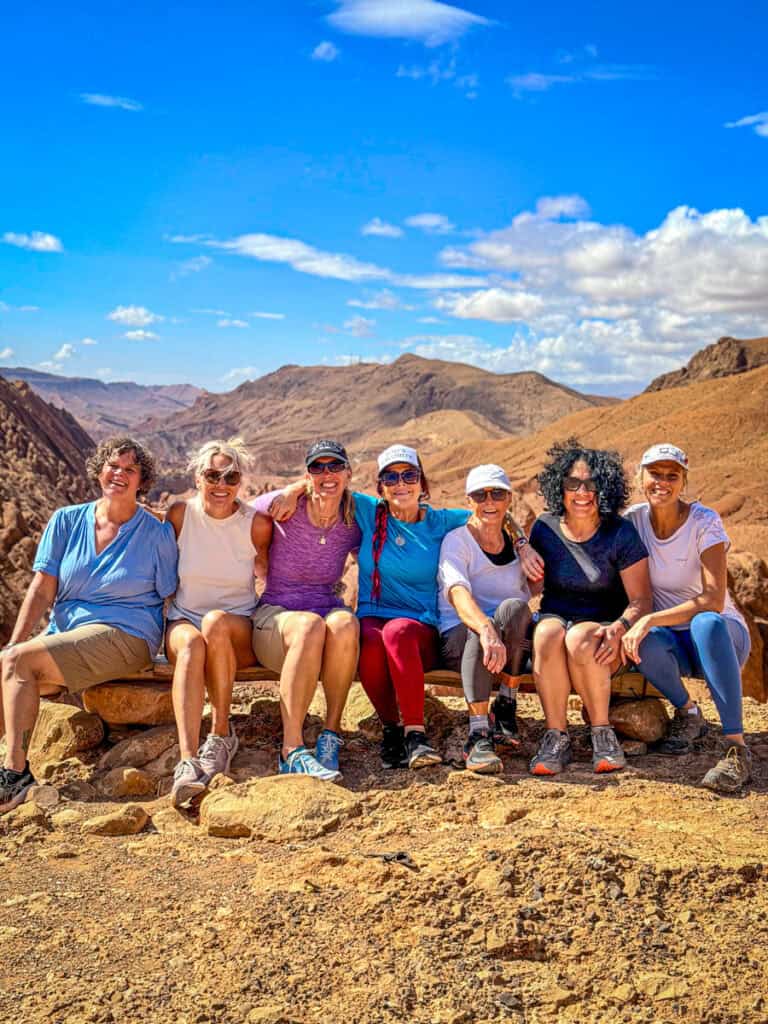
I led this trip for Your Limitless Adventures, a women’s adventure travel company, with our guide Mo and Ali, our trip photographer. Having a local guide meant skip-the-line tickets everywhere, and someone to sort it out when a restaurant’s card machine broke. Five days in, a dozen women who’d met as strangers were dancing around a campfire in the Sahara together. You can read my Your Limitless Adventures review, and I’m leading trips to Thailand in February 2027 and Vietnam in March 2027.
Common questions about a Morocco itinerary
How many days do you need in Morocco?
Ten days covers Marrakech, two nights in the Sahara and Fes without rushing, with a night in the Dades Valley to break the drive. With seven days you’d need to cut the desert to one night or drop a city.
How far is Marrakech from the Sahara desert?
Marrakech to Merzouga, the town at the edge of the Erg Chebbi dunes, is about 560 km and 8 to 9 hours of driving over the Tizi n’Tichka pass. Most itineraries break it with a night in the Dades Valley or near Aït Benhaddou.
Is Morocco safe for women travelers?
I felt safe throughout our October 2026 trip, including walking alone through the Marrakech souks at night, after checking my route with my hotel and guide. The US State Department advises women to travel with a companion or group where possible and to ignore harassment, and the most common problem we met was a scam by an unofficial guide.
Should I visit Marrakech or Fes?
If you can, do both. Marrakech is easier to navigate, with wider souks and the Jemaa el-Fnaa night market. Fesz is older and more of a maze, and it’s the place to buy ceramics and leather.
What’s the best time of year for a Morocco itinerary?
Spring and autumn are the most comfortable for the desert and hiking. We had dry, warm, clear days the whole way through late October.